


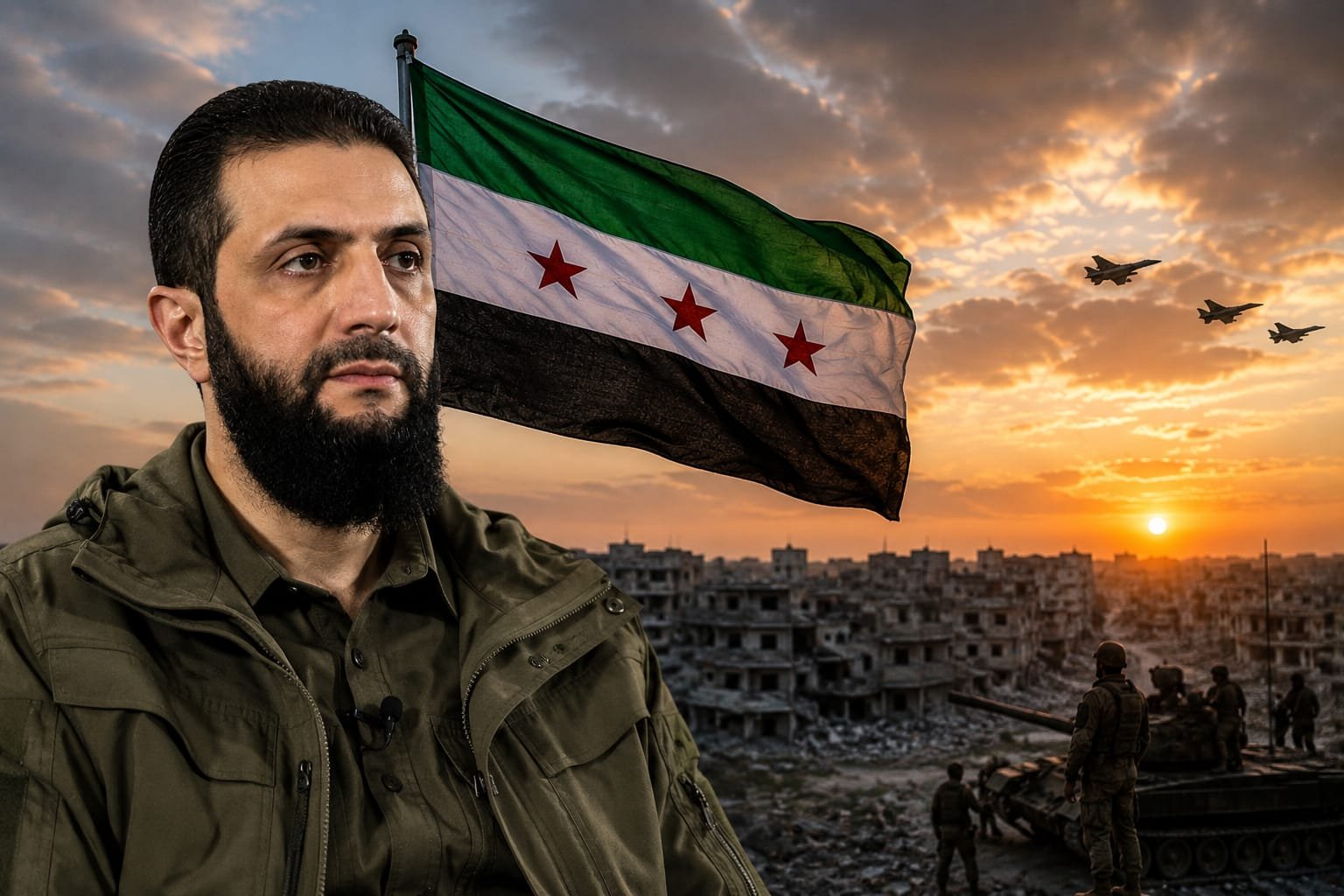
Amid the changing geopolitics of the Middle East, Syria has once again made its hardline stance against Israel clear. The government of President Ahmed al-Sharaa has tightened restrictions on Israeli goods and Israeli citizens through a new customs law. The move comes at a time when reports of limited diplomatic contacts between Damascus and Tel Aviv have continued to surface, while at the same time Syria appears to be accelerating its military and ideological preparations.
Under Article 112 of the newly issued Syrian customs law, the entry of any goods linked to Israel or Israeli companies has now been completely banned. Restrictions on the entry of Israeli citizens into Syria have also been maintained. Syrian authorities described the measure as part of national security, public order, and the country’s “Israel Boycott Law.”
While Western media has portrayed the move as a result of Syria’s “internal political compulsions” or an attempt to “mobilize domestic support,” regional analysts believe that the decision is driven not only by internal pressures but also by the ideological and strategic outlook of the current Syrian power structure.
Observers say that several influential figures within Syria’s current ruling establishment have backgrounds linked to Islamist political and armed organizations. During the years of civil war, many individuals associated with various Islamist factions, rebel groups, and regional networks became part of the administrative, military, and security apparatus. As a result, Syria’s tough stance toward Israel is increasingly being viewed not merely as a political strategy but also as an ideological commitment.
According to analysts, Damascus is currently pursuing two parallel strategies. The first is to raise the issue of Israeli-occupied territories, particularly the Golan Heights, at international forums through diplomatic channels. The second is to strengthen the country’s military capabilities, security system, and national unity.
Sources say special attention is being given to the restructuring of the Syrian army, increasing troop numbers, modern military training, and the expansion of weapon systems. Alongside this, the government is also seeking to systematically reinforce anti-Israel public sentiment in order to sustain what it calls a “spirit of resistance” among both the military and the public.
As part of this broader strategy, the boycott of Israeli goods has now been given a much harsher form than before. Officials say the objective of the new law is not merely to impose trade restrictions, but to eliminate any direct or indirect Israeli economic influence inside Syria. According to authorities, products of any company linked to Israel or Israeli capital will no longer be permitted.
The development comes amid continued reports of limited talks between Syria and Israel under U.S. mediation, although no substantial progress has been achieved so far. Syrian leaders have repeatedly accused Israel of refusing to end its military presence in Syrian territory.
Experts on Middle Eastern affairs say that Syria is currently avoiding a direct war scenario while advancing a policy of “long-term strategic preparation.” This approach combines diplomatic pressure, military reconstruction, ideological mobilization, and economic boycott simultaneously.
In this context, the new law is being viewed not merely as a trade measure, but also as a signal that tensions between Syria and Israel could deepen further in the coming period.