

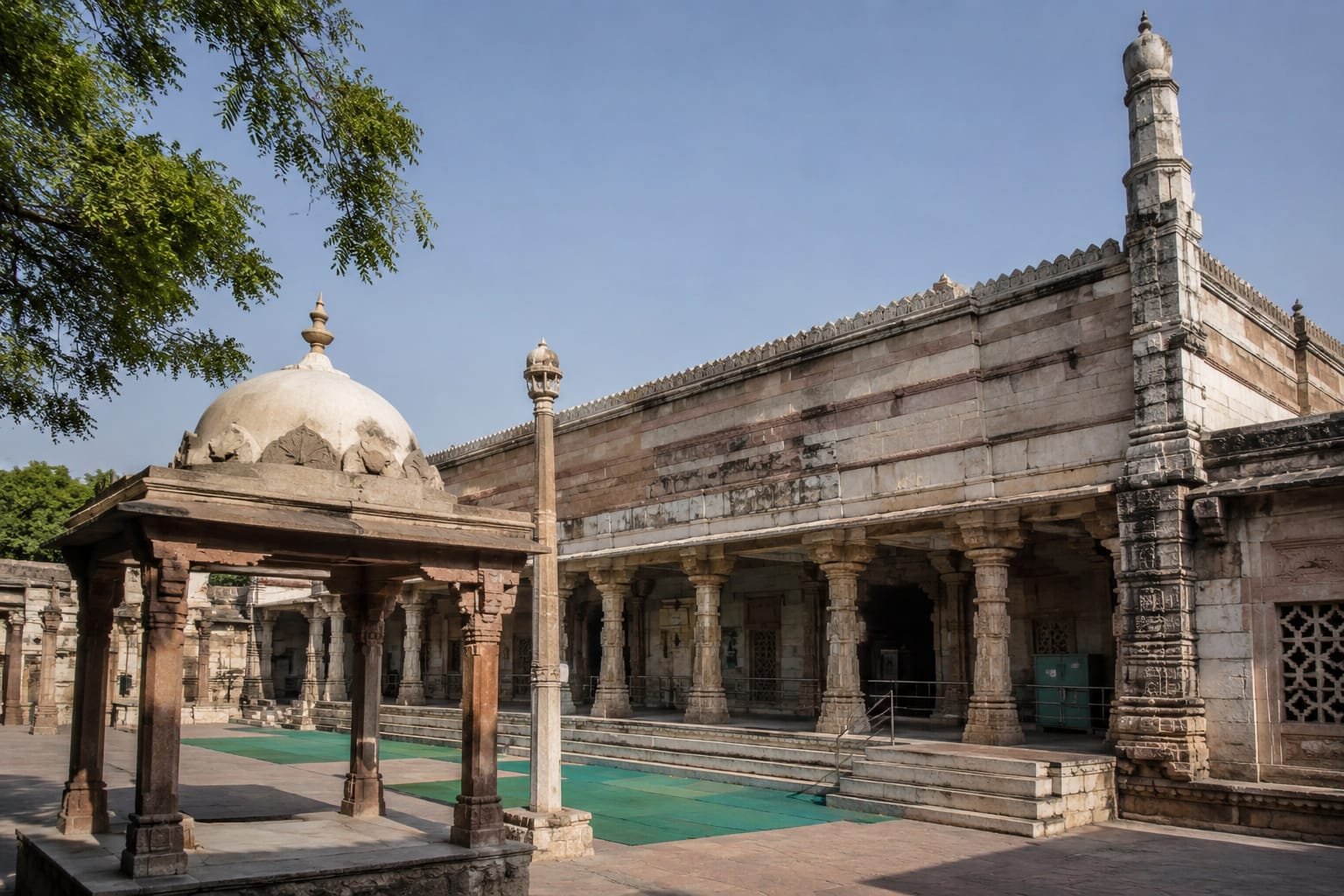
A fresh national debate has erupted following the recent decision of the Madhya Pradesh High Court in the Bhojshala–Kamal Maula Mosque dispute. The All India Muslim Personal Law Board has strongly rejected the court’s ruling, which declared the Bhojshala–Kamal Maula Mosque complex to be a Saraswati temple. The Board announced that the Kamal Maula Mosque Committee will challenge the verdict in the Supreme Court, and that it will provide full legal support in the case.
In a statement issued on Friday, Board spokesperson Dr. Syed Qasim Rasool Ilyas said the judgment goes against historical facts, government records, revenue documents, and archaeological evidence. He alleged that the court failed to give adequate weight to centuries-old religious usage and official records related to the site.
Dr. Ilyas stated that the earlier position of the Archaeological Survey of India itself acknowledged the shared religious character of the site. For years, ASI records and signboards described the complex as “Bhojshala / Kamal Maula Mosque.” Under an administrative arrangement introduced in 2003, Hindus were allowed to offer prayers on Tuesdays, while Muslims were permitted to offer namaz on Fridays. According to the Board, this arrangement reflected official recognition of the historical claims of both communities.
The statement further said that the Muslim side had informed the court that historical revenue records consistently identified the structure as a mosque. At the same time, it argued that no indisputable evidence exists proving that a Saraswati temple from the era of Raja Bhoj stood at the exact site. The Board alleged that the court did not attach due importance to these documents and records.
The Personal Law Board also questioned the recent ASI survey. According to the Board, the reuse of older architectural remains and construction material in medieval-era buildings was a common historical practice. Therefore, it argued, the presence of certain pillars, carvings, or remnants alone cannot erase the centuries-old religious identity of a mosque.
Dr. Ilyas further said that the court placed greater emphasis on narratives linked to Raja Bhoj, Sanskrit education, and cultural traditions, while overlooking continuous religious usage, government records, and constitutional principles. He also claimed that the judgment goes against the spirit of the Places of Worship Act, 1991, which was enacted to maintain the religious status of places of worship as they existed at the time of India’s independence.
The Board reiterated that it would extend every possible legal and moral assistance to the Kamal Maula Mosque Committee. With the matter now expected to reach the Supreme Court, the dispute is likely to intensify the national debate over religious sites, history, and constitutional rights in India.