

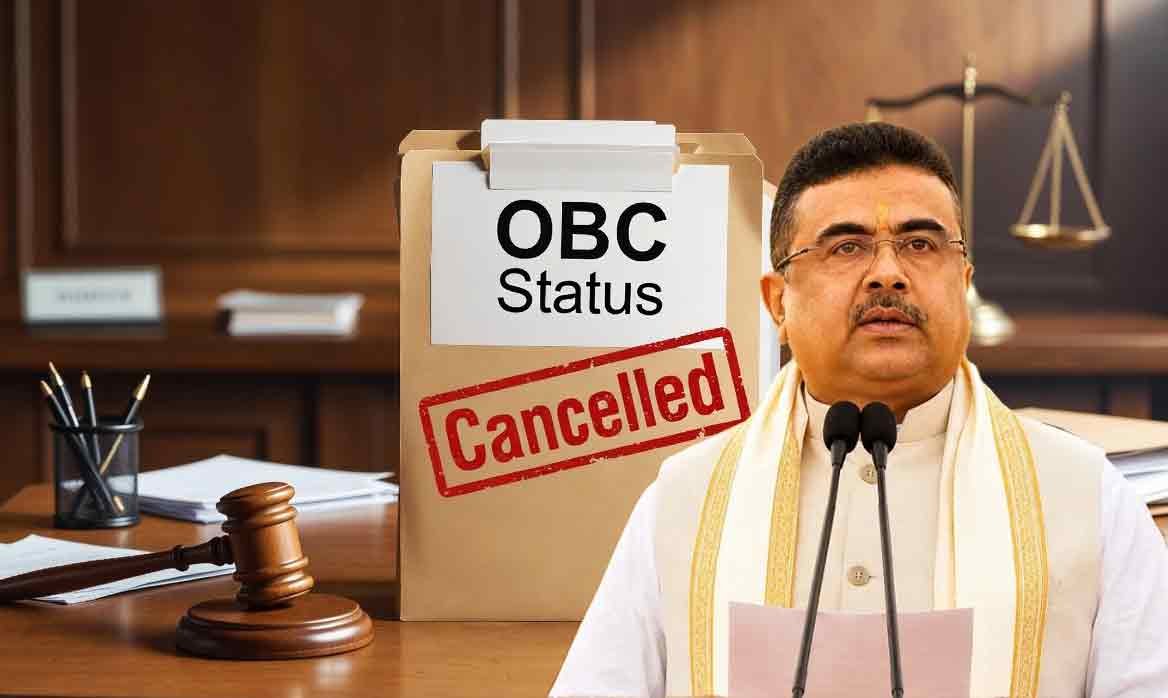
A major administrative and legal change has emerged regarding the Other Backward Classes (OBC) reservation system in West Bengal. The state government issued a notification on Tuesday restoring recognition to 66 communities that were included in the OBC list before 2010. Following this decision, these communities will now be eligible for 7 percent reservation in government services and posts.
According to the official notification, this step has been taken in compliance with recent court directions, after which the state’s OBC list and reservation structure have once again entered a phase of restructuring.
66 communities included in the list
The new list includes several traditional and socially diverse communities that have been reinstated. These include Kapali, Kurmi, Nai/Napit, Tanti, Dhank, Kasai, Khandayat, Turha, Paharia Muslim, Devanga, Hajjam (Muslim), among others.
The notification also clarifies that individuals belonging to Scheduled Caste (SC) who converted to Christianity, along with their descendants, will also fall under this category.
Changes after the 2024 High Court order
This entire development follows the May 2024 Calcutta High Court order, which had struck down several OBC categories in the state. The court had also partially invalidated the 2012 law under which OBC classifications were made in West Bengal.
Under the earlier system, OBC reservations in the state were divided into two categories:
Category A: 10 percent (more backward classes)
Category B: 7 percent (other backward classes)
However, after the court’s order, the overall OBC reservation in the state was restricted to 7 percent.
Government’s claim: transparency and social justice
The state government says this decision has been taken in accordance with judicial directions and aims to make the reservation system more transparent and legally sound. According to officials, the notification was issued only after a detailed review of old lists and records.
The government also claims that this move will benefit genuinely backward communities that were earlier excluded due to administrative errors.
Possible political and social impact
Experts believe this decision may have a wide-ranging impact on the state’s reservation politics. The reinstatement of 66 communities is likely to increase competition within the OBC category, potentially altering social equations.
Analysts suggest that in the coming period, the state government may need to reconsider the entire structure of the reservation system to maintain legal and social balance.
Future developments
At present, the OBC reservation system in the state is in a restructuring phase. With ongoing court directives and new notifications, further policy changes are expected in the future.
This decision is being seen as a significant turning point in West Bengal’s reservation policy, with long-term administrative, social, and political implications.