

Amid continuing controversies surrounding the NEET examination, paper leaks, and medical admissions in India, a new case has emerged that has raised serious questions about the credibility of the country’s medical education system. The Crime Branch of the Delhi Police has arrested Santosh Kumar Jaiswal, a resident of East Champaran in Bihar, in connection with an alleged MBBS admission racket that reportedly operated across multiple states.
According to investigators, the network promised medical seats in private colleges through “management quota,” “internal arrangements,” and “special contacts,” allegedly collecting lakhs of rupees from anxious students and their families.
The arrest has not only triggered concern in the education sector but has also ignited a political confrontation in Bihar, with the BJP and RJD trading accusations while villagers continue to describe Jaiswal as a “soft-spoken and sociable man.”
Delhi Police Claim “Organised Network” Was Operating
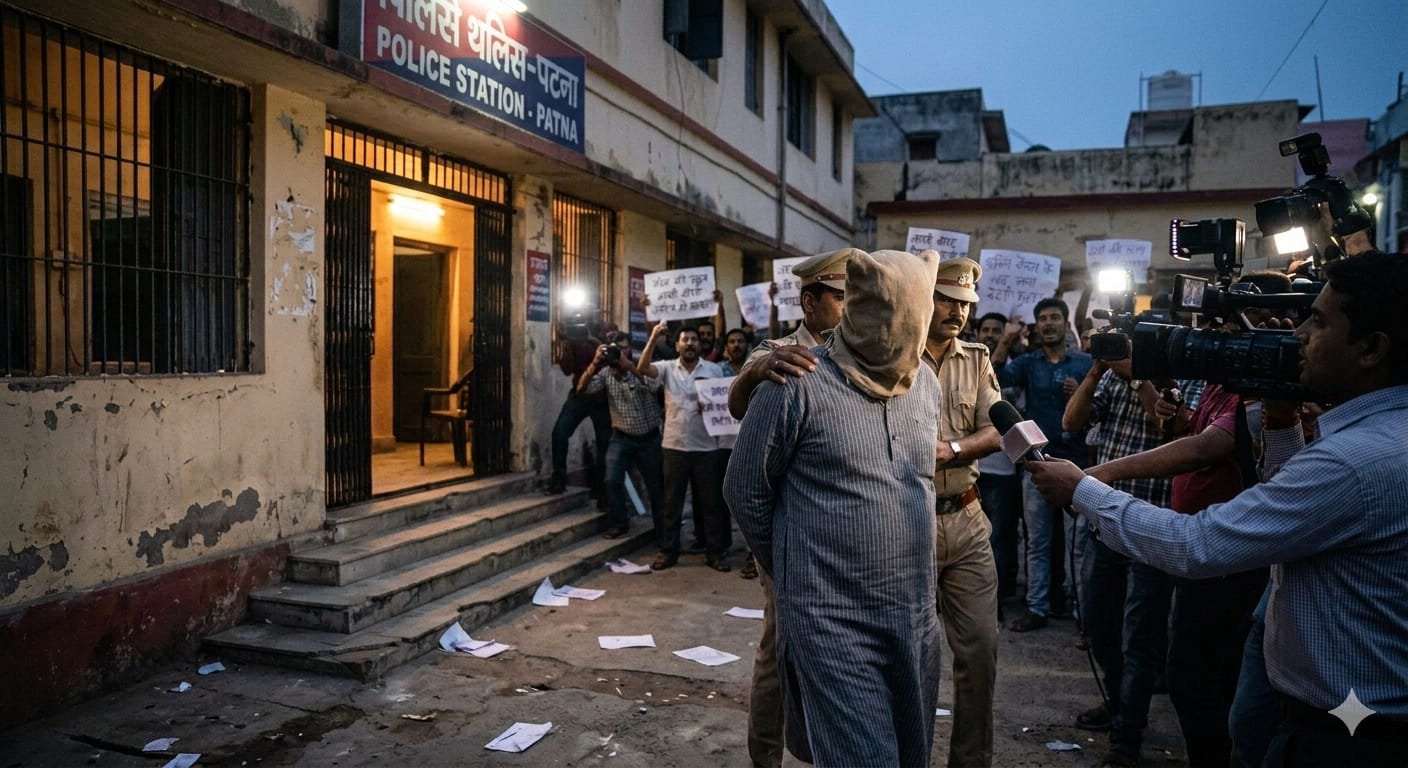
According to the Delhi Police Crime Branch, Santosh Kumar Jaiswal was arrested on May 3, 2026, during a special operation in the Mahipalpur area of Delhi. Police officials say the investigation began after intelligence inputs received from Surat in Gujarat indicated the existence of a wider admission-fixing network.
Investigators allege that the group specifically targeted students struggling with NEET and medical admissions. Families were reportedly assured that MBBS seats in private medical colleges could be secured through unofficial channels and high-level contacts.
Police claim the accused charged anywhere between ₹20 lakh and ₹30 lakh per student. In several cases, advance payments were allegedly collected before families were given repeated assurances and delayed responses.
Who Else Has Been Arrested?
Police say that based on Jaiswal’s disclosures, three other accused — Sant Pratap Singh, Dr. Akhlaq Alam alias Golden Alam, and Vivod Bhai — were also arrested.
Investigating agencies allege that the accused played different roles within the network. Some allegedly contacted students and parents, while others arranged documents, coordinated meetings, and finalized deals in hotels and temporary offices.
Raids were reportedly conducted at multiple hotels in Ghaziabad and Mahipalpur, where some students were also detained for questioning. Authorities have not yet clarified whether those students were victims or active participants in the alleged racket.
What Did the Raids Reveal?
According to police sources, investigators recovered several suspicious documents during the raids. These reportedly include alleged question papers, answer sheets, blank cheques, photocopies of student mark sheets, and admission-related paperwork.
Agencies are now investigating whether the operation was limited to fraudulent admissions or whether it had links to a larger examination or paper leak syndicate operating across states.
Shock in the Village: “We Never Expected This”
In Lain Baswariya village under the Ghorasahan police station area of East Champaran district near the Nepal border, reactions to Jaiswal’s arrest have been mixed.
Villagers say they are stunned by the allegations. Local residents described him as calm, respectful, and well-behaved. Elderly villager Ram Sagar Prasad Yadav said Jaiswal belonged to a “good family” and never appeared controversial in village life.
Another resident, Joginder Prasad Yadav, said Jaiswal interacted politely with everyone whenever he visited the village. Many villagers admitted they knew little about his business dealings outside the area.
His family has so far avoided media interaction and declined to comment publicly on the arrest.
Political Clash: BJP vs RJD
The case has quickly turned political in Bihar.
BJP spokesperson Kuntal Krishna alleged that Santosh Jaiswal had previously been associated with the RJD and accused the party of maintaining links with “corrupt elements.” He stated that cheating students and middle-class families in sensitive matters like NEET and medical admissions was a grave crime.
The BJP further alleged that an alliance between education mafias and political protection networks has been active in several states for years.
RJD Hits Back
RJD spokesperson Chitranjan Gagan rejected the BJP’s allegations, claiming that Santosh Jaiswal had no connection with the party and had already been removed earlier.
The RJD countered that controversies involving NEET paper leaks and examination irregularities were not limited to Bihar. The party pointed to similar cases emerging from Rajasthan, Gujarat, and other BJP-ruled states.
The opposition party said strict action should be taken if anyone is found guilty, but accused the BJP of attempting to politicize the issue for electoral gain.
Growing “Seat Mafia” in Medical Education
Experts believe the severe shortage of government medical seats and the extremely high fees charged by private medical colleges have created a parallel “admission marketplace” in India.
Every year, lakhs of students appear for NEET, but the limited number of affordable MBBS seats forces many families toward private institutions and, in some cases, middlemen promising guaranteed admissions.
Investigating agencies say such networks often use phrases like “guaranteed admission,” “management quota,” “direct seat,” and “internal setting” to gain the trust of desperate parents.
Key Questions Raised by the Case
The controversy has once again brought several critical questions into public debate:
Is there a large-scale network of middlemen operating in India’s medical admission system?
Are some private colleges indirectly linked with admission brokers?
Is the current security and monitoring system around NEET and admissions strong enough?
Has rapid privatization in education created fertile ground for such rackets?
Delhi Police investigations are expected to determine whether this is merely a case of financial fraud or part of a much larger education mafia network spread across the country.
For now, what began in a small border village in Bihar has evolved into a national debate over transparency, accountability, and trust in India’s medical education and examination system.