

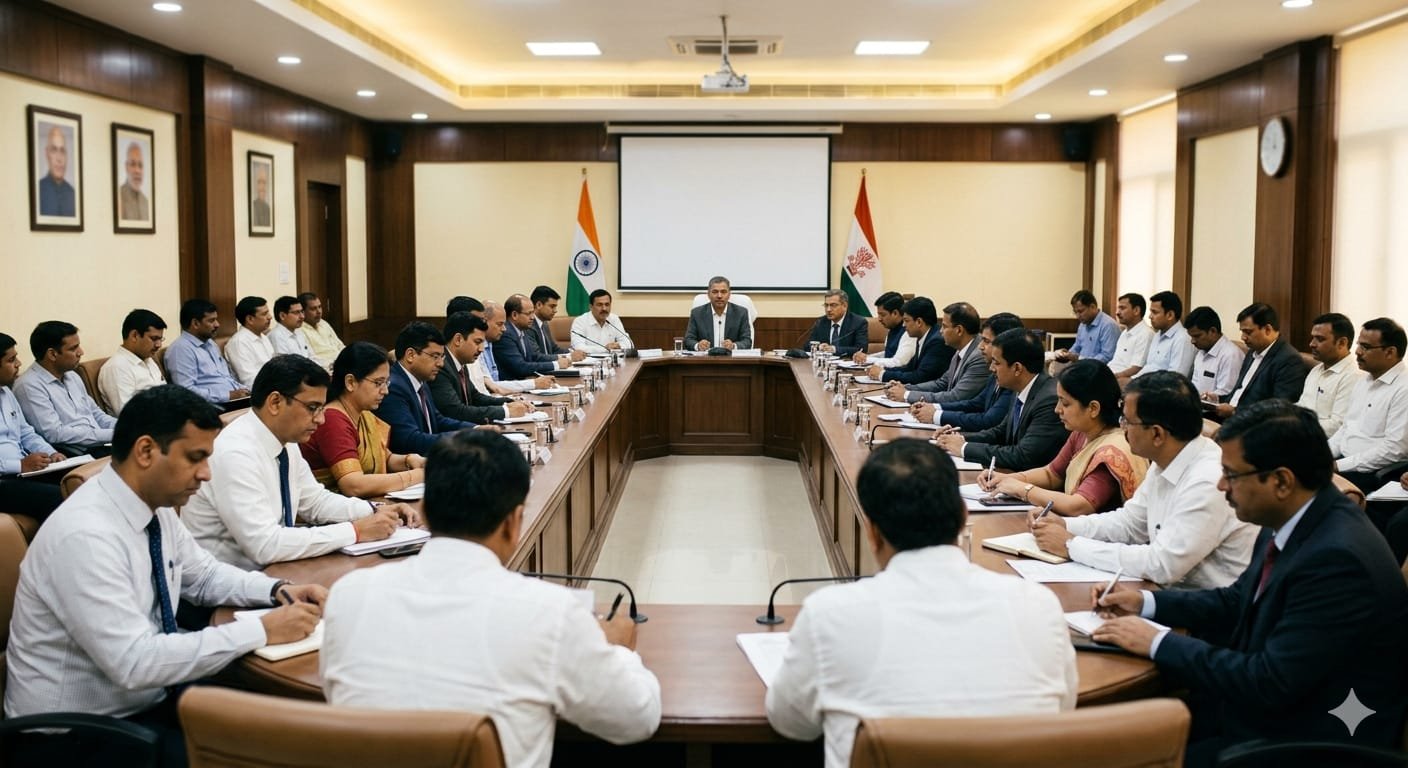
The government of Samrat Choudhary has carried out a major administrative restructuring in Bihar to strengthen administrative monitoring, implementation of development schemes, and district-level accountability. Under the new arrangement, 34 senior IAS officers have been appointed as in-charge secretaries for different districts across the state. According to a notification issued by the Cabinet Secretariat Department, officers at the level of Additional Chief Secretary, Principal Secretary, and Secretary will now directly supervise administrative and developmental activities in the districts.
In political and bureaucratic circles, the move is being described as a “double monitoring model” within Bihar’s governance structure. Earlier, the government had already assigned ministers as district in-charges. Now, senior secretariat-level bureaucrats have also been linked directly with districts. The decision is being seen as an attempt to accelerate development projects and make the administrative machinery more active ahead of the upcoming Bihar Assembly elections.
Why was this administrative experiment considered necessary?
For years, Bihar has faced criticism over the slow pace of development schemes, delays in file clearances, lack of departmental coordination, corruption, and weak implementation at the grassroots level. In many districts, projects related to roads, healthcare, education, drinking water pipelines, housing schemes, Anganwadi services, and rural development have failed to meet deadlines.
The government believes that direct supervision by senior secretariat officials will improve review mechanisms and increase accountability of district administrations, including District Magistrates. The in-charge secretaries have been tasked with visiting districts regularly, conducting review meetings, and submitting reports directly to the government.
A new administrative monitoring network from Patna to Seemanchal
The responsibility for Patna has been assigned to Additional Chief Secretary Vinay Kumar. Politically significant Nalanda will be overseen by Ravi Kumar Ravi. Pranav Kumar has been assigned Samastipur, Rajesh Kumar will supervise Darbhanga, and Chandra Shekhar Singh has been appointed in-charge secretary for Muzaffarpur.
Deepak Anand has been given responsibility for Bhagalpur, while Vinod Singh Gunjiyal will oversee Saharsa. The government has also deployed experienced officers in the sensitive districts of Seemanchal and North Bihar, indicating a special administrative focus on these regions.
Major responsibilities assigned to women officers
Women officers have also been entrusted with key districts in this reshuffle. Rachna Patil has been appointed in-charge of Vaishali, Dr. Ashima Jain for Arwal and Jehanabad, Seema Tripathi for Supaul, and Kanwal Tanuj for Sheikhpura and Lakhisarai.
Administrative experts believe the appointments reflect the government’s strategy of “inclusive governance.” Their involvement could particularly influence monitoring of education, women’s safety, nutrition, and healthcare schemes.
Special attention on Seemanchal and flood-prone districts
Kartikeya Dhananjay has been assigned Purnia, Rajkumar will oversee Katihar, and Animesh Kumar has been given Kishanganj. Mohammad Sohel has been appointed in-charge secretary for Araria.
These districts are considered among Bihar’s most challenging regions due to recurring floods, migration, unemployment, poor healthcare, and educational backwardness. The government hopes that senior-level monitoring will improve implementation of welfare and development schemes in these areas.
New administrative structure from Champaran to Magadh
Topshat Kapil Ashok has been made in-charge of East Champaran, while Abhay Kumar Singh will oversee West Champaran. Robert L. Chongthu has been assigned Gaya, Manoj Kumar will supervise Aurangabad, Himanshu Sharma has been posted to Nawada, and Kaushal Kishore has been made in-charge secretary for Jamui.
Rahul Kumar has been assigned Madhepura and Khagaria, Nilesh Ramchandra Deore will oversee Banka, and Rajiv Roshan has been given responsibility for Sheohar and Sitamarhi. Senior officers have also been deployed in Bhojpur, Buxar, Kaimur, Rohtas, Madhubani, and Saran.
What could change under the “In-Charge Minister + In-Charge Secretary” model?
The government is now implementing a dual-monitoring framework in districts. While in-charge ministers will review political and public grievance-related issues, in-charge secretaries will focus on administrative and technical supervision.
Experts believe this system could ensure that progress reports of development schemes reach the Chief Minister’s Office directly, enabling quicker action against negligence. However, some former bureaucrats have warned that poor coordination between in-charge secretaries and district magistrates could also create administrative friction.
Administrative reform or electoral strategy?
Political analysts believe the move is not merely an administrative reform but also a politically significant strategy ahead of the Bihar Assembly elections. The government appears keen to demonstrate faster progress in roads, healthcare, education, irrigation, electricity, and employment schemes before voters.
Through this restructuring, the administration is attempting to send a message that monitoring of schemes will now move beyond paperwork and be supervised from the highest levels down to the grassroots.
Opposition raises questions
Opposition parties have criticized the new arrangement, arguing that if the existing district administration had been functioning effectively, there would have been no need to appoint separate in-charge secretaries. Some opposition leaders have described the move as “excessive centralization.”
The government, however, maintains that the initiative is a major step toward “result-based governance” and will improve both transparency and accountability in implementation of public schemes.
How effective this major shift in Bihar’s administrative system proves to be will become clear in the coming months, as the entire state watches closely.