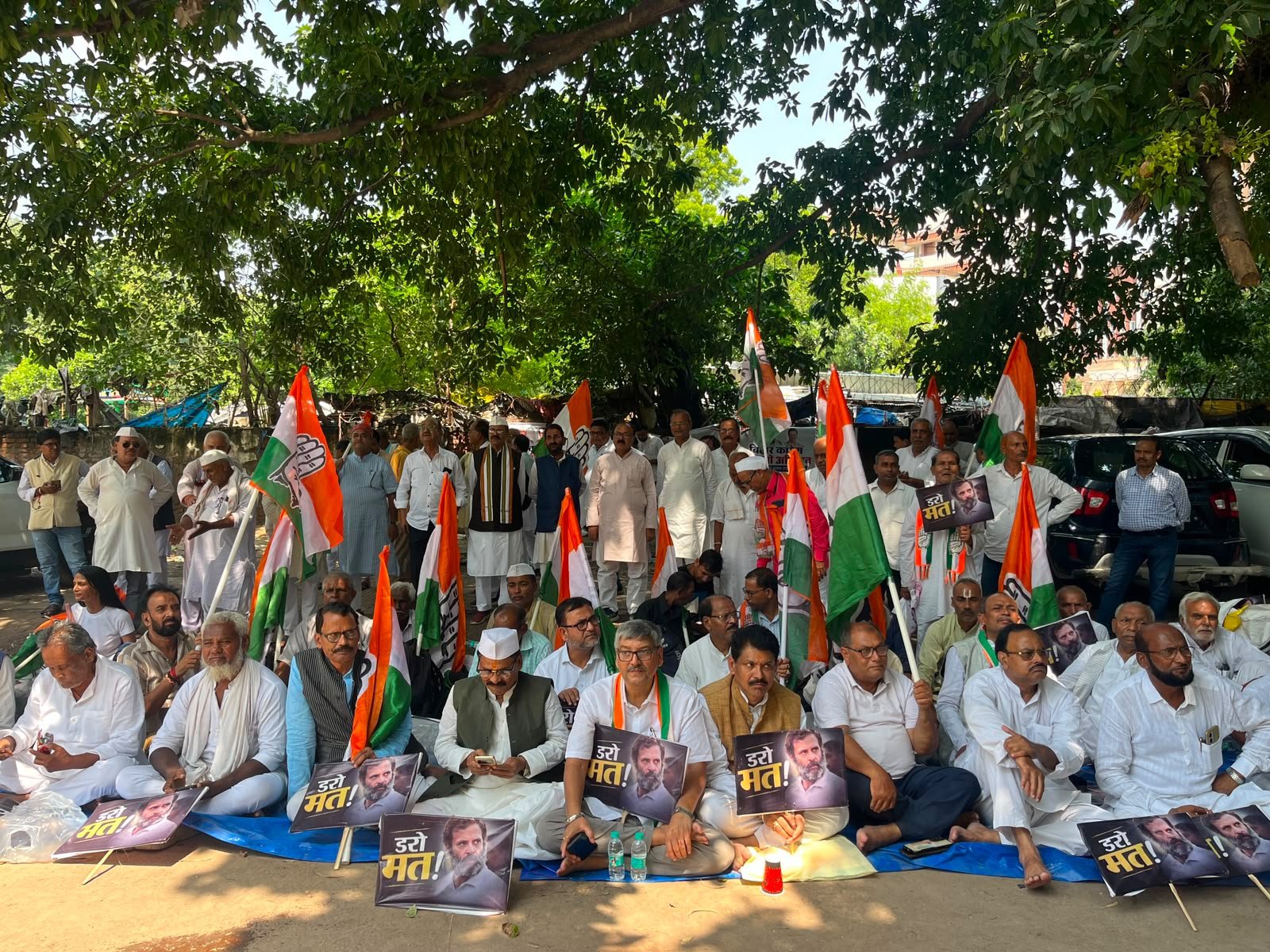


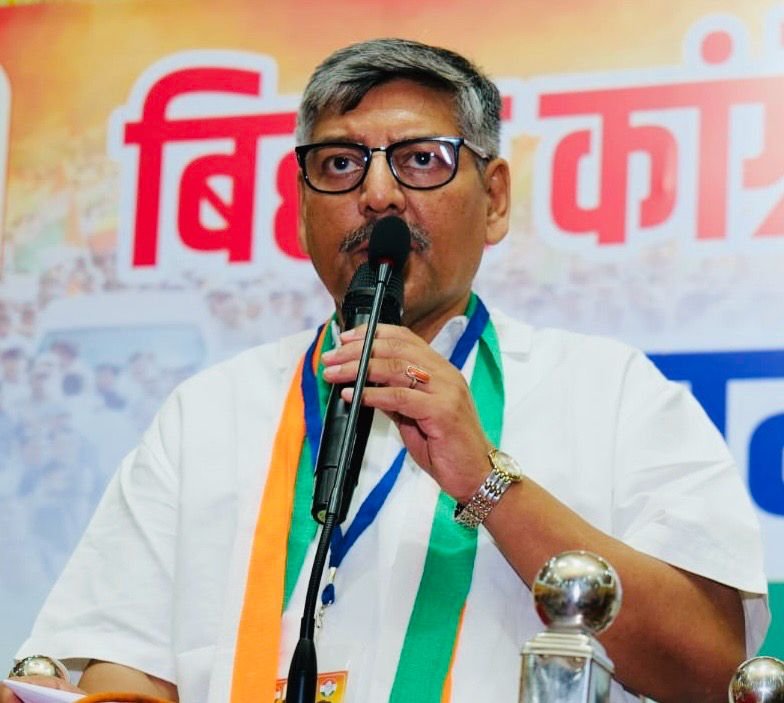
Dissatisfaction within the Indian National Congress in Bihar has now begun to surface openly. Senior party leader and AICC member Anand Madhav has issued a detailed press statement raising serious questions about the current functioning of the organization and its leadership. His allegations have not only put the state leadership under scrutiny but have also triggered a broader debate over the grassroots condition of the Congress in Bihar.
In his statement, Anand Madhav said that the Bihar Congress is no longer an active grassroots organization and has instead been reduced to functioning through online campaigns. He described the party’s “Srijan Saathi Jansampark Abhiyan” as misleading for workers, arguing that such initiatives focus more on optics than on genuine organizational strengthening.
Targeting Bihar Pradesh Congress Committee president Rajesh Ram and Bihar in-charge Krishna Allavaru, he alleged that the current leadership is resorting to repeated “experiments” to conceal its failures. According to him, these efforts are aimed at diverting workers from real issues rather than strengthening the party.
Referring to his past experience, Anand Madhav recalled that during the tenure of former state president Madan Mohan Jha, a digital membership drive had been conducted successfully, with significant participation from the ground level. He noted that he himself had served as coordinator for 21 districts in South Bihar, and the campaign had visible grassroots impact at the time.
He also raised concerns over the recent appointment of 52 district presidents. He questioned the criteria of digital membership as the basis for these appointments, stating that it remains unclear whether the process was properly followed across all districts. He further alleged that in several cases, individuals who had failed in electoral politics were given key organizational responsibilities.
Anand Madhav went on to mention a “deep conspiracy” within the organization, claiming that it is aimed at weakening the Bihar Congress and bringing it under the influence of other political forces. He also expressed concerns over possible financial irregularities in the membership drive, alleging that more than the prescribed fee is being collected.
In conclusion, he urged the party high command to intervene, warning that unless immediate changes are made, the Congress may face a serious existential crisis in Bihar. He suggested that leadership roles should be entrusted to individuals with active political engagement and proven grassroots experience.
Amid upcoming political challenges in Bihar, this internal dissent within the Congress could pose fresh difficulties for the party. It remains to be seen how the leadership responds to these allegations and what steps it takes to maintain unity within the organization.