
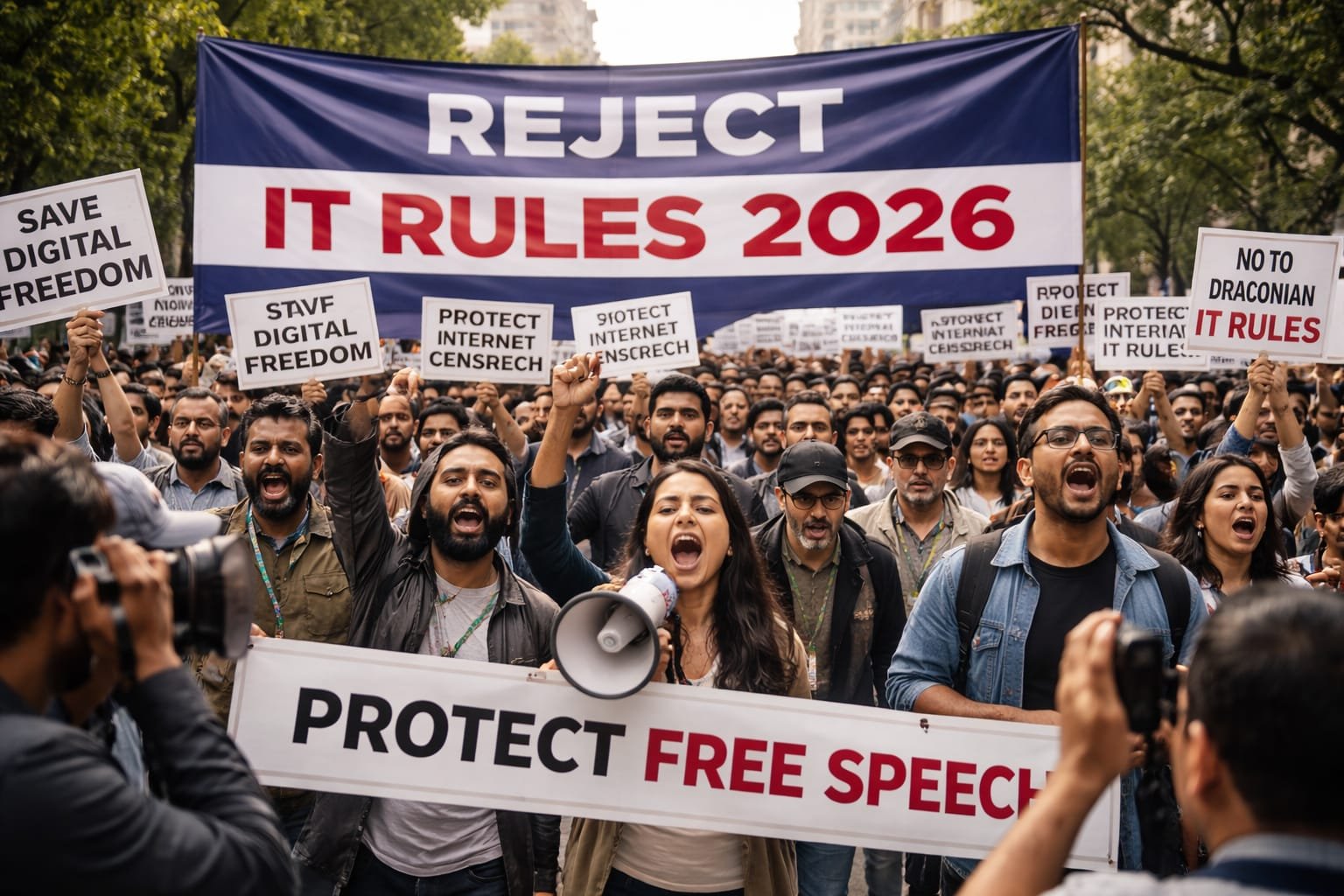
The controversy surrounding the proposed Information Technology (Intermediary Guidelines and Digital Media Ethics Code) Second Amendment Rules, 2026 has intensified across India. Amid strong objections from journalist bodies, digital rights activists, and independent content creators, a joint press conference by media organizations in New Delhi has further escalated the debate.
The joint press conference, held at the Press Club of India, saw participation from several prominent organizations including the Editors Guild of India, DIGIPUB, Indian Women’s Press Corps, Network of Women in Media, and the Delhi Union of Journalists. Speakers unanimously stated that the proposed IT Rules pose a serious threat to freedom of expression and press freedom, and must be withdrawn immediately.
During the conference, speakers highlighted that the proposed amendments would grant extraordinary powers to the government, particularly under Rule 3(4), which could make government advisories and directions legally binding. According to them, this would effectively give informal executive instructions the force of law, weakening parliamentary oversight and transparency.
Journalist bodies also expressed concern that the amendments could undermine the principle of “safe harbour,” which protects social media platforms from liability for user-generated content. If this protection is diluted, platforms may resort to pre-emptive content removal to avoid legal risks, leading to widespread censorship.
The impact on independent creators and freelancers was another major concern raised at the conference. Speakers noted that YouTubers, podcasters, and individual journalists would be among the worst affected, as the compliance burden could be financially unsustainable for them. They warned of a growing “chilling effect,” where individuals may self-censor out of fear of potential action.
The proposed reduction in content takedown timelines—from 36 hours to just a few hours in certain cases—was also criticized as impractical. Experts argued that such short deadlines would not allow for proper legal scrutiny, increasing the likelihood of wrongful or excessive takedowns.
The “Sahyog portal” also came under sharp criticism. According to speakers, the portal connects multiple government agencies, enabling them to issue takedown orders directly to platforms across jurisdictions, often without adequate judicial oversight.
Legal experts at the conference referred to the Supreme Court’s landmark judgment in Shreya Singhal vs Union of India (2015), emphasizing that content takedowns must follow due legal process. They argued that the proposed rules weaken these established safeguards.
Separately, experts and commentators have warned that the amendments blur the line between “hard law” and “soft law,” effectively granting legal force to informal government advisories. This, they argue, could pave the way for a structured system of digital censorship.
At the conclusion of the press conference, media organizations put forward a set of demands, including the complete withdrawal of the draft IT Rules 2026, strict adherence to due process in content takedowns, immediate suspension of the Sahyog portal, and wider consultation with stakeholders before introducing any legislation affecting press freedom.
The government, however, maintains that the amendments are necessary to tackle misinformation, deepfakes, and AI-generated content. Critics, on the other hand, argue that these measures risk curbing online expression and dissent.
Experts believe that if the draft is implemented in its current form, it is likely to face legal challenges in court. Meanwhile, civil society groups and media organizations are expected to intensify their opposition in the coming days.