

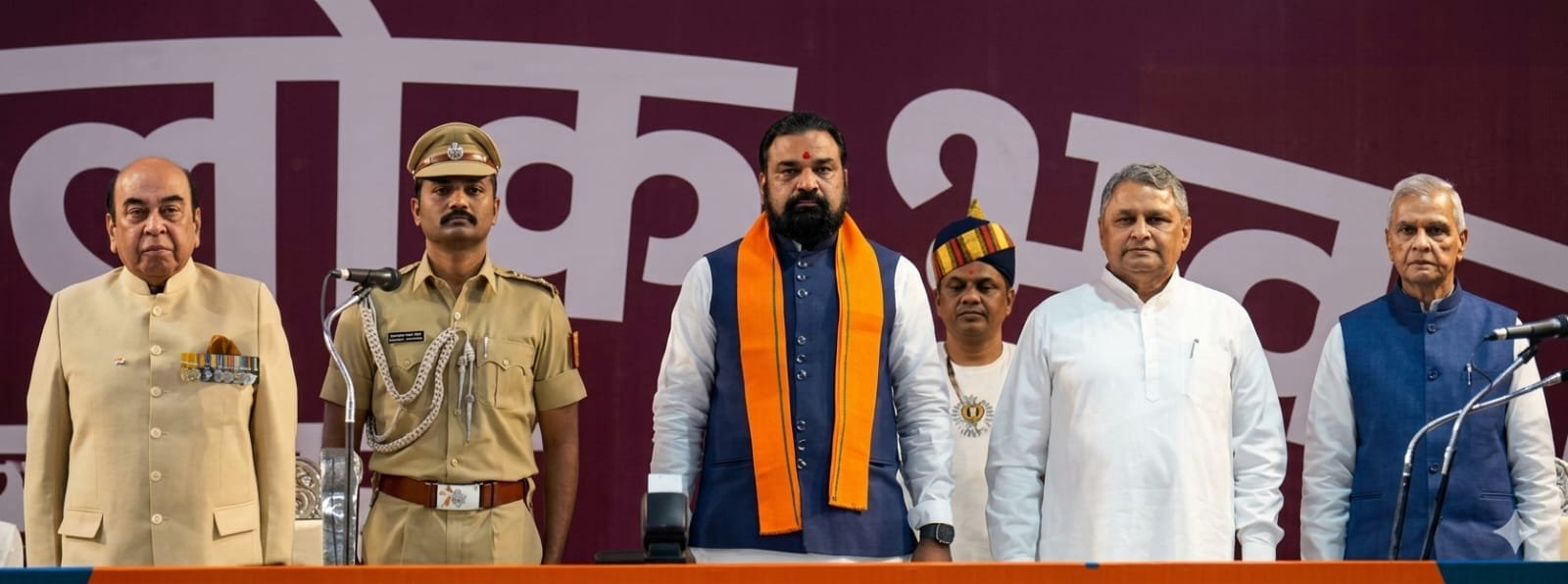
Bihar’s politics took a decisive turn on Wednesday, entering a new era. Following the resignation of Nitish Kumar, who had long remained at the center of the state’s power structure, senior Bharatiya Janata Party leader Samrat Choudhary was sworn in as the 24th Chief Minister of the state. In a ceremony held at Raj Bhavan’s Lok Bhavan, Governor Syed Ata Hasnain administered the oath of office and secrecy to him. With this oath, nearly two decades of the ‘Nitish era’ formally came to an end, and the reins of power passed into new leadership.
Samrat Choudhary’s rise to the position of Chief Minister is the result of a long political journey. Entering active politics in the 1990s, Choudhary strengthened his political identity through various phases. In 1999, he became Agriculture Minister in Rabri Devi’s government, although he had to step down due to certain technical reasons. Later, in 2014, he served as Urban Development and Housing Minister in the government led by Nitish Kumar. After becoming Panchayati Raj Minister in 2021 and Deputy Chief Minister in 2024, he has now reached the state’s highest office. He is widely regarded as a straightforward, aggressive, and organizationally strong leader with a firm grip over both party structure and social equations.
This change of power is not merely a change of leadership but also signals a reconfiguration of the balance of power in Bihar’s politics. Nitish Kumar, who shaped governance and development in the state since 2005, has now stepped down from the Chief Minister’s post after becoming a Rajya Sabha member. His resignation marks the end of a political era long associated with stability and coalition governance.
To maintain balance in the new government, two senior leaders from the JD(U) quota have been appointed as Deputy Chief Ministers. Vijay Kumar Choudhary and Vijendra Prasad Yadav also took oath of office and secrecy. Both leaders are considered important for their experience and political influence.
Vijay Kumar Choudhary’s political career spans over four decades. He first entered the Bihar Legislative Assembly in 1982 on a Congress ticket and later joined Janata Dal (United), becoming a trusted associate of Nitish Kumar. Apart from handling key portfolios such as education, water resources, and parliamentary affairs, he has also served as the Speaker of the Bihar Legislative Assembly. He is known for his balanced approach and strong administrative experience.
On the other hand, Vijendra Prasad Yadav is known in Bihar politics for his strong grassroots presence and consistent electoral success. Starting his political career with the Janata Dal, he also served as a minister in Lalu Prasad Yadav’s government. Being elected nine consecutive times from the Supaul Assembly constituency reflects his strong public support. Since 2005, he has played a significant role in Nitish Kumar’s governments and has handled important departments including energy and finance.
Strict security arrangements were made in the capital Patna for the swearing-in ceremony. The event was held amid the deployment of thousands of police personnel and security forces. While NDA workers expressed enthusiasm, reactions from various political parties were also seen. The ruling alliance described it as a continuation of development and the beginning of new leadership, whereas the opposition questioned the change and termed it against the popular mandate.
Bihar now stands at a juncture where the new government faces several major challenges—maintaining the pace of development, ensuring balance within the coalition, and delivering concrete results on issues such as employment, education, and healthcare.
Thus, the new government led by Samrat Choudhary is not only a symbol of a change in power but is also set to influence the political direction and developmental trajectory of the state. The ‘Samrat era’ that has begun after the ‘Nitish era’ now carries the responsibility of shaping Bihar’s future through its decisions and policies.