

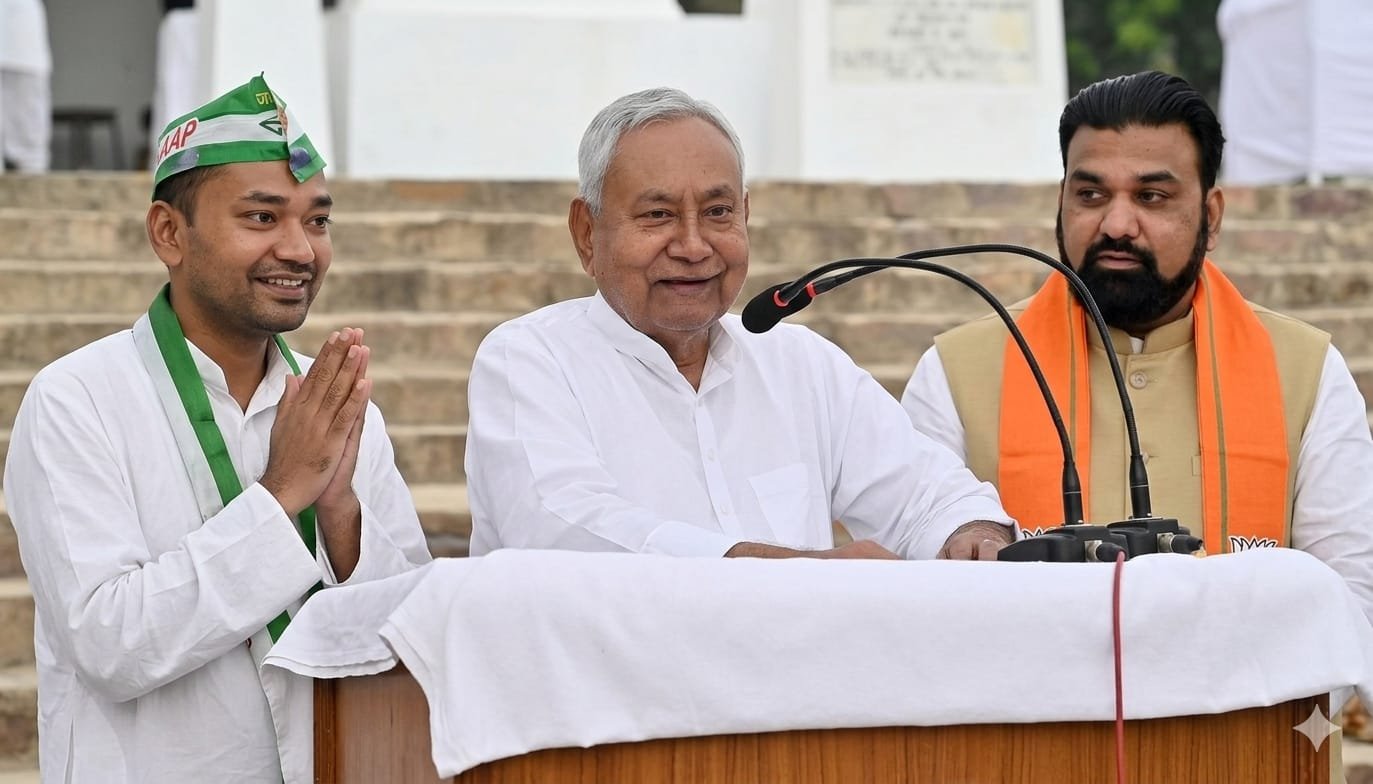
Amid rapidly unfolding political developments in Bihar, the situation regarding Chief Minister Nitish Kumar is becoming increasingly clear. He has been elected to the Rajya Sabha, and according to constitutional provisions, he will have to resign from his Legislative Council (MLC) post within a few days and take oath as a Rajya Sabha member.
Under the Indian parliamentary system, no individual can simultaneously remain a member of both legislative houses for an extended period. Therefore, Nitish Kumar’s resignation from the MLC post is now considered a mere formality.
Following this, he is expected to resign from the Chief Minister’s post as well. Political sources indicate that after the end of Kharmas, Nitish Kumar will step down from the Chief Ministership. Although no official date has been confirmed yet, discussions around this are intensifying in political circles.
The most prominent name being considered for the leadership change is Samrat Choudhary, who could be appointed Chief Minister by the Bharatiya Janata Party. This would mark a significant shift in Bihar’s politics, as it would be the first time the BJP directly leads the state government.
Meanwhile, Nishant Kumar is being discussed as a potential Deputy Chief Minister from Janata Dal (United). Nishant Kumar’s entry, after being away from active politics, is also being viewed as the beginning of a new generation of leadership within the JD(U).
Sources further suggest that the new government may include an additional Deputy Chief Minister, either from the Muslim community or the upper-caste group, as a measure to maintain the social and caste balance in the state.
Political analysts believe that this entire sequence of events is not just a constitutional formality but could also be part of a broader political strategy. It is being seen in the context of Nitish Kumar’s potential active role at the national level and the new power equations in Bihar.
For now, official announcements are awaited. However, it is clear that Bihar’s political landscape is at a critical turning point, and the coming days could redefine the state’s political future.