

The Middle East is once again moving toward a large-scale military confrontation. Recent developments suggest that tensions between Iran, United States, and Israel have expanded beyond limited conflict and are now taking the shape of a wider regional crisis. Reports from international outlets such as Al Jazeera indicate that the impact of this escalation is spreading across Israel, Lebanon, Yemen, and the Gulf region.
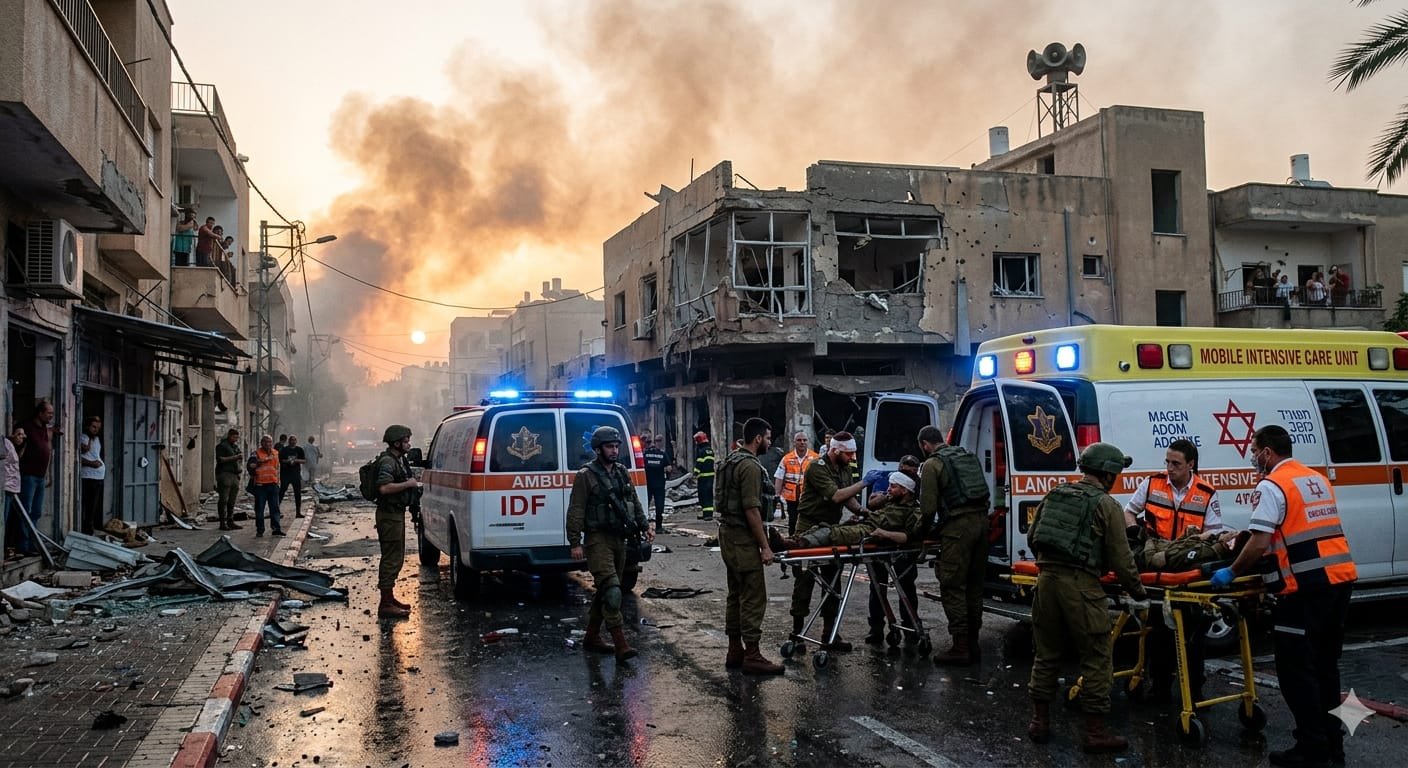
Inside Israel, the situation remained highly tense overnight. In areas like Haifa, Nahariya, Galilee, and Acre, sirens continued to sound repeatedly, accompanied by multiple explosions. Local reports suggest that civilians had to rush into bunkers nearly 18 times during the night. In southern Lebanon, clashes reportedly left two military officers and seven soldiers injured. There are also claims that, for the first time in this phase of the conflict, an attack was launched toward Israel from Yemen, signaling a dangerous expansion of the conflict zone.
The Gulf region is also facing direct consequences. Reports suggest that U.S. military bases in Saudi Arabia were targeted, injuring around 12 American personnel, including two in critical condition. In Abu Dhabi, another attack reportedly resulted in five injuries.
Meanwhile, strikes inside Iran continue to raise serious concerns. According to reports, one attack hit a residential area, killing 10 members of a single family. Another incident reportedly targeted a university campus, intensifying global debate over possible violations of international humanitarian law. Iran has also indicated that it may raise the issue internationally following an attack on a key industrial facility.
A major flashpoint in this crisis is the Strait of Hormuz, which is considered the lifeline of global oil supply. Due to rising tensions, maritime movement has been disrupted, and reports suggest that safe passage is becoming increasingly difficult without Iran’s approval. This is already impacting global oil markets, supply chains, and economic stability worldwide.
At the global level, the roles of China and Russia are also being closely observed. While both countries appear to be avoiding direct military involvement, their diplomatic and strategic influence could play a crucial role in shaping the outcome.
At the same time, Gulf and other Arab nations are maintaining a cautious stance, focusing on internal stability and avoiding direct participation in the conflict. Experts believe this approach is currently the most practical under such volatile conditions.
Overall, the escalating crisis in the Middle East is no longer confined to the region. It now poses a serious threat to global peace, energy security, and economic stability. The coming days will be critical in determining whether diplomatic efforts can contain the situation or if the world is heading toward a broader and more dangerous war.