

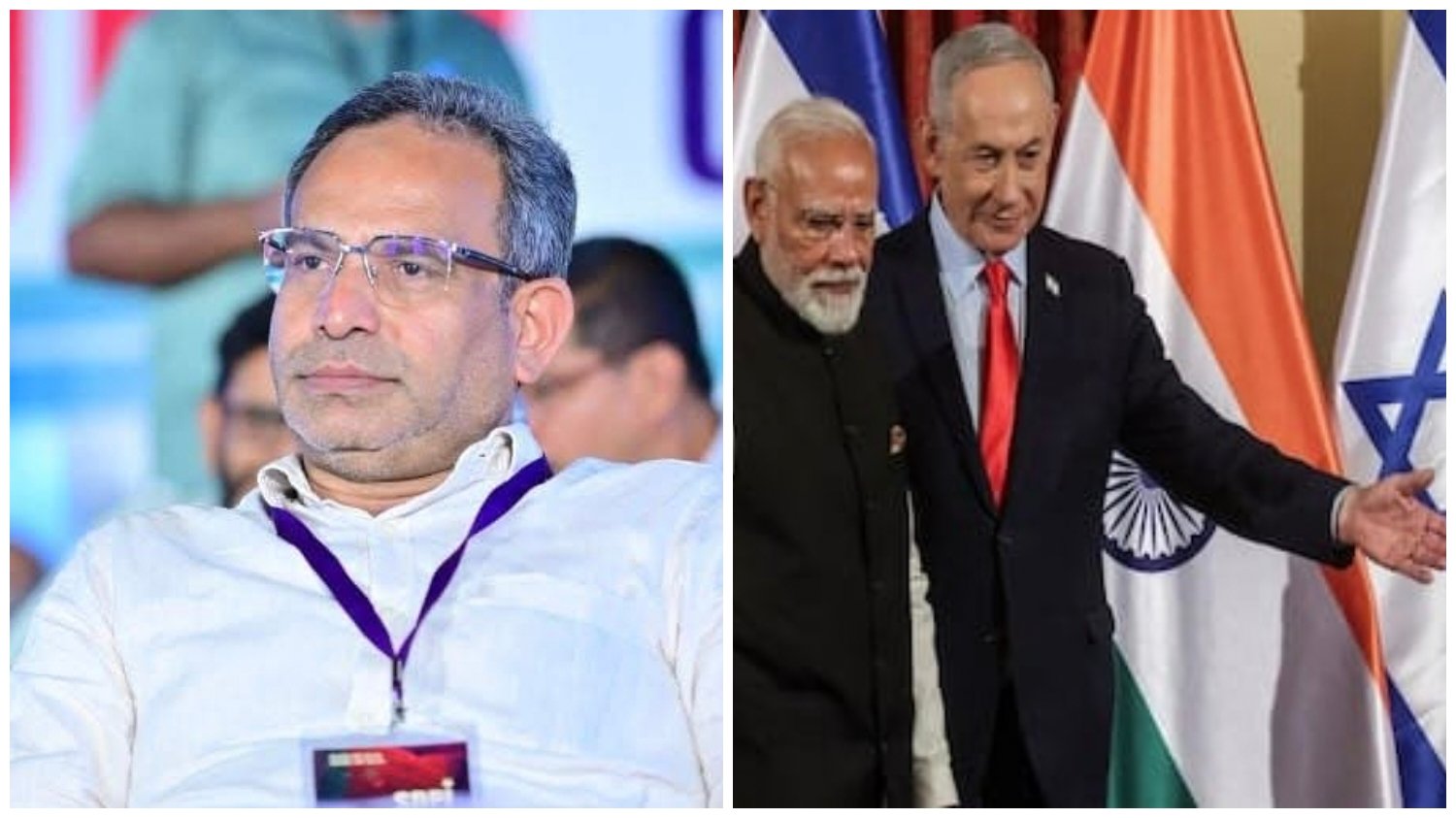
M.K. Faizy, National President of the Social Democratic Party of India (SDPI), has sharply criticized the central government over Prime Minister Narendra Modi’s visit to Israel, asserting that India’s foreign policy should be guided by national interests rather than ideological commitments.
In a statement, Faizy said that publicly showcasing deep defense and strategic ties with Israel amid the ongoing humanitarian crisis in Gaza sends a signal that deviates from India’s traditional balanced diplomacy. He warned that such a stance could weaken India’s historical commitment to playing a just and balanced role in West Asia.
Recalling India’s historical position, Faizy noted that in 1947, India opposed the partition plan for Palestine. In 1974, India became the first non-Arab country to recognize the Palestine Liberation Organization (PLO) as the legitimate representative of the Palestinian people, and in 1988, it formally recognized an independent Palestinian state. He emphasized that this policy was rooted in anti-colonial principles and the right to self-determination.
Faizy alleged that a large number of civilians, including women and children, have been killed in Gaza, and hospitals and infrastructure have suffered extensive damage, resulting in displacement and food insecurity. In such a context, increasing military cooperation with Israel sends a “worrisome message,” he said.
He added that defense trade between India and Israel runs into billions of dollars, with India purchasing missile systems, surveillance technology, and unmanned aerial vehicles in large quantities. The SDPI alleged that celebrating this partnership politically marks a departure from India’s earlier balanced policies.
The party stressed that India’s interests lie in maintaining balanced and constructive relations across West Asia. Millions of Indian nationals work in the Gulf, and the country’s energy security is closely tied to the region. SDPI warned that any perception of India leaning toward one side could have diplomatic and economic repercussions.
Referring to Iran, Faizy highlighted that India’s strategic projects, such as the Chabahar port, and initiatives to connect with Central Asia require a balanced foreign policy approach.
The SDPI demanded that the central government immediately ensure a ceasefire in Gaza, protect civilians, and hold accountable those violating international law. The party also urged India to play an active role in supporting a two-state solution by recognizing East Jerusalem as the capital of an independent Palestine.
“India’s foreign policy must reflect the moral values, security, and long-term interests of its people. It cannot be determined by symbolic political gestures or ideological leanings,” Faizy said.