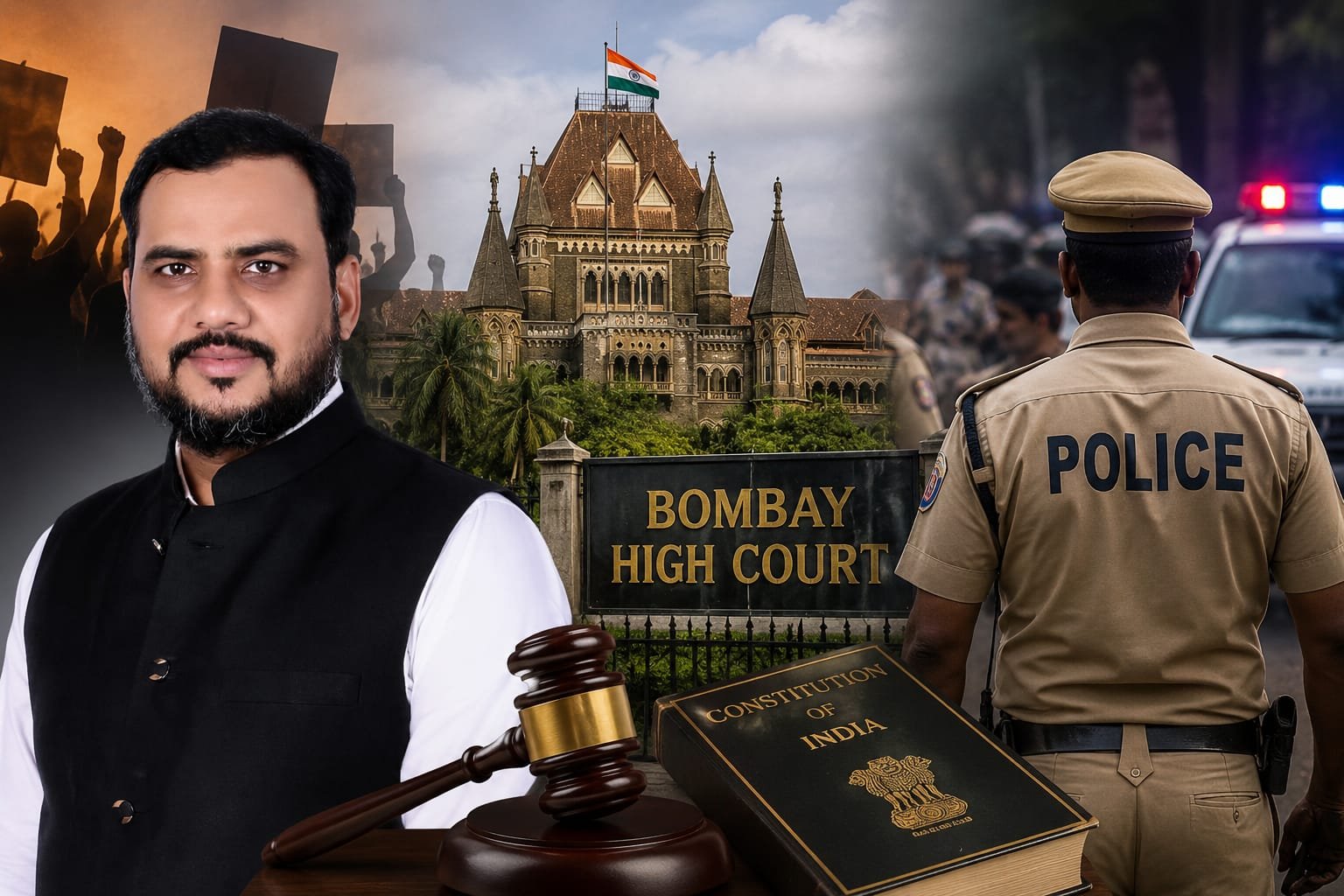



The 2024 communal violence case in Uttar Pradesh’s Bahraich district has once again grabbed headlines. A local court recently convicted ten accused in the murder of Ramgopal Mishra, sentencing the main accused to death and the other nine to life imprisonment. However, the court’s reference to the Manusmriti in its judgment has sparked fresh controversy, igniting nationwide debate over legal and social implications.
According to the court, the incident occurred in Maharajganj town during a Durga idol immersion procession. The 22-year-old victim, Ramgopal Mishra, allegedly climbed onto the roof of a Muslim family’s house, causing property damage and replacing a green flag with a saffron one. The procession reportedly passed in front of a mosque, accompanied by Islamophobic songs played at high volume.
The judge described the crime as “extremely heinous” and emphasized that strict punishment was necessary to maintain social harmony. In this context, the judgment cited a verse from the Manusmriti, highlighting its preventive role in deterring crime.
The reference to the ancient text has triggered intense reactions on social media. Many users criticized it as contrary to India’s secular constitution and modern judicial thinking. Some commentators called it an “entry of Manu’s ideology into the judiciary,” raising questions about constitutional supremacy and secular values.
Meanwhile, some legal experts and analysts argue that historical or philosophical texts have occasionally been cited by courts as references, and as long as the judgment adheres to the Indian Penal Code and the Constitution, such references should not be seen as problematic.
Appeals by the convicted are expected in the coming weeks. The Bahraich violence case has now transcended the realm of murder and punishment, becoming a focal point for broader discussions on the separation of religion and law, judicial language, and constitutional values in India.