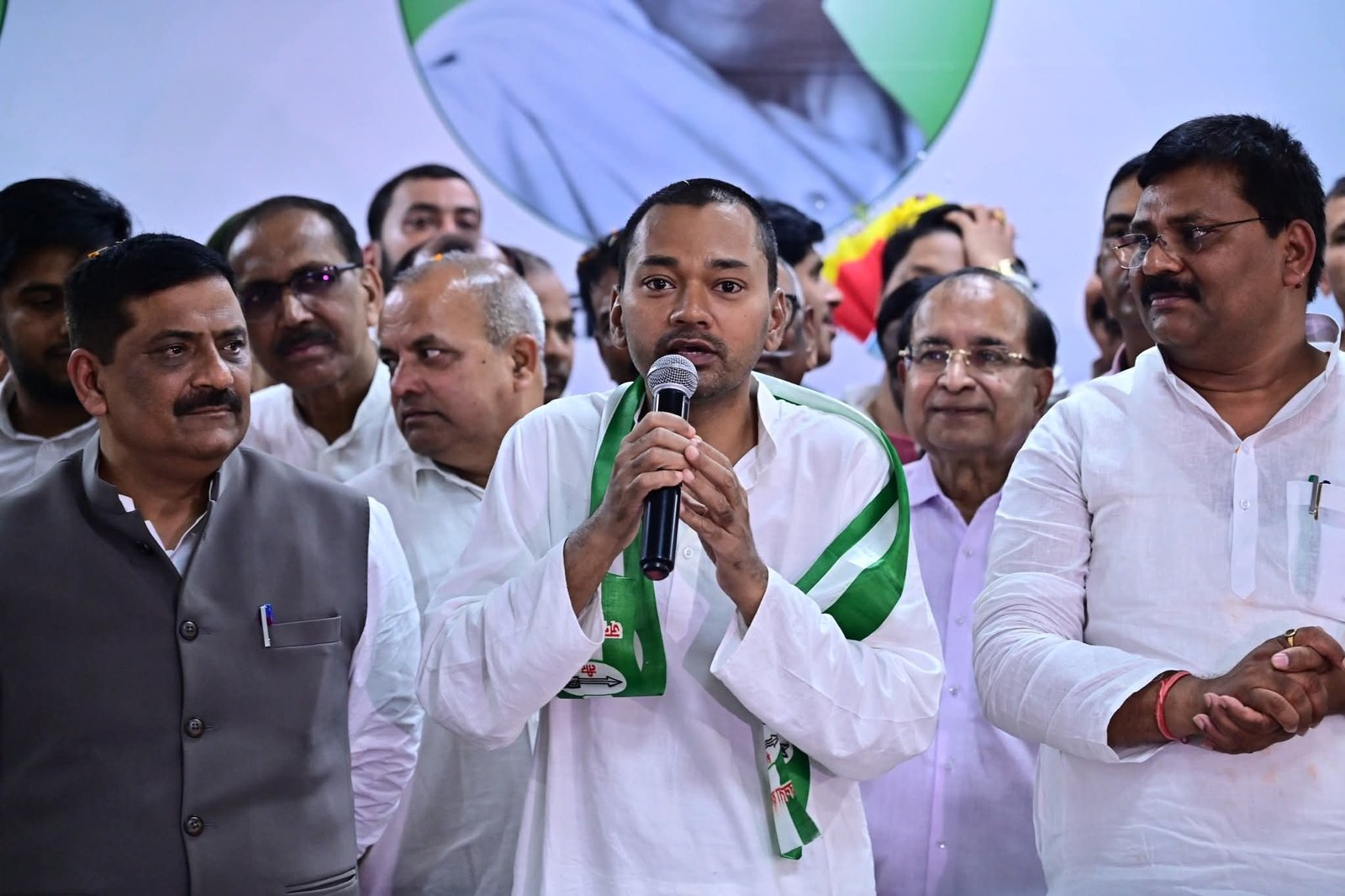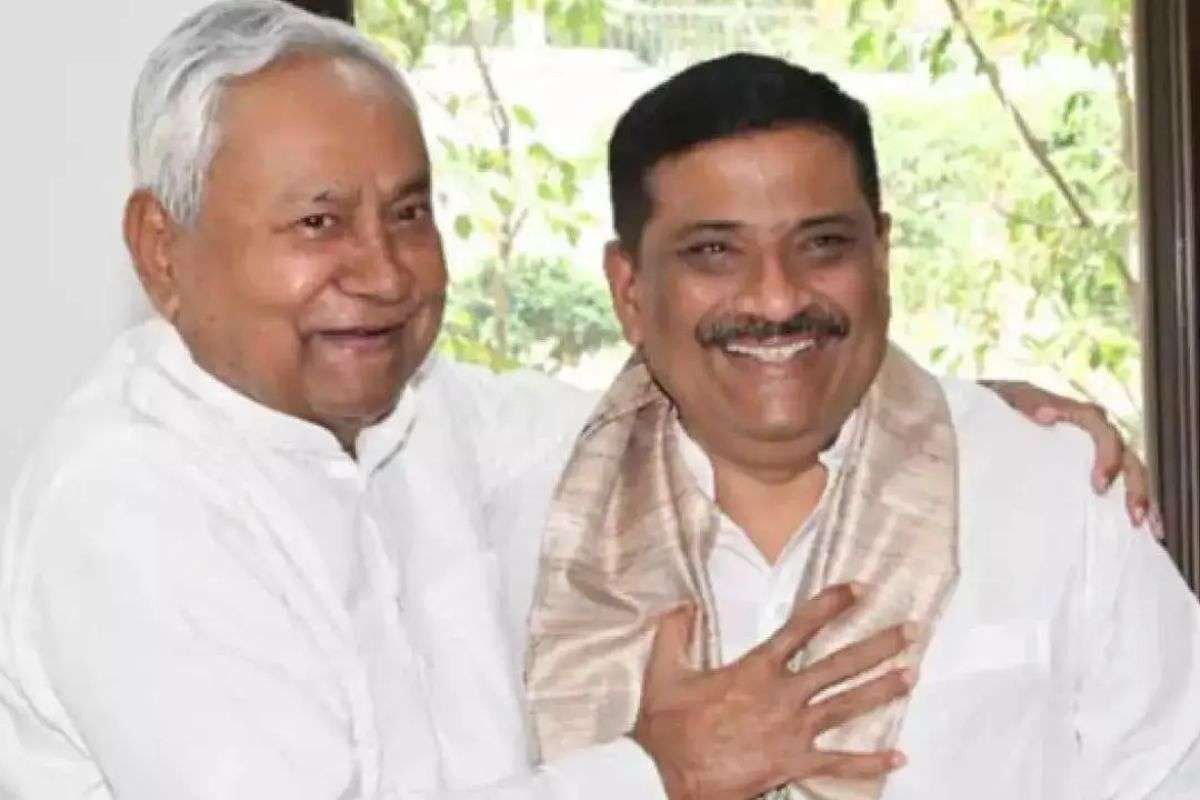

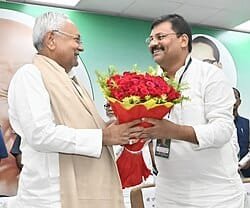
Senior Janata Dal (United) leader and Mahnar Assembly MLA Umesh Singh Kushwaha has been elected Bihar State President of JDU for the third time, unopposed. No other candidate filed nominations this time, leading to Kushwaha being declared the winner by default, and he was formally presented with the certificate of election.
State Election Officers Ashok Kumar ‘Munna’ and Parmahans Kumar officially handed over the responsibilities to Kushwaha, describing the uncontested election as a symbol of organizational strength. Kushwaha had submitted his nomination papers in four sets.
Senior Leaders Show Support
Several senior party leaders were present during the nomination process, including veterans like Lacey Singh and Shravan Kumar. Kushwaha stated “My second term is coming to an end, and I have filed my nomination for a third term. We will continue to uphold Chief Minister Nitish Kumar’s commitment to justice and development.”
Strengthening the Organization
Political analysts say that re-electing Kushwaha as state president signals confidence in the party’s leadership and organizational strength. He mentioned that his nomination was submitted under the guidance of Chief Minister Nitish Kumar and reflected trust in advancing the party’s policies.
Kushwaha urged party workers to remain united and respect organizational decisions.
Electoral Success and Strategy
Under Kushwaha’s leadership, JDU achieved significant success in recent assembly elections and strengthened its organizational framework. During his first two terms, the party focused on organizational expansion and electoral mobilization. His uncontested victory demonstrates the leadership’s full confidence in his organizational skills and discipline.
Political experts believe Kushwaha’s third unopposed election reflects faith in leadership and the robustness of the party’s structure. He encouraged workers to stay united and continue promoting party policies. This decision also comes at a time when Bihar’s political landscape is witnessing new equations and potential leadership changes.