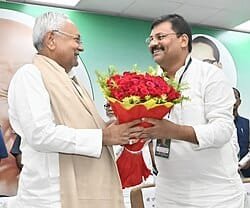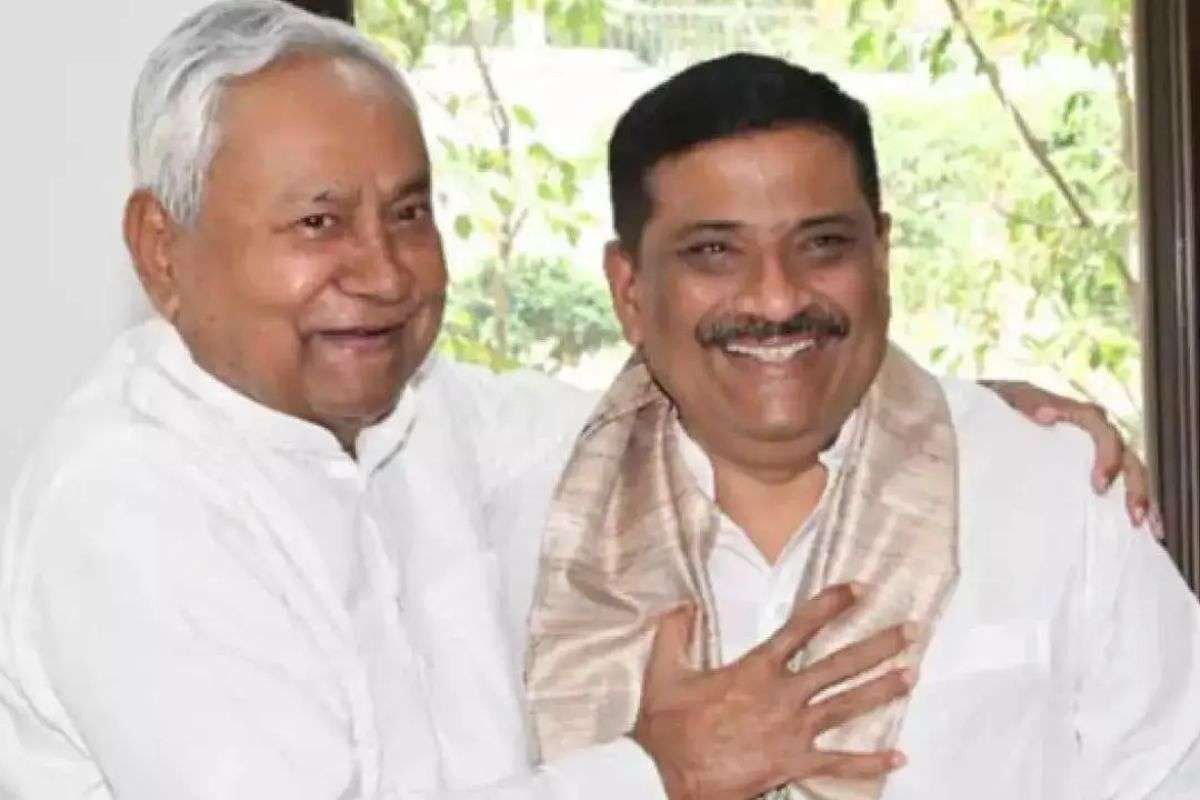


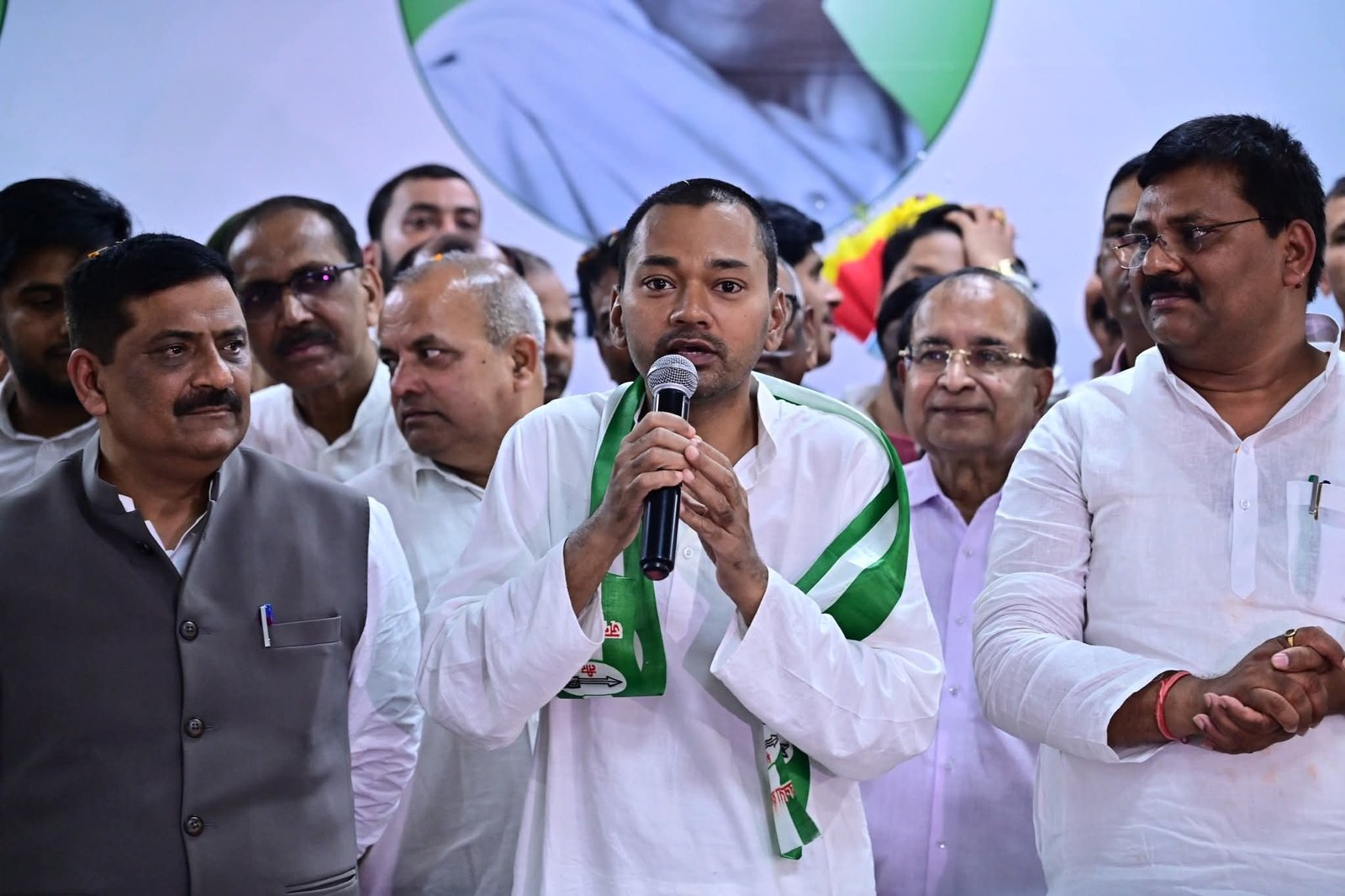
A new chapter has begun in Bihar’s political landscape. Nishant Kumar, son of Chief Minister Nitish Kumar, formally joined the Janata Dal (United) [JDU], officially marking the start of his political career. The membership ceremony was attended by the party’s National Executive President Sanjay Jha, Bihar State President Umesh Kushwaha, and several senior leaders. However, Chief Minister Nitish Kumar himself was not present at the event.
A Pledge to Live Up to Trust
While taking his membership, Nishant Kumar said, “I thank everyone. I will do my best to live up to the trust placed in me. I am proud of what my father has achieved for Bihar and the nation over the past 20 years.”
Meetings with Party Workers and Legislators
Over the past two days, Nishant has been meeting party legislators and senior leaders. Meetings at the Chief Minister’s residence and Sanjay Jha’s residence, including discussions with young senior MLAs, have prepared him for active political engagement within the JDU. Party sources indicate that he may be entrusted with a leadership role in the party in the near future.
Experts Weigh In
Former minister and JDU legislator Ratnesh Sada described Nishant’s entry into JDU as “Bihar’s future” and stated, “Chief Minister Nitish Kumar’s unfinished work will be continued by Nishant.”
Union Minister and NDA Rajya Sabha candidate Ramnath Thakur added “This decision comes in response to the demands of party workers and the people. Nishant Kumar will listen to the public and act accordingly.”
Nitish Kumar’s Legacy and Nishant’s Path
Analysts believe that Nishant Kumar’s political debut signals the continuation of Chief Minister Nitish Kumar’s political legacy. Sources suggest that Nishant will tour Bihar to connect directly with the public and party workers, following the path his father once took through grassroots outreach and public engagement.
Changing Dynamics in Bihar Politics
With Nitish Kumar moving to the Rajya Sabha and Nishant Kumar joining the JDU, Bihar’s political scenario may witness a fresh shift. The emergence of new leadership and the rise of the younger generation within the party are becoming increasingly evident.