

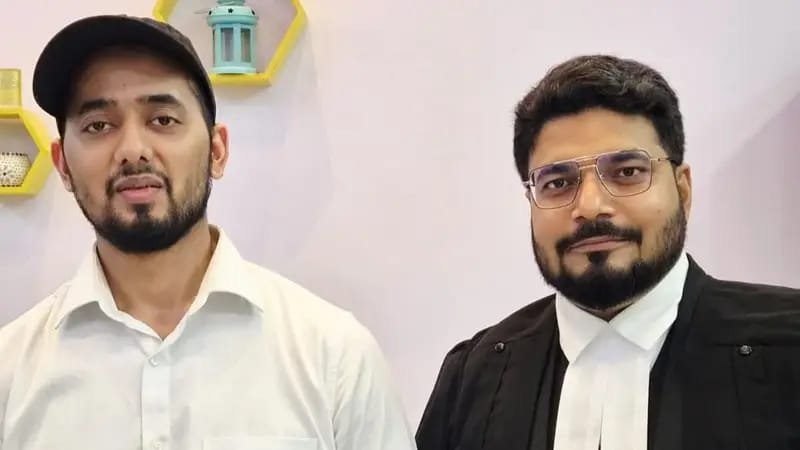
The case of Ayush Malik from Shamli, Uttar Pradesh, has now reached the Allahabad High Court. Hearing allegations that he was allegedly kept in custody against his wishes after converting to Islam and marrying a Muslim woman, the court on Wednesday ensured that Ayush was produced before it. Before the court, Ayush made his position clear and said that he had accepted Islam of his own free will and wanted to live with his wife, Chandni Qureshi.
After hearing Ayush, the High Court directed the police not to unnecessarily interfere with his personal liberty and married life. The developments in the case have once again brought into focus the question of where the limits of family or administrative intervention should lie when an adult chooses their religion and life partner.
Friend Filed Habeas Corpus Petition in High Court
The matter reached the High Court through a habeas corpus petition filed by Ayush’s friend, Sultan. The petition alleged that Ayush was being kept under the supervision of his father and that government officials had also played a role in his alleged detention.
According to the petitioner’s side, Ayush embraced Islam voluntarily and subsequently married Chandni Qureshi. It was stated that his father did not approve of the decision, following which the dispute escalated.
The petition challenged the alleged restriction on Ayush’s liberty and sought his production before the court.
Court Had Sought Ayush’s Response on September 9
On September 9, a bench of Justice Sandeep Jain directed that Ayush be produced before the court. At that stage, the court considered the allegations of illegal detention and the alleged involvement of state authorities to be of a serious nature.
The High Court directed the concerned Uttar Pradesh authorities and Ayush’s father, Devraj Singh Malik, to produce Ayush before the court on September 16.
The central question for the court was where and with whom Ayush actually wanted to live of his own free will.
Ayush Told Court His Conversion Was Voluntary
During the September 16 hearing, Ayush Malik was produced before the court. During the proceedings, he stated that he had accepted Islam of his own choice. He denied that he had been pressured or forced to convert and expressed his desire to live with his wife, Chandni Qureshi.
After Ayush made his wishes clear before the court, the police were directed not to interfere with his personal liberty.
Thus, Ayush’s own statement before the court became significant in the matter—both regarding the faith he wished to follow and the person with whom he wanted to live his married life.
FIR Was Registered Following Father’s Complaint
Another important aspect of the case is the FIR registered by the police. According to available judicial records and reports, a case was registered at a Shamli police station on June 6, 2026, on the complaint of Ayush’s father against Chandni Qureshi and some of her relatives.
The FIR invoked provisions of the Uttar Pradesh Prohibition of Unlawful Conversion of Religion Act, 2021, along with various provisions of the Bharatiya Nyaya Sanhita.
The petitioner’s side has described the FIR as false and motivated by ill intent. However, the final truth of the allegations made in the FIR had not been determined by the court at the time of this report.
‘Prima Facie’ Observation by the High Court Is Significant
During the previous hearing, the High Court had prima facie indicated, on the basis of the material available before it, that the record appeared to suggest that Ayush had accepted Islam voluntarily and married Chandni.
However, it is important to understand the term ‘prima facie’. It does not constitute a final judicial determination in a case. The court had made the observation on the basis of the material available at that stage and, considering the seriousness of the allegations, chose to have Ayush personally produced before it.
After Ayush appeared before the court on September 16 and expressed his wishes, the immediate question concerning his personal liberty moved in a different direction.
Beyond Conversion and Marriage, the Issue of Personal Liberty
Viewing the Ayush Malik case solely as a dispute over religious conversion or an interfaith marriage would limit the broader context of the proceedings. The case also involves questions concerning the personal liberty of an adult, the freedom to choose one’s faith, and the desire to live with one’s chosen spouse.
Questions relating to the personal choices and liberty of adult citizens have come before Indian courts on several occasions. However, the facts and legal circumstances differ from case to case.
In this matter too, the FIR registered under Uttar Pradesh’s conversion law and the allegations contained in it remain subjects of judicial scrutiny, while Ayush’s statement that his conversion and marriage were voluntary represents another significant aspect of the case.
Legal Proceedings Will Continue
Despite Ayush expressing his wishes during the September 16 hearing and the court directing the police not to interfere, all legal aspects of the case have not come to an end. The FIR and related proceedings may continue through their respective legal processes.
For now, the most significant development is that the person whose alleged detention against his wishes led to the habeas corpus petition before the High Court has personally stated his position before the court.
Ayush told the court that accepting Islam was his own decision and that he wanted to live with Chandni Qureshi. The High Court, while protecting his personal liberty, directed the police not to interfere with his decision.
The further judicial proceedings will determine the final legal position regarding the allegations in the FIR and other questions arising from the case.