

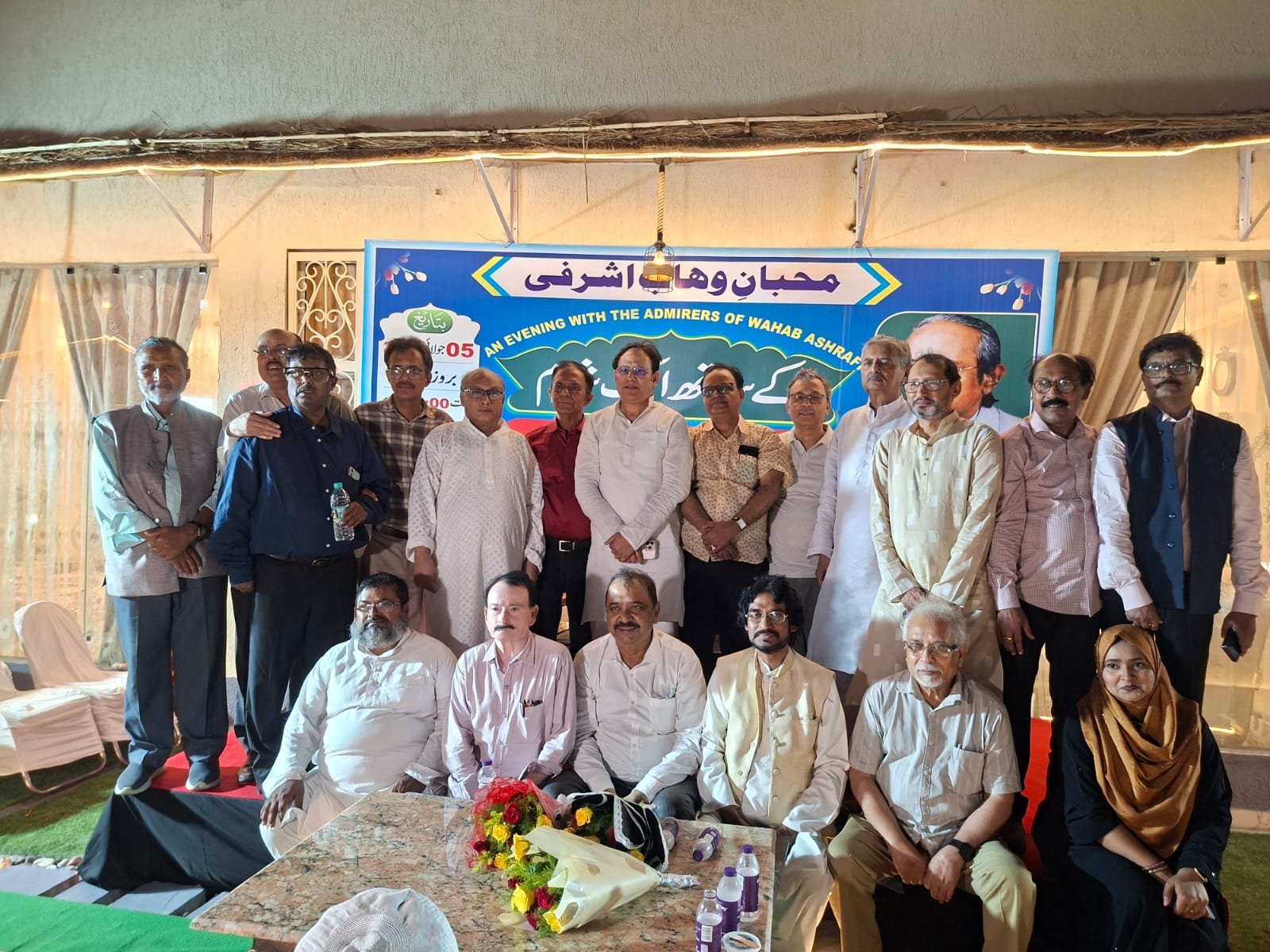
A dignified memorial meeting in memory of the eminent Urdu critic, researcher, and literary scholar, Prof. Dr. Abdul Wahab Ashrafi, recipient of the Sahitya Akademi Award, was held on Sunday (July 5) at “Ashrafi Thikana” in Haroon Nagar, Phulwari Sharif, Patna. The gathering was not merely a condolence meeting but evolved into a historic cultural event reflecting a collective commitment to Urdu literature, the Ganga-Jamuni ethos, and the tradition of knowledge.
The event witnessed the participation of literary figures, academicians, researchers, journalists, social activists, and a large number of students from various districts of Bihar as well as Jharkhand and other states. The venue was filled well before the scheduled time, with many attendees standing throughout the program due to the overwhelming turnout.
The meeting was chaired by Prof. Abdus Samad, who remarked that Prof. Dr. Abdul Wahab Ashrafi was not merely a literary critic but a beacon of Urdu criticism whose intellectual legacy would continue to guide future generations.
Chief Guest Prof. Ejaz Ali Arshad recalled Ashrafi’s scholarship, research vision, and literary contributions, describing him as an invaluable treasure of the Urdu world. Senior journalist S. M. Ashraf Farid shared memories of his long association with Ashrafi and said that while great personalities may leave this world, their character, ideas, and writings remain alive forever.
Prof. Tauqeer Alam highlighted the challenges facing the Urdu language and emphasized the need to connect the younger generation with it. Ubaidur Rahman stated that languages are not merely tools of communication but custodians of a society’s cultural identity and history.
Prof. Mohsin Raza Rizvi underlined Ashrafi’s outstanding research contributions, while Imtiaz Ahmad Karimi proposed instituting an award and scholarship in his name so that future generations could draw inspiration from his intellectual legacy.
Renowned Islamic scholar Mufti Sanaul Huda Qasmi observed that personalities like Prof. Dr. Abdul Wahab Ashrafi are born only once in centuries, guiding generations through their knowledge, character, and vision. Maulana Shakeel Ahmad Qasmi remembered his simplicity, humility, and lifelong dedication to learning.
Prof. Abu Bakar Rizvi, Registrar of Patliputra University, said that Ashrafi’s contributions to literature and literary criticism would remain a lasting source of inspiration. Syed Faisal Ali, Member of the Bihar Legislative Council (RJD), remarked that Ashrafi was not the legacy of a single family or city but the shared heritage of the entire society.
Among those present were Prof. Munawwar Jahan, Dr. Humayun Ashraf, Dr. Anwarul Huda, Prof. Humayun Ashraf (Sidho-Kanho Murmu University), Dr. Afsana Khatoon, Dr. Abdul Malik, Dr. Ashrafunnabi Qaiser, Marghoob Asar Fatmi, Niyaz Nazar Fatmi, Sabir Saharsavi, Muin Giridihvi, Asar Faridi, Nawab Atiquzzaman, Mohammad Anwar (Advocate), and many other distinguished personalities.
Shakeel Ashrafi, the eldest son of the late Prof. Ashrafi, shared emotional memories of his father’s life, simplicity, affection for students, and literary journey, leaving the audience deeply moved. The program concluded with a collective prayer, followed by a vote of thanks delivered by Afroz Ashrafi.
The proceedings were skillfully conducted by Dr. Afshan Bano, while Dr. Anwarul Huda, Faheem Ahmad, and members of the Ashrafi family played key roles in organizing and managing the event.
*Prof. Dr. Abdul Wahab Ashrafi: A Golden Chapter in Urdu Criticism
Born on June 2, 1936, in Bibipur village, Kako block, Jehanabad district, Bihar, Prof. Dr. Abdul Wahab Ashrafi was one of the foremost Urdu critics, researchers, and teachers of his time. He was honored with the Sahitya Akademi Award for his acclaimed work “Tarikh-e-Urdu Adab” (History of Urdu Literature). As the Head of the Department of Urdu at Ranchi University, he mentored thousands of students and provided a new intellectual direction to Urdu literary criticism.
The speakers unanimously observed that Prof. Dr. Abdul Wahab Ashrafi was not merely a literary figure but an ideology, an institution, and a living tradition of Urdu. Through his books, his students, and his ideas, his remarkable legacy will continue to inspire generations to come.
(Report: Syed Asif Imam Kakvi)