

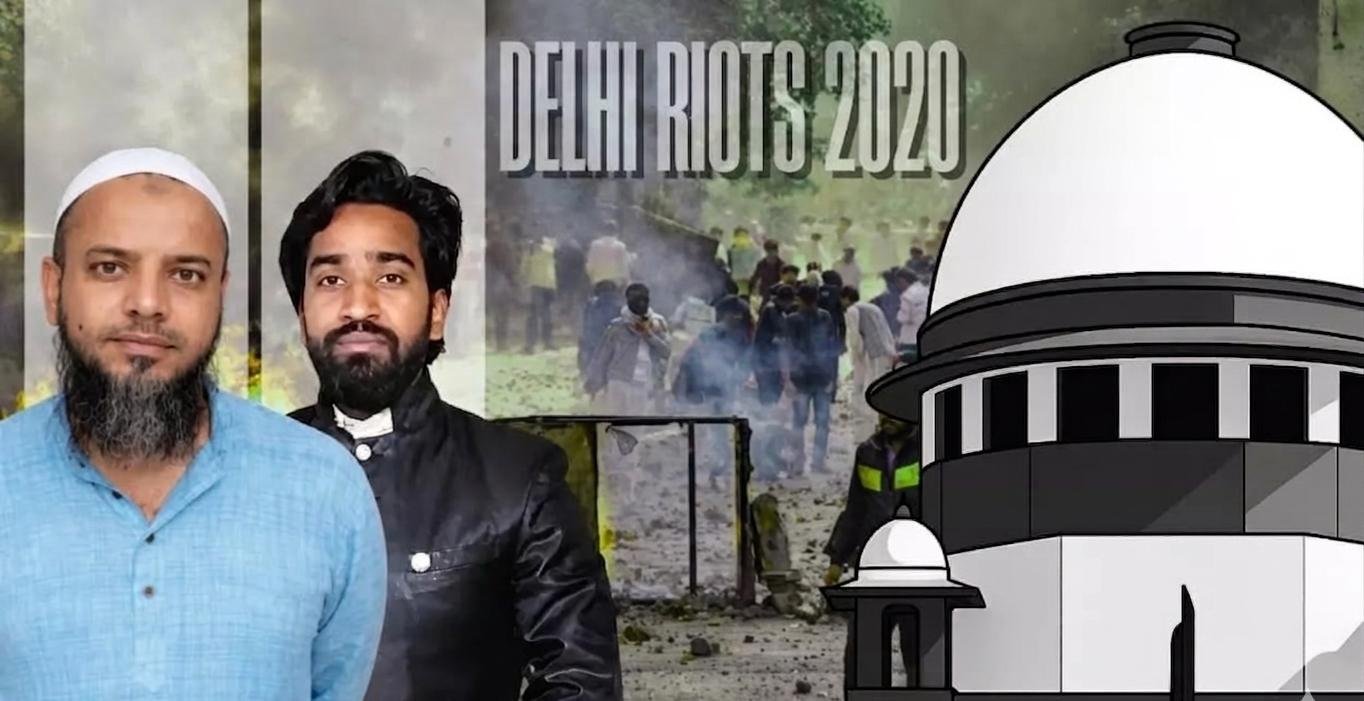
In the 2020 North-East Delhi riots “larger conspiracy” case, the Supreme Court on Friday granted six months of interim bail to Tasleem Ahmed and social activist Khalid Saifi. The decision is being seen as a major relief for those accused who have been in jail for a long time under the UAPA.
During the hearing, the Supreme Court bench observed that the continuous delay in the trial and years of incarceration cannot be ignored. The court remarked that if the trial is not being completed on time and the delay is not attributable to the accused, then the constitutional right to personal liberty must also be considered.
The case is related to the North-East Delhi riots of February 2020, in which more than 50 people lost their lives and hundreds were injured. The Delhi Police has accused several student leaders, social activists, and individuals associated with the anti-CAA movement of orchestrating a “larger conspiracy.” Tasleem Ahmed and Khalid Saifi are among the accused and have been in jail for nearly five years.
During the hearing, Additional Solicitor General S. V. Raju, appearing for the central government, argued that delay in the trial alone cannot be a ground for bail. Citing the seriousness of such cases, he said that courts must adopt a cautious approach in matters related to national security and communal violence.
However, the Supreme Court stated that the judicial process cannot become a means of indefinite detention. The court also clarified that each case must be examined based on its specific facts and circumstances.
During the hearing, the Supreme Court referred an important legal question regarding bail under the UAPA to a larger bench. The court noted that different viewpoints have emerged in recent judgments and that a clear legal framework is required on this issue.
Khalid Saifi has long been active in issues related to civil rights and communal violence. He has been associated with the organization “United Against Hate.” Following his arrest, several human rights organizations and activists raised concerns over the use of the UAPA.
Legal experts believe that this Supreme Court decision could have an impact on other UAPA cases in the future, especially those where accused persons have been in jail for years awaiting trial.
Different reactions have emerged in political and social circles regarding the verdict. Civil rights groups have described it as an important step towards constitutional liberty and judicial balance, while the government side continues to emphasize the seriousness of the case.