

Southern Lebanon has once again become the center of an intense military confrontation, where tensions between Israel and Hezbollah are rapidly escalating. Recent developments have not only undermined regional peace efforts but have also created extremely dire conditions for civilians.
Helicopter Targeted in Taybeh: A New Front in the Conflict
Hezbollah has claimed that it targeted an Israeli military helicopter in the Taybeh area of southern Lebanon. The attack reportedly occurred while Israeli forces were attempting to evacuate wounded soldiers during an ongoing military operation.
According to Hezbollah, the drone strikes did not only hit the helicopter but also targeted rescue personnel and a newly established artillery position. This suggests a higher level of coordination and increasing technological sophistication in the group’s military operations.
Israeli Airstrikes: Rising Death Toll
Lebanon’s Ministry of Health reported that at least 14 people were killed and 37 others injured in Israeli airstrikes carried out on Sunday.
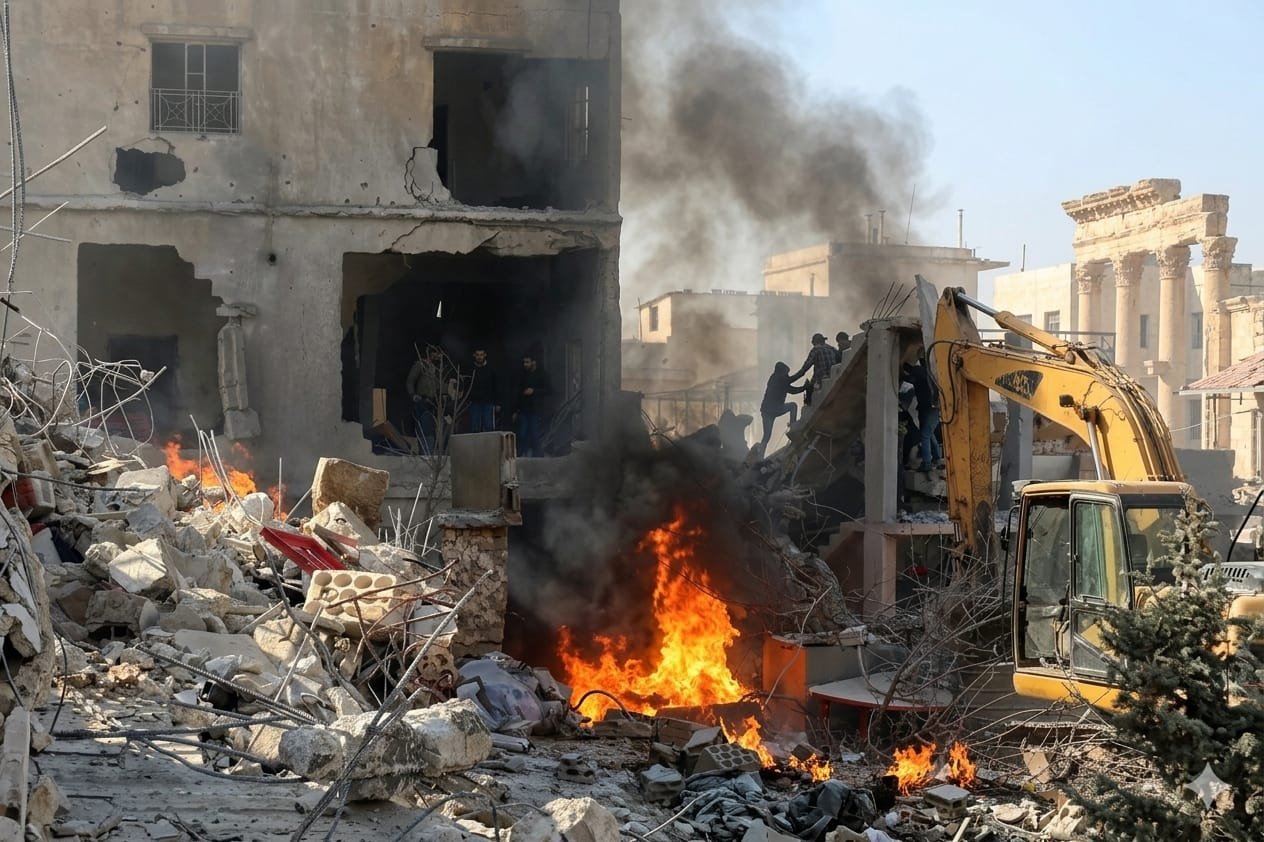
The scope of the strikes extended beyond border regions into Nabatieh province and other interior areas. Several villages witnessed plumes of smoke and widespread destruction, intensifying fear and panic among civilians.
Forced Evacuations: Thousands Displaced
Israel has ordered residents of seven towns in southern Lebanon to evacuate immediately. These towns lie north of the Litani River and outside the so-called “buffer zone,” yet they remain under active military operations.
Israeli forces instructed civilians to move toward northern and western areas. Following the order, thousands have fled toward cities like Sidon and Tyre. This new wave of displacement is worsening an already severe humanitarian crisis, with millions already affected.
Ceasefire Disputes: Accusations and Counterclaims
Israeli Prime Minister Benjamin Netanyahu has accused Hezbollah of repeatedly violating the ceasefire and undermining the agreement.
In response, Hezbollah has rejected these allegations, stating that its actions are “legitimate resistance” against ongoing Israeli violations. The group claims that Israel has breached the ceasefire more than 500 times.
Hezbollah also emphasized that it never formally accepted the U.S.-brokered ceasefire, and therefore does not consider itself bound by it.
Growing Human Toll: Over 2,500 Dead
According to Lebanon’s Health Ministry, more than 2,500 people have been killed and over 7,700 injured since this phase of conflict began on March 2.
A significant number of the casualties are civilians. Continuous bombardment and instability have severely disrupted healthcare systems, food supply chains, and humanitarian relief efforts.
Infrastructure Destruction: Solar Panels, Roads, and Farms Hit
In the town of Debel in southern Lebanon, reports indicate that Israeli forces used bulldozers to destroy solar panels—critical for local electricity supply and water systems.
Their destruction has deepened the electricity crisis and reduced access to clean drinking water. Additionally, homes, roads, and olive groves have been damaged, dealing a heavy blow to the local economy, particularly agriculture.
Serious Threat to Regional Stability
The U.S.-mediated ceasefire that came into effect on April 16 and was extended until mid-May now appears increasingly fragile. Both sides continue to accuse each other of violations while attacks persist on the ground.
Experts warn that without urgent and effective diplomatic intervention, the conflict could escalate into a broader regional war involving multiple actors.
The situation in southern Lebanon remains extremely alarming. While military escalation continues, civilians are left struggling with displacement, scarcity of resources, and constant fear. What was once a border conflict is now evolving into a deep humanitarian and geopolitical crisis, with potential consequences for the entire Middle East.
Lebanon #Israel #Hezbollah #MiddleEast #War #Airstrikes #DroneAttack #Ceasefire #HumanitarianCrisis #BreakingNews #WestAsia #Conflict #Displacement #Netanyahu #Geopolitics