

Amir-e-Shariat Raises Serious Concerns Over Arrest Procedure of Maulana Abdullah Salim Qasmi, Calls for Constitutional Accountability
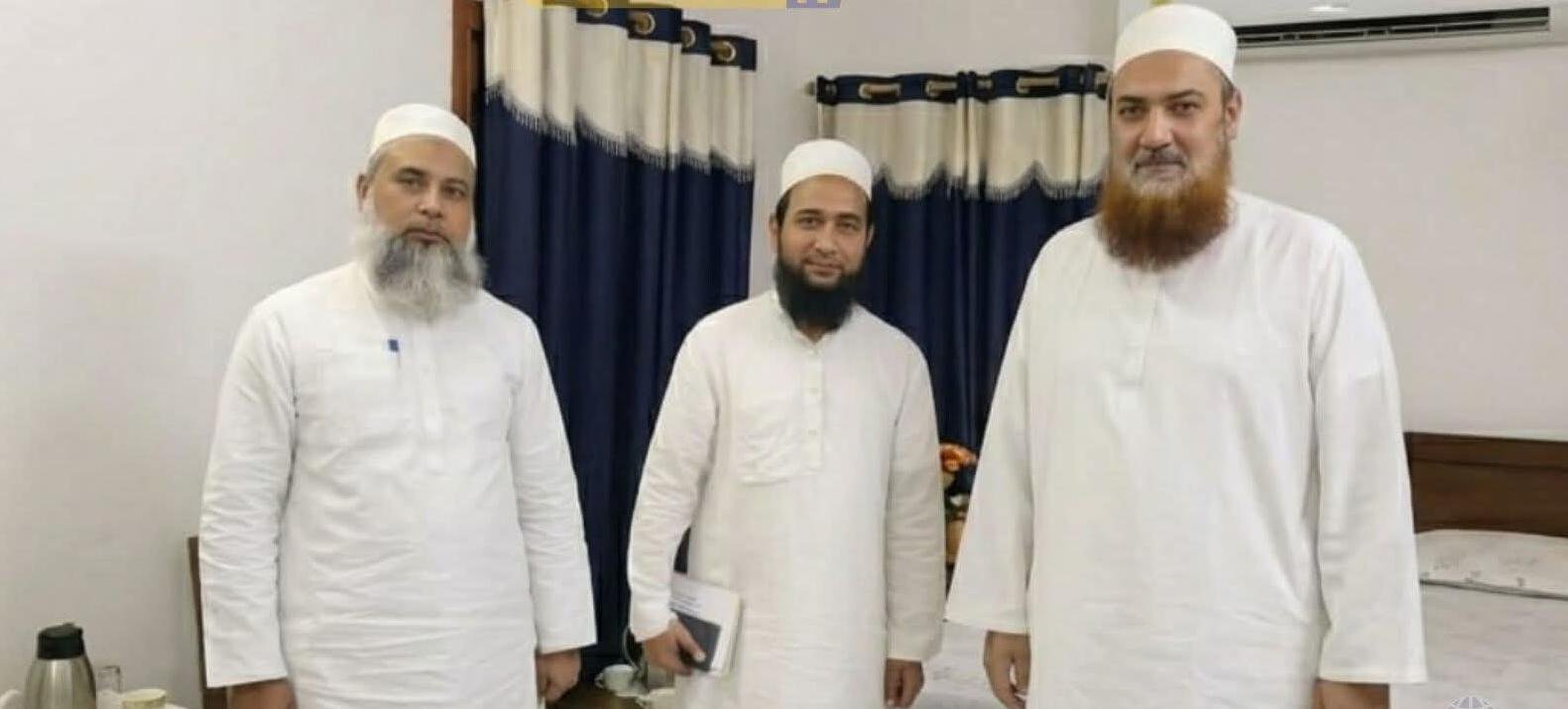
The Amir-e-Shariat of Bihar, Odisha, Jharkhand, and West Bengal, Maulana Ahmad Wali Faisal Rahmani, has expressed serious concern over the manner in which Maulana Abdullah Salim Qasmi was arrested, describing it as a matter of significant importance in the context of constitutional values and civil liberties.
In his statement, he emphasized that the true strength of Indian democracy lies in its Constitution, which ensures a balance between the powers of the state and the rights of citizens. Therefore, any state action must strictly adhere to constitutional boundaries and established legal procedures.
The Amir-e-Shariat stated that the manner of Qasmi’s arrest has raised several fundamental questions, not only about the justice system but also about the use of state authority. He questioned whether the action was carried out entirely within the constitutional framework.
Referring to Article 19(1)(a) of the Constitution, he noted that every citizen has the right to freedom of expression, and restrictions on this right can only be imposed under Article 19(2). Citing various Supreme Court judgments, he pointed out that merely expressing an unpopular opinion does not constitute a crime unless it directly disrupts public order.
He further mentioned Articles 21 and 22, highlighting that personal liberty and legal safeguards during arrest are fundamental rights of every citizen. Referring to the landmark Supreme Court judgment in D.K. Basu vs State of West Bengal (1997), he stressed that clear procedures for arrest have been laid down and must be strictly followed.
Citing media reports, he expressed concern over Qasmi’s reportedly weak physical condition during court appearance and the emergence of a video apology. While he clarified that these do not, in themselves, conclusively prove coercion, they do raise serious questions that warrant attention.
The Amir-e-Shariat asked whether all legal procedures were followed during the arrest, whether the individual was informed of the grounds of arrest, whether the family was notified, and whether proper medical examination was conducted. He also questioned the reasons behind Qasmi appearing weak during the hearing and under what circumstances the apology was recorded.
He further raised the issue of inter-state police action, asking whether due legal procedures were followed when one state’s police carried out an operation in another state, and whether local police authorities were duly involved.
He clarified that these questions are not accusations but are being raised in the spirit of constitutional accountability. He stated that a strong democracy is one in which state power remains transparent, accountable, and subject to the rule of law.
Concluding his statement, the Amir-e-Shariat warned that any disregard for constitutional principles could lead to an atmosphere of mistrust and insecurity in society. He urged the concerned authorities to maintain transparency in the matter and make all relevant information public, so that public confidence in the rule of law remains intact.