

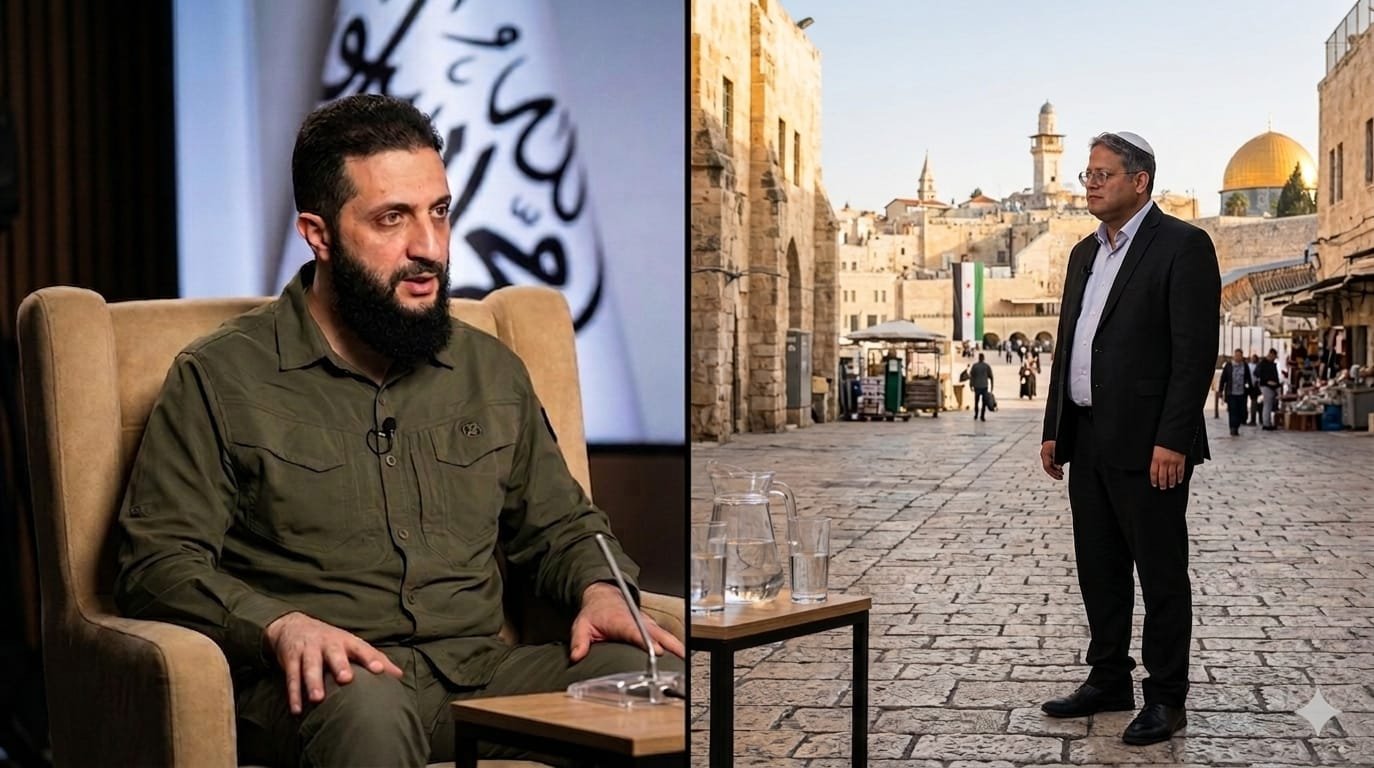
Israeli National Security Minister Itamar Ben-Gvir has publicly called for the “removal” of Syrian President Ahmad al-Sharaa. This statement echoes a controversial remark he made last July, when he stated that “the Syrian leader should be eliminated and the serpent’s head must be cut off.”
According to experts, this statement is not merely a political comment but a direct call for assassination. It comes amid regional tensions and diplomatic efforts, at a time when Syria is attempting to stabilize its political system.
Itamar Ben-Gvir: Who Is He?
Itamar Ben-Gvir is the leader of the far-right Otzma Yehudit party and currently serves as Israel’s National Security Minister. His statements frequently spark controversy. Experts describe his stance as hardline and radical, noting that he has previously made aggressive remarks against neighboring countries and political opponents.
Ahmad al-Sharaa: Syria’s Current Leader
Ahmad al-Sharaa assumed the presidency of Syria in January 2025, following the fall of Bashar al-Assad. Under his leadership, Syria is working on political reforms, restoring regional control, and strengthening international diplomatic relations.
Al-Sharaa is now an established and recognized president. His government is gradually steering the country toward stability and actively seeking improved relations with Western nations.
Political and Security Implications of the Statement
Experts warn that Ben-Gvir’s remarks could escalate regional tensions. The statement directly calls for the physical elimination of the Syrian president. Security agencies have already thwarted several assassination plots, and Turkey’s intelligence services have reportedly requested increased protection for al-Sharaa from the British MI6.
This situation indicates that the statement is more than political rhetoric; it signals potential instability.
International Perspective
The Syrian leadership has repeatedly emphasized its commitment to diplomacy and peaceful solutions. Al-Sharaa’s government has accelerated efforts to resolve past chemical weapons issues and improve ties with Western countries.
Ben-Gvir’s statement challenges these efforts and reduces the prospects for stability in the Middle East. Experts assert that it is not merely a provocative comment but could have serious repercussions for international security and regional stability. Amid rising tensions between Syria and Israel, this statement may pose a new challenge in Middle Eastern politics.