

The ongoing war in the Middle East is increasingly taking the shape of a wider regional conflict. Iran has launched missile and drone attacks not only on Israel but also on several Gulf countries—Bahrain, Kuwait, United Arab Emirates, Saudi Arabia and Qatar. Following the strikes, air defense systems across the region were activated. Fires and explosions were reported at multiple locations, and the attacks have begun affecting oil and energy supplies.
According to Israeli officials, ballistic missiles fired by Iran targeted several areas in central Israel. At least six people were injured in the attacks, one of them seriously. Israel’s air defense systems intercepted several missiles mid-air, but falling debris caused damage at different locations. Witnesses recorded scenes of missile barrages and interceptions in the skies south of Tel Aviv.
Refinery and Water Plant Hit in Bahrain
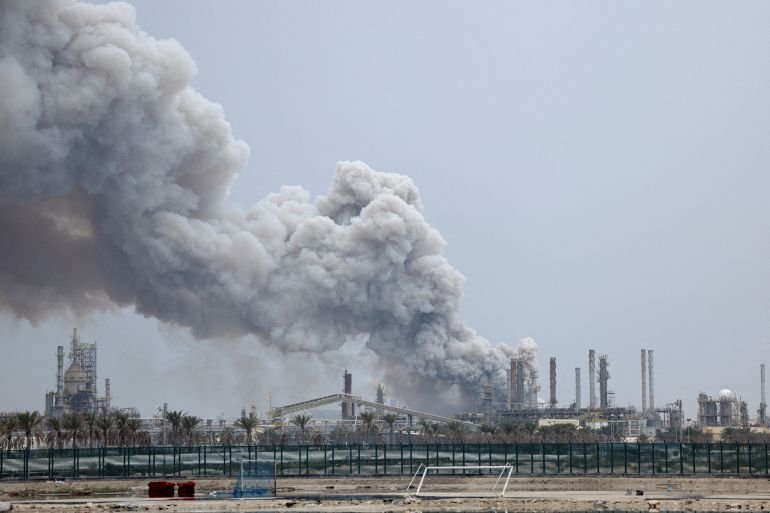
The most severe impact in the Gulf region was reported in Bahrain. Following an Iranian drone strike, a major oil refinery located on Sitra Island caught fire. The state energy company Bapco subsequently declared “force majeure” on its operations, raising concerns about disruptions in oil supply.
Bahrain’s Interior Ministry said a drone strike also damaged a desalination plant that converts seawater into drinking water. In another incident, debris from an intercepted missile fell on a university building in the Muharraq area, damaging the structure and injuring three people. Dozens of civilians were reportedly wounded in another drone attack in the Sitra area.
Drone Attacks and Fires in Kuwait
The Kuwaiti military said its air defense systems intercepted several missiles and drones. However, one drone strike targeted fuel tanks at Kuwait International Airport, causing a fire. Authorities said the blaze was quickly brought under control, preventing major damage.
In a separate incident, a fire was reported at the high-rise building of the Public Institution for Social Security in Kuwait. Authorities also confirmed the deaths of two police officers during security operations following the attacks.
Missiles and Drones Intercepted in the UAE
The Defense Ministry of the United Arab Emirates said that 16 ballistic missiles and more than 120 drones were detected during the attacks, most of which were intercepted and destroyed. In Dubai, debris from an intercepted projectile fell on a vehicle, killing the driver.
UAE President Sheikh Mohamed bin Zayed Al Nahyan, while visiting the injured in hospital, said the country was “going through a time of war but is prepared to confront every threat.”
Alert in Saudi Arabia and Qatar
According to the Defense Ministry of Saudi Arabia, a ballistic missile fired toward the Prince Sultan Air Base southeast of Riyadh landed in an uninhabited area. Air defense systems also intercepted four drones headed toward the Shaybah Oil Field.
Reports said a projectile strike in the Al‑Kharj region of Saudi Arabia killed two people and injured several others. Meanwhile, the military of Qatar confirmed that it intercepted a missile attack.
Impact on Oil Markets and Air Traffic
As the attacks continued, several Gulf countries temporarily closed their airspace or imposed restrictions on flights as a precaution. Kuwait’s national oil company announced a temporary cut in production. Meanwhile, international crude oil prices surged past $100 per barrel.
Experts warn that if water and energy facilities continue to be targeted, the Gulf region could face a serious crisis, as most drinking water in these countries comes from desalination plants.
Iran said the attacks were a response to military actions by the United States and Israel against it. Iranian Foreign Minister Abbas Araghchi said the strikes followed a US attack on a water facility located on Qeshm Island, which disrupted water supplies to several villages.
Iranian President Masoud Pezeshkian warned that if neighboring countries allowed their territory to be used for attacks against Iran, Tehran would be “forced to respond.”
The conflict in the Middle East has now entered its second week and continues to expand. Analysts warn that without a swift diplomatic solution, the war could engulf the entire region.