
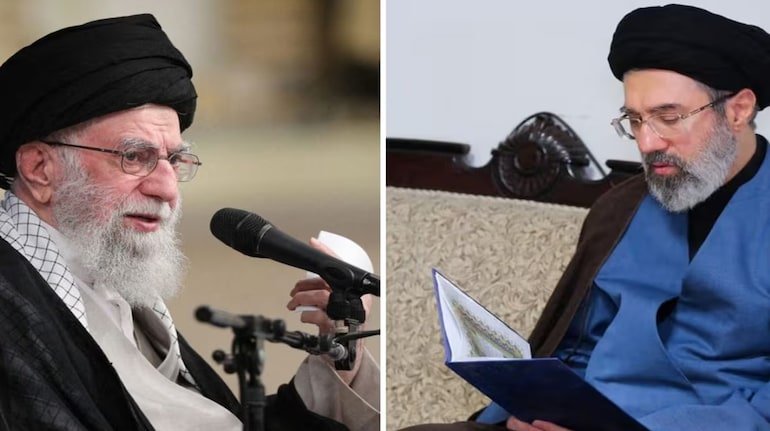
Amid an ongoing war and deep political turmoil, a major change in leadership has emerged in Iran. According to Iranian state media, the country’s highest clerical body, the Assembly of Experts, has appointed Mojtaba Khamenei as Iran’s new Supreme Leader following the death of Ayatollah Ali Khamenei.
In a statement, the institution said that the 88-member council reached the decision after a decisive vote. It also called on the Iranian people to maintain national unity and pledge loyalty to the new leader. The statement particularly urged intellectuals associated with universities and religious institutions to stand with the country’s leadership.
Ayatollah Ali Khamenei Killed in Attack
According to reports, Iran’s Supreme Leader Ayatollah Ali Khamenei was killed in an attack on his residential compound in Tehran. The strike is said to have been part of a broader military campaign launched by the United States and Israel against Iran.
Several members of Khamenei’s family were also reportedly killed in the attack, including his wife and one of his daughters. However, Mojtaba Khamenei was not present at the residence at the time and survived the attack.
Long-Standing Influence in Power Circles
Fifty-six-year-old Mojtaba Khamenei has never formally participated in electoral politics, but he has long been regarded as a highly influential figure within Iran’s power structure. In particular, he is believed to wield significant influence within Iran’s powerful military institution, the Islamic Revolutionary Guard Corps.
Analysts say Mojtaba Khamenei’s elevation to the position of Supreme Leader could strengthen the hold of hardline religious factions in Iranian politics. This development may also signal that the prospects of a major agreement or negotiations with Western countries in the near future are likely to diminish.
History of Controversy and Opposition
Mojtaba Khamenei’s name has also been associated with several controversies in the past. Opposition leaders and reformist factions have linked him to the suppression of protests during the 2009 Iranian Green Movement.
At the time, large-scale demonstrations erupted across Iran following disputed election results. Security forces and paramilitary groups eventually crushed the protests with force.
Debate Over Religious Credentials
From a religious perspective, Mojtaba Khamenei currently holds the clerical rank of “Hojjatoleslam,” which is considered a mid-level position among Shiite clerics. Traditionally, Iran’s Supreme Leader holds the higher religious title of “Ayatollah.”
However, a similar constitutional adjustment had been made in 1989 when his father assumed the position of Supreme Leader.
New Leadership in a Time of Uncertainty
Iran is currently grappling with external military pressure, internal dissent, and a deep economic crisis. In such a situation, Mojtaba Khamenei’s appointment as Supreme Leader could significantly influence not only Iran’s domestic politics but also the broader balance of power across West Asia.