
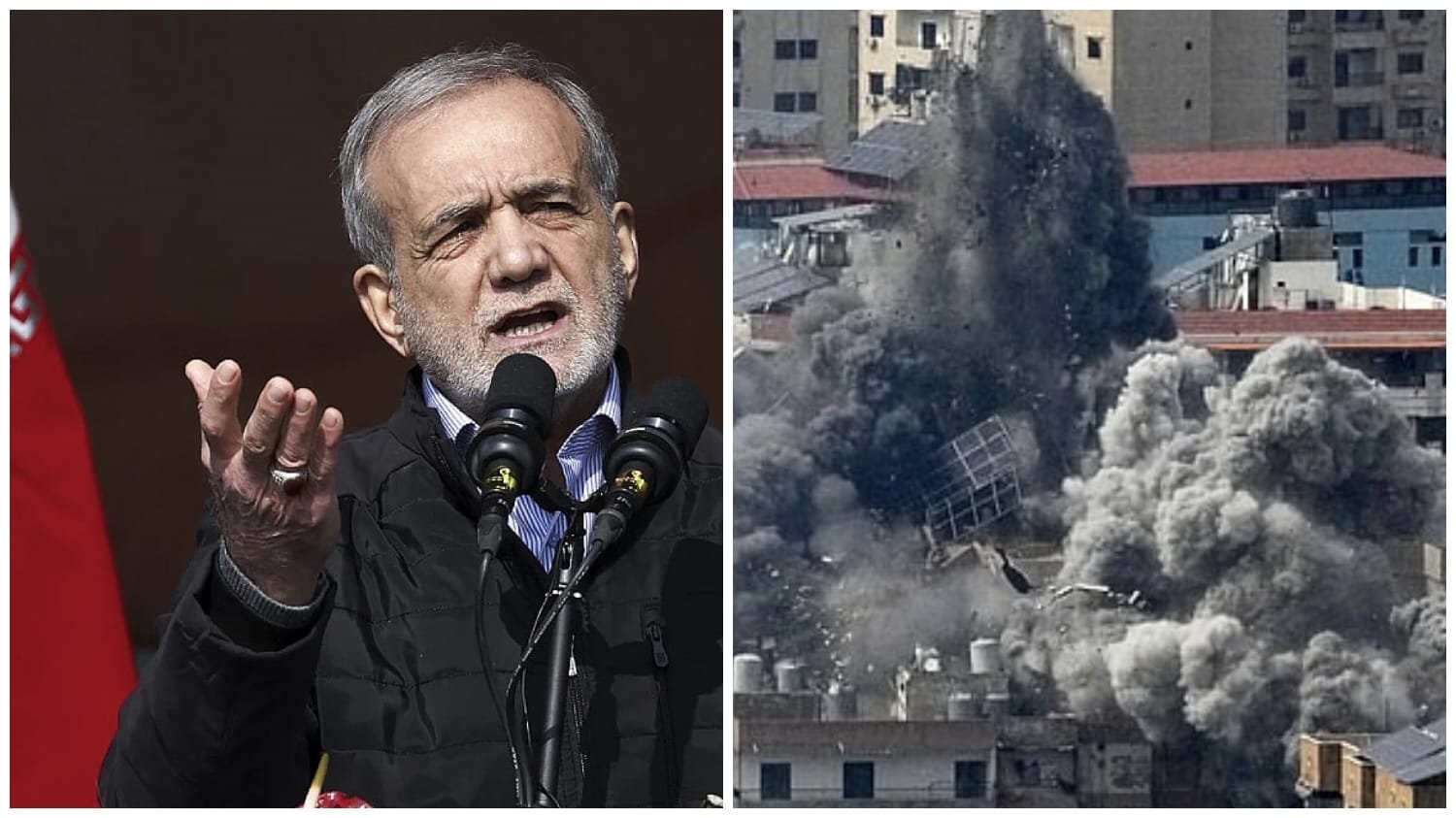
Tensions in the Gulf region are escalating as Iranian President Masoud Pezeshkian issued an apology for attacks on neighboring countries. However, almost immediately after his statement aired on state television, explosions were reported in Doha, highlighting the continuation of US and Israeli military strikes across the region.
Trump’s Claim and Tehran’s Firm Response
Former US President Donald Trump asserted that he should have a say in the selection of Iran’s next Supreme Leader. Iranian Parliament Speaker Mohammad Bagher Ghalibaf strongly rejected the claim, stating, “Iran’s future will be decided solely by the Iranian people, not by any foreign power.”
Ghalibaf further wrote on social media: “The destiny of our nation will not be dictated by any external force or the so-called ‘Epstein network.’”
Iranian Deputy Foreign Minister Speaks in New Delhi
At the Raisina Dialogue, Iranian Deputy Foreign Minister Saeed Khatibzadeh ridiculed Trump’s claim, saying, “He cannot even choose the mayor of New York in his own country, so why attempt to change Iran’s leadership?” He labeled the statement as a “colonialist mindset.”
Trump Advocates ‘Venezuela Model’ for Iran
Trump suggested that Iran should follow a model similar to Venezuela, where the political structure remains intact but leadership changes, provided the new leader aligns with US and Israeli interests.
Iranian expert Sina Azodi countered this, stating, “There is no leader in Iran who would assume power under foreign pressure. All potential candidates among the next generation of Iranian leaders remain loyal to the Islamic Republic system.”
Supreme Leader Selection
Iran’s Supreme Leader will be chosen by the 88-member Assembly of Experts. Trump has criticized possible successor Mojtaba Khamenei, labeling him “weak.”
No Ceasefire or Negotiation
Iranian Foreign Minister Abbas Araghchi clarified that there are no plans for a ceasefire, nor has any initiative been taken to negotiate with the US. “No ceasefire, no talks—and the United States has not received a call,” he said.
War Propaganda and National Resolve
US and Israeli officials claim that Iran is suffering heavy losses. Tehran, however, asserts that any attacks will force the US and its allies to pay a steep price.
Experts note that despite the superior military power of the US and Israel, Iran’s vast geography, strong national identity, and cultural cohesion provide it with resilience in a prolonged conflict.
Sina Azodi remarked, “No nation wants its future dictated by external forces. This patriotic resolve is evident across Iran today.”