

The ongoing heavy air and missile attacks by the United States and Israel on Iran have not only shaken the region’s economic structure but also worsened an emerging humanitarian crisis.
US Faces Heavy Expenditure
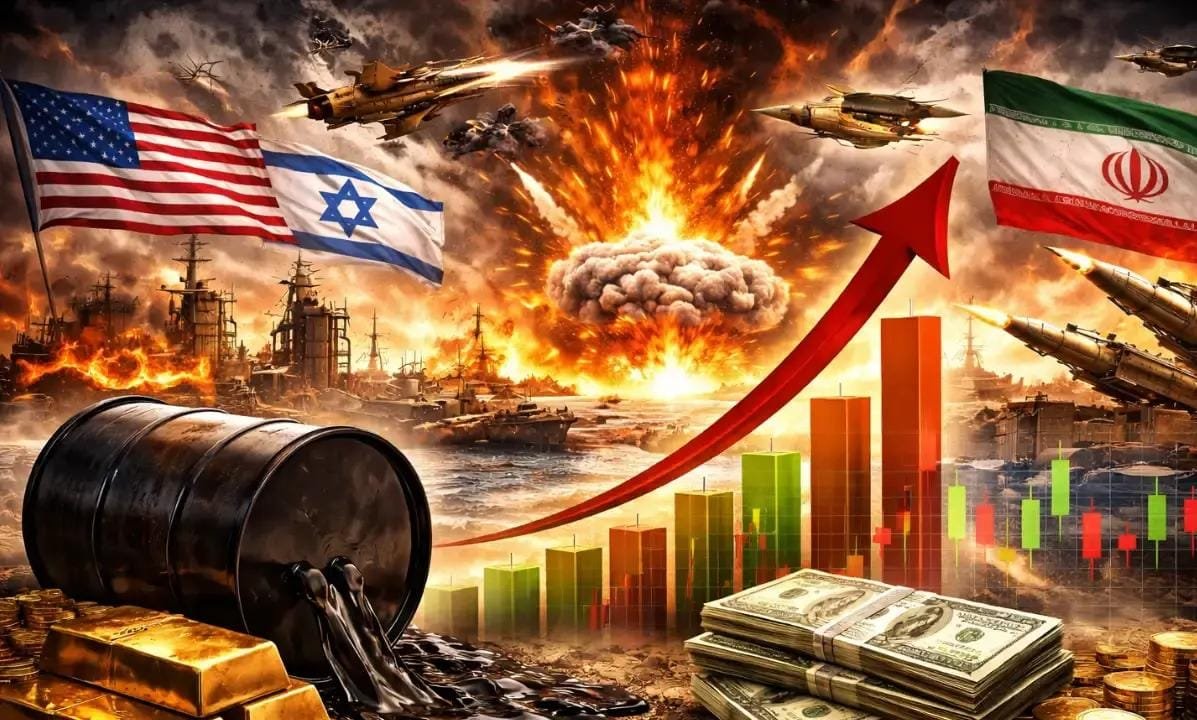
According to the Washington-based think tank CSIS, the United States spent nearly $3.7 billion in the first 100 hours of the conflict, averaging around $891 million per day. Most of this expenditure went toward weapons, missiles, and aerial strikes. Experts warn that the Pentagon may require additional funding, potentially sparking domestic political debates.
Israel’s Economy Suffers
Data from Israel’s Ministry of Finance indicate that the conflict is costing the Israeli economy roughly $2.9–3 billion per week. Commercial activities, schools, and offices have largely shut down, and the heightened military readiness has further slowed economic activity.
Global Energy Markets Hit
The conflict has triggered volatility in global oil and energy markets. Brent Crude and WTI prices have surged, while instability in Gulf shipping lanes—particularly the Strait of Hormuz—has disrupted international supply. Analysts caution that this could exacerbate global inflation and increase the risk of economic slowdown.
Humanitarian Toll
Iran has reported over 1,332 fatalities, including many children. Civilians in Lebanon and other parts of the Middle East have also been affected, with cities and critical infrastructure suffering severe damage.
Wider Global Impact
The crisis is not confined to the Middle East. Economies in Europe and Asia are showing signs of instability. Prolonged conflict threatens semiconductor and energy supply chains, while Gulf countries are reconsidering foreign investment strategies.
Political Pressure Mounts
Rising costs and mounting civilian casualties are putting pressure on global leaders. International bodies such as the United Nations and the European Union have intensified diplomatic efforts to restore peace.