

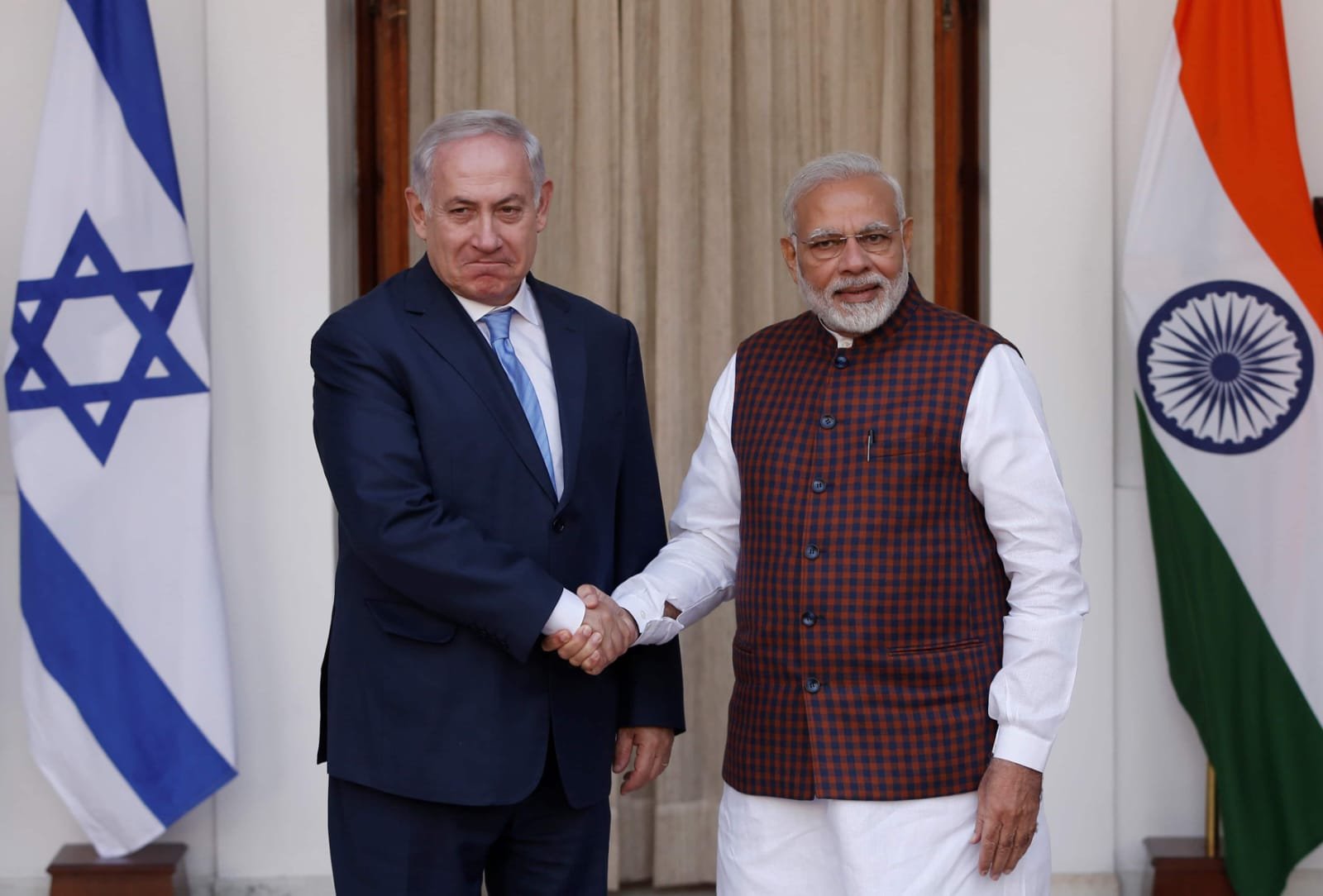
Benjamin Netanyahu has described Indian Prime Minister Narendra Modi’s upcoming visit to Israel as part of a broader strategic initiative, saying it represents a significant step toward building a new regional alliance against what he termed “radical Sunni and Shiite axes.”
Speaking during a cabinet meeting, Netanyahu said Israel is working to form a group of countries that share a common vision against regional instability and extremist forces. He referred to the proposed framework as a “hexagon alliance,” suggesting that, in addition to India, Greece, Cyprus, and several Arab and African nations could potentially be part of the grouping.
Describing India as an “emerging global power,” Netanyahu said ties with New Delhi extend beyond bilateral cooperation and could play an important role in promoting regional and global stability.
Modi’s visit is expected to focus on strengthening cooperation in defense, cyber security, artificial intelligence, agricultural technology, and trade partnerships. Defense and technological collaboration between India and Israel is already considered robust.
Responding to Netanyahu’s remarks, Modi described India–Israel ties as a “strong and multidimensional partnership,” adding that both countries are advancing toward shared goals of peace, innovation, and development.
Analysts say the statement comes at a time of rapidly shifting geopolitics in the Middle East. Israel has long viewed Iran-backed groups as part of a “Shiite axis,” while concerns have also been raised in recent years over the growing influence of other Sunni forces in the region.
India, which traditionally follows a policy of “strategic autonomy,” maintains deep ties with Israel while also balancing its relationships with Gulf countries and Iran. As such, diplomatic circles are closely watching the proposed alliance’s structure and the role India may ultimately play.
Although details regarding the formal structure and membership of the so-called “hexagon alliance” remain unclear, Netanyahu’s remarks signal that India is being seen as a key player in the evolving strategic architecture of the Middle East.
Modi’s visit could therefore have implications not only for bilateral relations but also for broader regional alignments.