

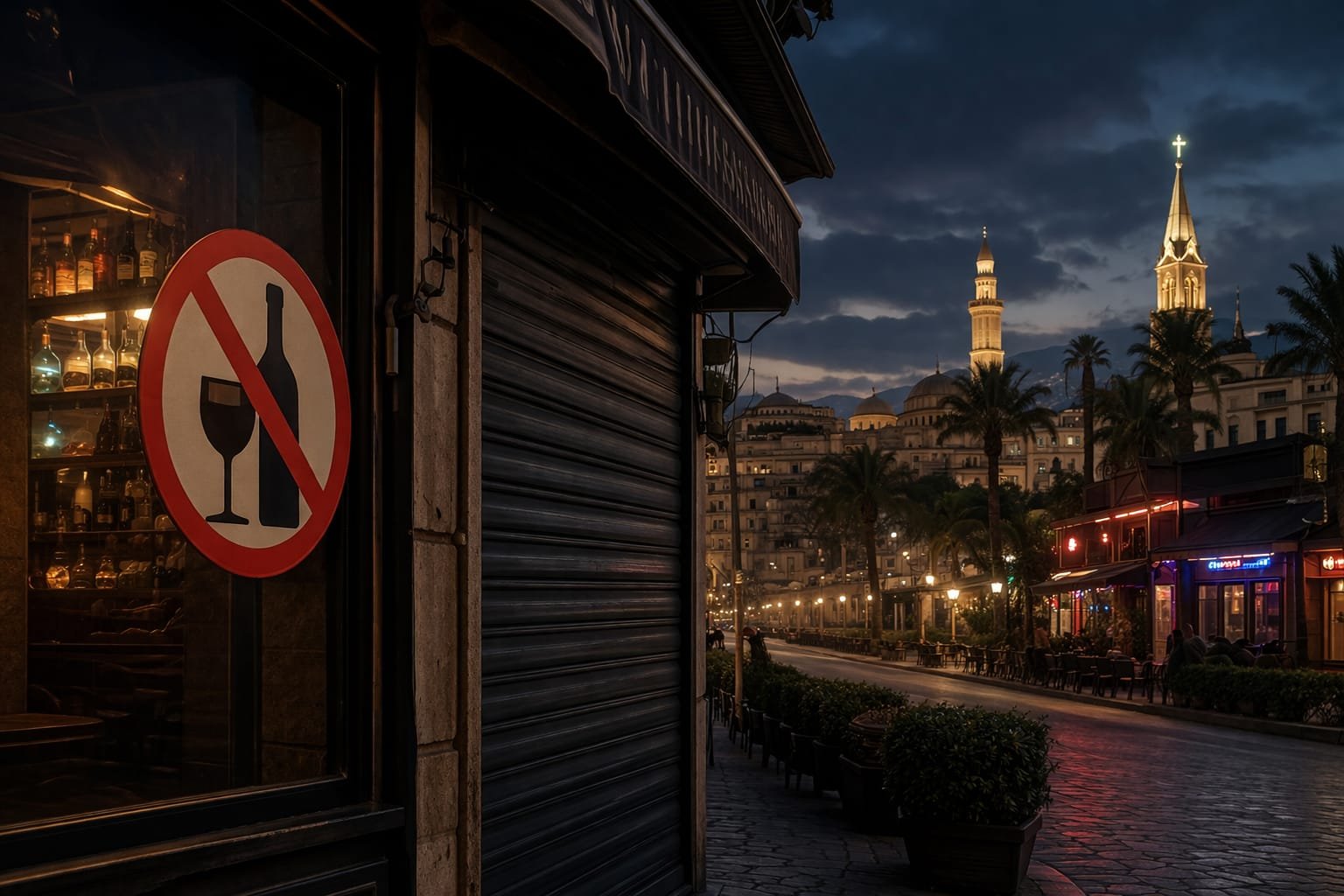
After years of prolonged civil war and a major shift in power, Syria now appears to be entering a new social and political phase. In the capital city, Damascus, a recent ban on the sale and serving of alcohol has made this transformation even more evident. The move has been introduced by the government led by Ahmed al-Sharaa, which took control after the fall of former President Bashar al-Assad.
This decision is not merely an administrative measure but is being seen as a clear signal of the country’s shifting social fabric and governing direction. Under the new regulations, bars and nightclubs have been given three months to convert their licenses into “café licenses.” Additionally, alcohol sales will be restricted to sealed bottles for takeaway only, primarily limited to Christian-majority areas.
The impact of this decision has been immediate, particularly on the capital’s nightlife and local businesses. Many bars and restaurants had already stopped serving alcohol, while the remaining establishments now face the choice of restructuring their operations or shutting down entirely. As one bar owner put it, “This business was not just about food and drinks—it was about a certain atmosphere, which now seems to be disappearing.”
Experts believe that the move goes beyond economic implications and will significantly affect social life as well. Tourism, the hospitality sector, and urban culture are all likely to face long-term consequences. Damascus, once known for its relatively Western-style nightlife, now appears to be moving toward a more conservative, Islamic-oriented social framework.
However, the decision has also raised legal and human rights concerns. Mohammed al-Abdullah, director of the Syria Justice and Accountability Center, stated that current Syrian laws do not impose a complete ban on alcohol consumption or sale. According to him, the decision may conflict with constitutional provisions that recognize civil liberties and international human rights agreements.
The government, on its part, has indicated that these measures are aimed at strengthening “social order” and “moral values.” Supporters view the move as necessary for stability and cultural rebuilding, while critics argue that it poses a challenge to personal freedoms and Syria’s pluralistic society.
Overall, the alcohol ban in Damascus has sparked a broader debate about the country’s future direction. The central question now is whether Syria is heading toward a more religiously guided and socially regulated system. Upcoming government decisions are expected to further clarify this trajectory.