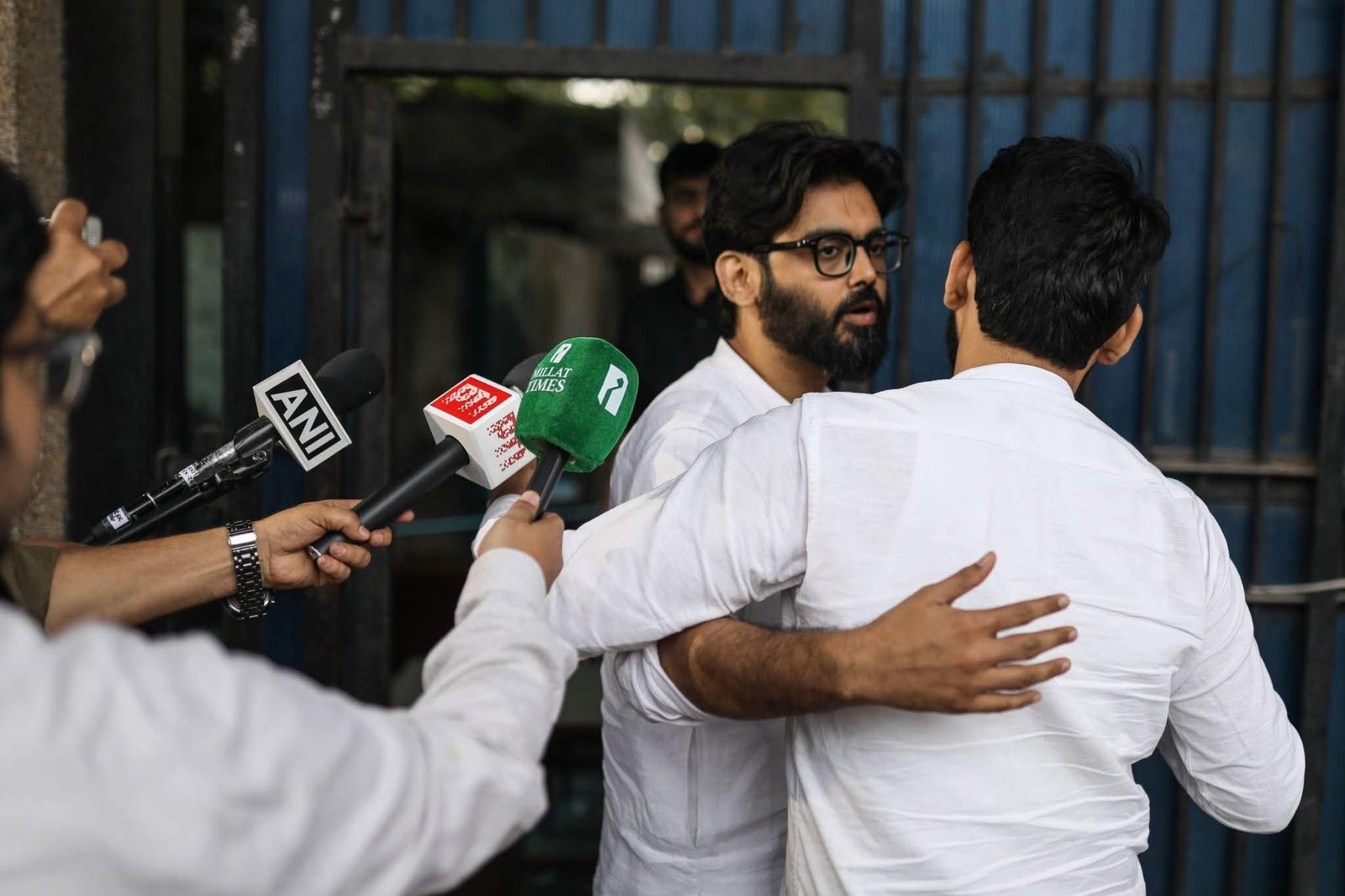



Student activist and scholar Sharjeel Imam has completed six years of what has been described as “wrongful and unjust” incarceration today. Despite the absence of any conviction in any case so far, his continued imprisonment has raised serious questions about the country’s criminal justice system. Civil rights organisations say the case has come to symbolise how prolonged incarceration itself is being turned into punishment, even as the process of justice remains incomplete.
In a strongly worded statement, the Campaign Against State Repression (CASR) said the Supreme Court’s rejection of the bail applications of Sharjeel Imam and former Jawaharlal Nehru University student leader Umar Khalid amounts to a “mockery” of justice. According to the organisation, keeping individuals in prison for years without trial violates personal liberty, due process, and the constitutional principle that “bail is the rule and jail the exception.”
CASR alleged that harsh laws are being misused to silence the voices of students, activists, academics, journalists, and marginalised communities. The organisation said criminalising dissent and using prolonged incarceration as a tool of political repression constitutes a direct assault on democracy.
In its statement, CASR reiterated its demand for the immediate release of Sharjeel Imam and Umar Khalid, and called for the release of all political prisoners across the country who have been jailed solely because their political views do not align with the ideology of the ruling BJP–RSS. The organisation also demanded an immediate end to the weaponisation of “draconian” laws and the criminalisation of dissent.
The statement concluded by saying, “Justice delayed is justice denied.”
The CASR organising team includes AIRSO, AISF, APCR, ASA, BASF, BSM, Bhim Army, CEM, Fraternity, People’s Watch, Rihai Manch, Mazdoor Adhikar Sangathan, NAPM, among several other social and political organisations.
Sharjeel Imam’s six-year-long incarceration has once again brought to the forefront the debate on whether dissent in India is increasingly being met with imprisonment, and whether the justice system can rise to meet this challenge.