

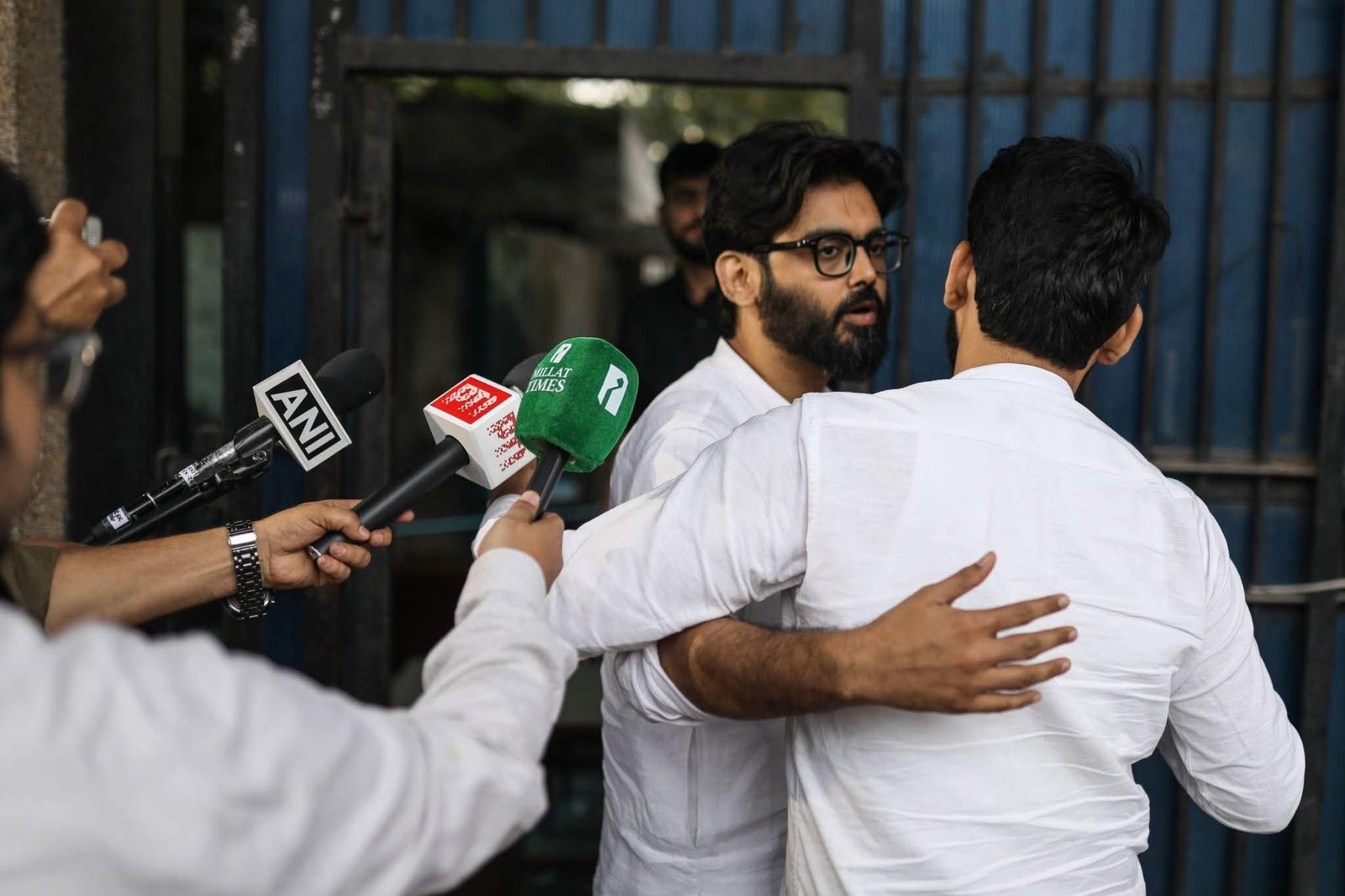
Sharjeel Imam, a research scholar at Jawaharlal Nehru University and a prominent face of protests against the Citizenship Amendment Act, was recently granted interim bail for the first time since his arrest. The 10-day relief was provided to allow him to attend the wedding of his brother, Muzammil Imam.
After the court-mandated period ended, Imam complied with legal procedures and surrendered once again at Tihar Jail. This marked a rare personal reprieve during his prolonged incarceration, enabling him to participate in an important family occasion.
Imam was arrested on January 28, 2020, amid nationwide protests against the Citizenship Amendment Act. He faces multiple serious charges, including sedition, and cases have also been filed against him under stringent laws such as the Unlawful Activities (Prevention) Act. Investigating agencies allege that his speeches and activities posed a threat to national security, while his supporters maintain that his actions fall within the ambit of freedom of expression.
His case has remained pending in courts for nearly six years, during which he has not been granted regular bail. This has intensified debates around judicial delays and the prolonged detention of undertrial prisoners. Human rights organizations and legal experts have repeatedly raised concerns, arguing that extended incarceration without a final verdict undermines the principles of justice.
On the other hand, investigative authorities continue to justify strict action under existing laws, emphasizing the seriousness of the charges.
For now, with his interim bail period over, Sharjeel Imam is back in Tihar Jail. Attention now turns to upcoming court hearings, the possibility of regular bail, and the broader direction of the legal process.
The case has evolved beyond an individual legal battle, becoming a significant part of the ongoing national discourse on freedom of expression, the right to protest, and the use of stringent laws in India.