

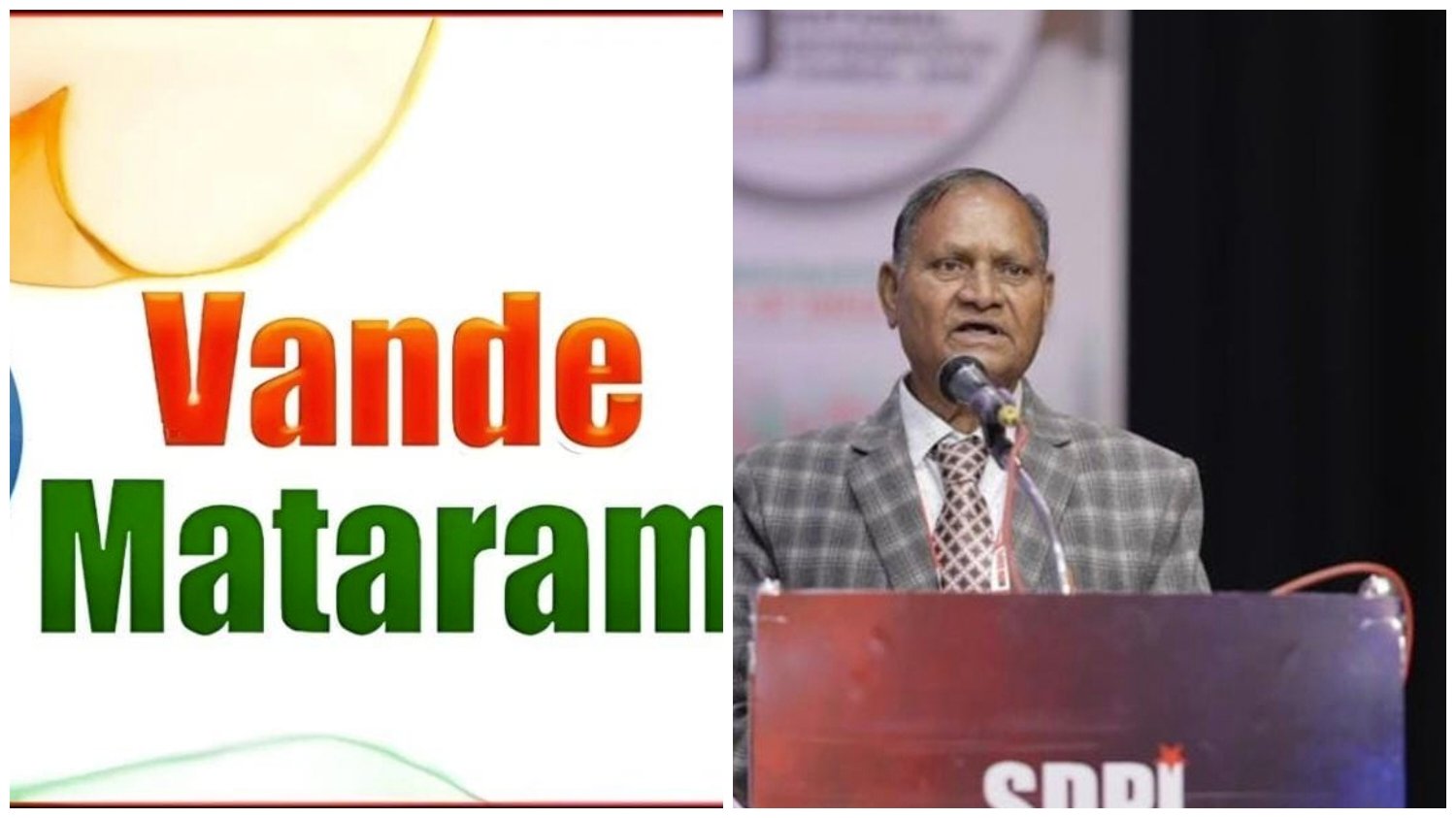
The Social Democratic Party of India has strongly opposed the Ministry of Home Affairs directive mandating the singing of all six stanzas of Vande Mataram at official ceremonies, events involving the President and Governors, and school assemblies. The party described the move as a direct assault on the country’s secular democratic framework.
In a statement, the party’s National Vice President, Sitaram Khoiwal, said the decision ignores the historical prudence shown in 1937, when during the freedom struggle the Indian National Congress, after deliberations, adopted only the first two stanzas of the song to ensure that the national song remained acceptable and inclusive for all communities.
Khoiwal noted that the later stanzas contain references to Hindu deities such as Durga and Lakshmi, as well as temple imagery, which many citizens, particularly those from minority communities, do not consider consistent with their religious beliefs. Making the entire song compulsory and requiring all attendees to stand, he argued, amounts to a violation of the fundamental right to freedom of religion and conscience.
He added that in a pluralistic society like India, no citizen should be compelled to participate in a ritual that conflicts with their personal beliefs. Referring specifically to educational institutions, he said schools should be spaces of unity and learning, not sites of discomfort and division.
The party leader alleged that the move is not about patriotism but a political attempt to impose a “majoritarian cultural narrative” and test the loyalty of minorities. Respect for national symbols, he said, must evolve through voluntary participation and dialogue, not through fear of punishment or social pressure.
The Social Democratic Party of India has demanded that the central government immediately withdraw the directive. The statement asserted that India’s true strength lies in its diversity, not in enforced uniformity, and reiterated the party’s commitment to resisting any attempt to weaken the secular character of the Republic while standing for an inclusive India.