

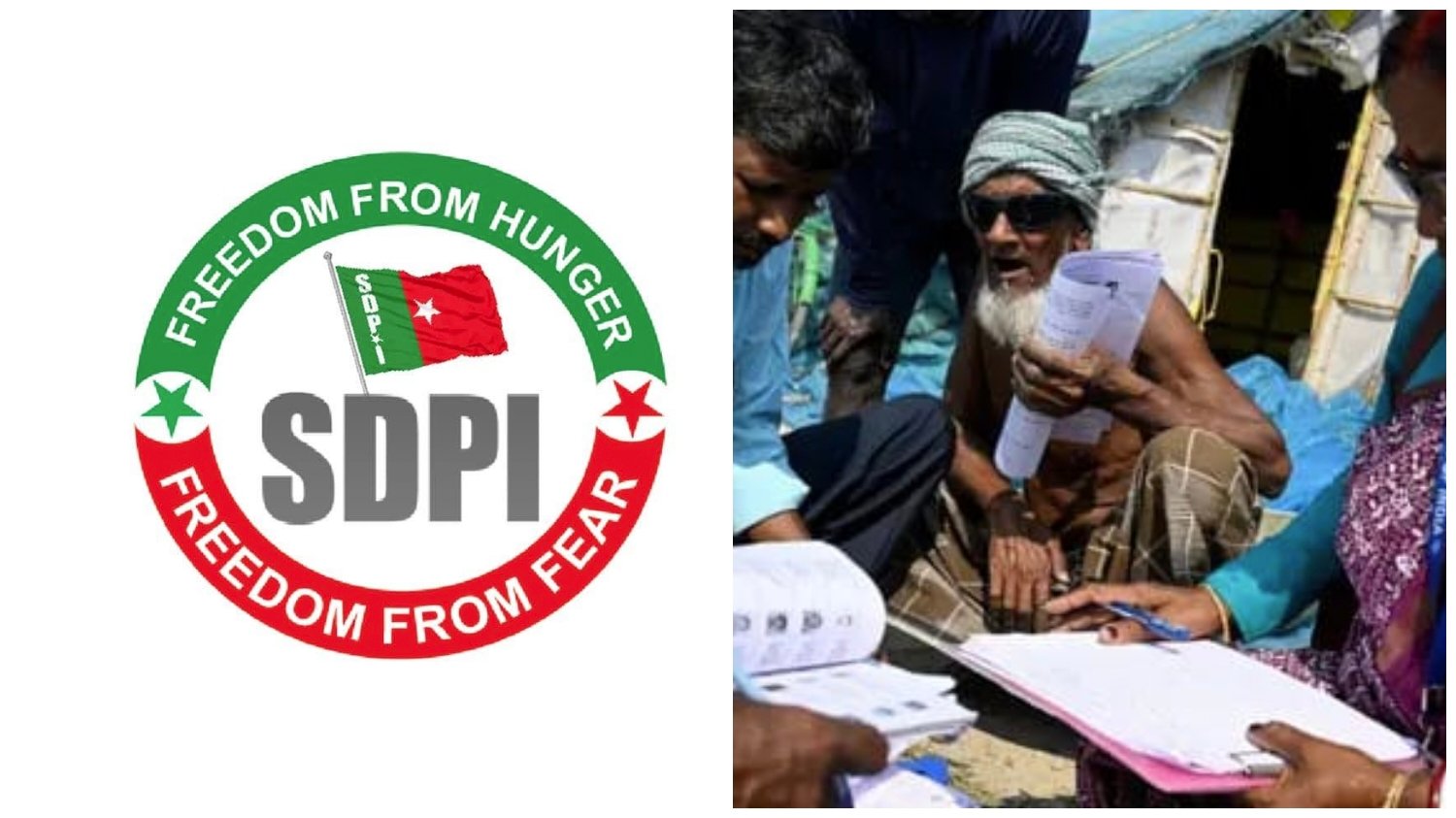
The Social Democratic Party of India (SDPI) has leveled serious allegations against the Election Commission of India (ECI) over the Special Intensive Revision (SIR) of voter lists, describing it as a national-level crisis that excludes women, marginalized communities, and minorities from the electoral rolls. The party claims that the SIR process is no longer a problem confined to a single state, but has become a threat to democracy across the country.
Data from the draft voter lists under the SIR process reveals a significant 21.4% drop in the number of registered women in Uttar Pradesh, reducing the female-to-male voter ratio from 877 to 824 per 1,000 men. More than 15.4 million women voters in the state have reportedly been removed, a figure considerably higher than for men. This decline has raised concerns of similar gender imbalances in other states nationwide.
SDPI asserts that women, Dalits, backward classes, workers, the poor, and minority voters are being systematically excluded under the SIR process, a practice it says is unacceptable in any democratic framework. The party has demanded:
*An immediate gender-based and social-category audit of voter lists
*Public disclosure of state-wise removed voters
*Restoration of names removed in error
*Institutional accountability within the Election Commission
The party has also called on civil society organizations, women’s groups, journalists, academics, and legal experts to independently analyze the SIR voter lists and highlight patterns of voter exclusion at the national level. SDPI warned that the electoral process can only be safe and fair if all communities and genders are equally represented in the voter rolls.
The Election Commission, meanwhile, has defended the SIR process as a necessary step to clean the voter lists and remove duplicate, deceased, or relocated entries. Deadlines for voter claims and objections have also been announced in several states. However, opposition parties and civil society groups have raised concerns about the timing and methodology of the SIR process, arguing that it may violate the core principles of the Indian Constitution.
The Supreme Court has instructed that names with “logical inconsistencies” in the SIR process be published to ensure transparency.
These issues have made the SIR process a focal point of heated debate in India over voter rights and democratic participation, a debate expected to intensify in the coming weeks.