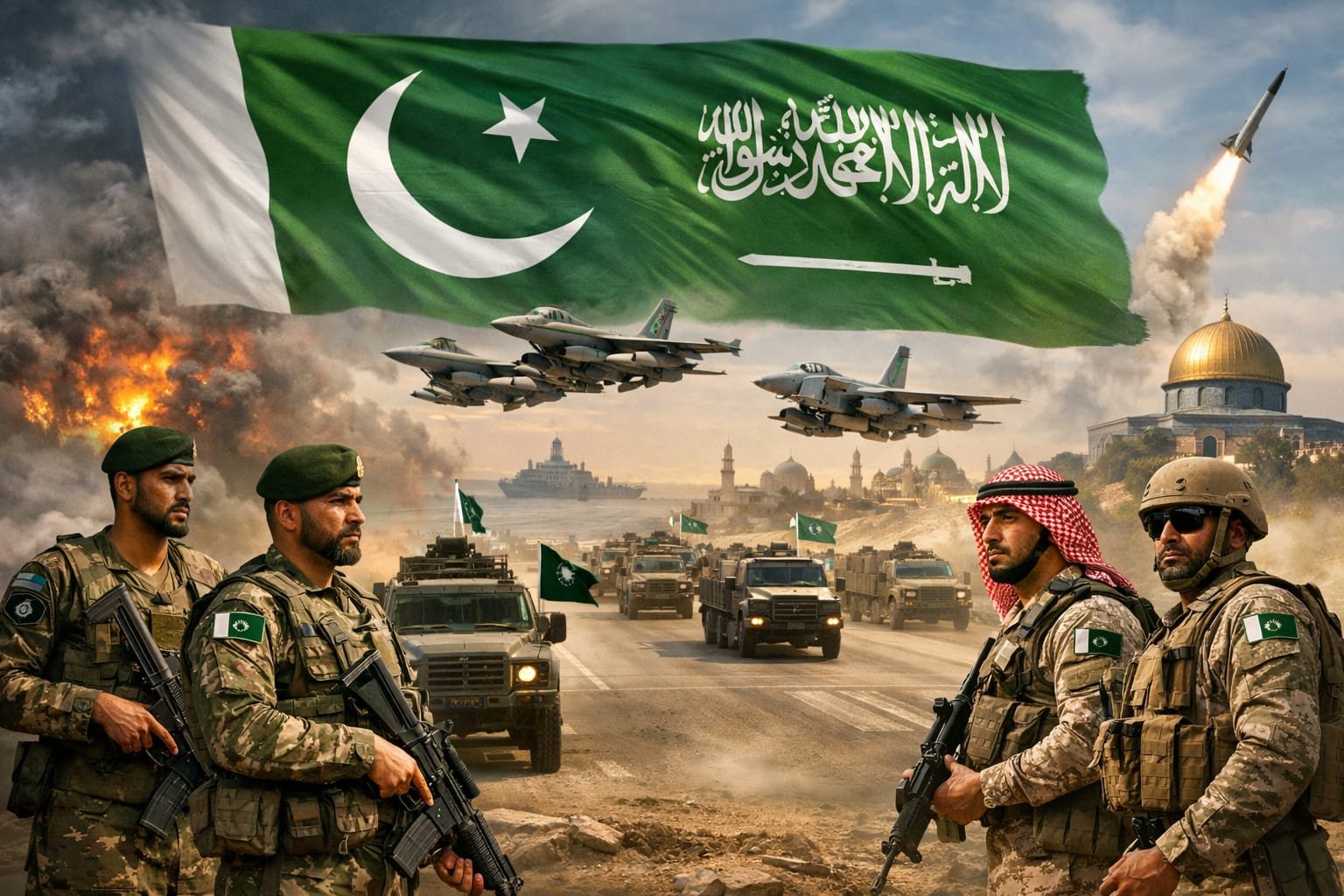
Amid rising geopolitical tensions in West Asia, strategic defence cooperation between Pakistan and Saudi Arabia has entered a new phase. According to the Saudi Ministry of Defence, Pakistan has deployed around 13,000 troops and 10 to 18 fighter jets at King Abdulaziz Air Base in the Eastern region.This move comes under the comprehensive defence agreement signed between the two countries in 2025, under which an attack on one country would be considered an attack on the other. The deployment is being viewed as highly significant in the context of the changing security situation in the Gulf region.The Saudi Ministry of Defence stated that the presence of Pakistani forces aims to strengthen military coordination between the two countries, enhance operational readiness, and reinforce regional and international security frameworks.According to a report by Press Trust of India (PTI), international affairs expert Mohammad Mehdi claimed that this deployment is not entirely new, as around 10,000 Pakistani troops were already stationed in Saudi Arabia, with a recent increase. He said the total number has now reached approximately 13,000.Experts say the entire arrangement is purely defensive under the framework of the defence agreement and is intended to ensure Saudi Arabia’s security.Meanwhile, another report also claimed that Pakistan has provided missile interceptor systems to Saudi Arabia. This step is said to be a response to recent rising attacks and security threats in the Gulf region, although this claim has not been independently verified.Photographs released by Agence France-Presse (AFP) show Pakistani military convoys moving in military vehicles, visually confirming the large-scale deployment operation.Analysts believe that this development is not limited to military cooperation alone, but also signals a shift in the balance of power in West Asia. It could impact the security architecture of the Gulf region and may further intensify existing tensions between Iran and Saudi Arabia.At the same time, the deployment is also seen as an important turning point in Pakistan’s foreign policy, as it strengthens its security commitments with traditional allies while attempting to maintain a regional diplomatic balance.The entire region is closely watching the development, as this deployment could shape the direction of security and diplomacy in West Asia in the coming period.