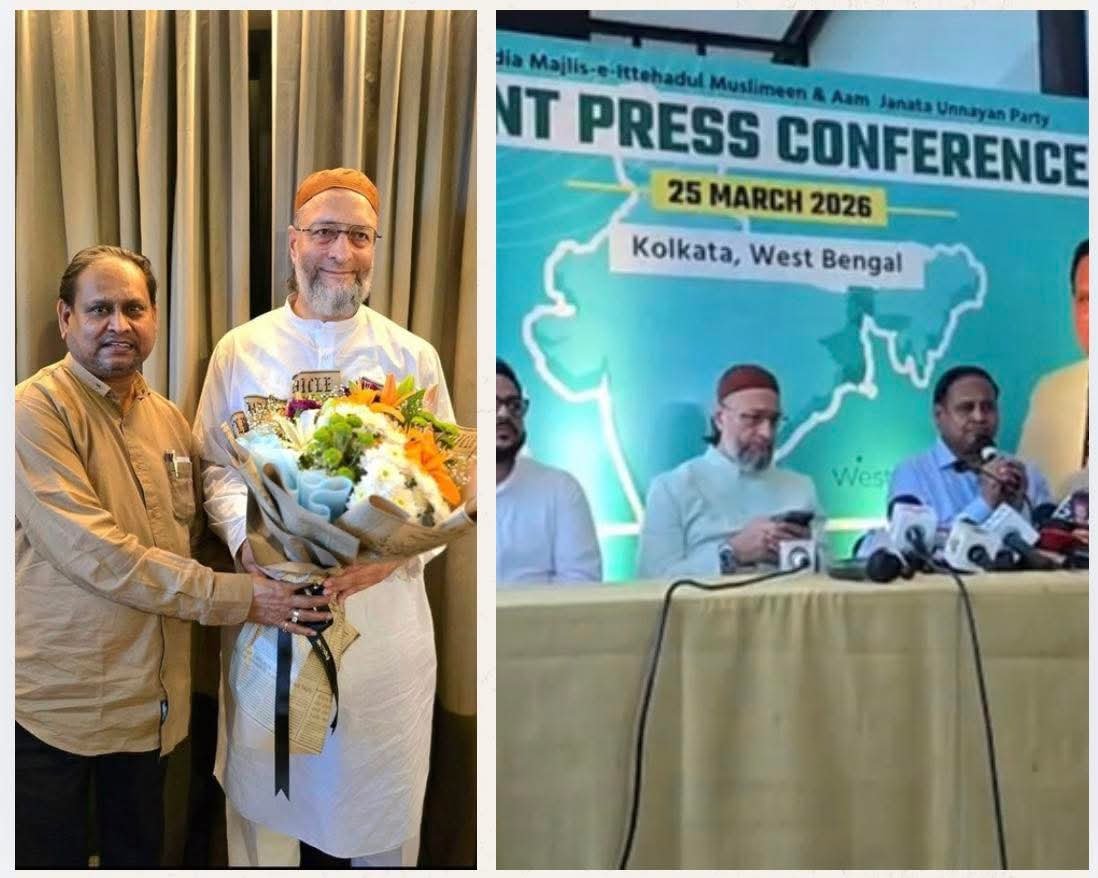



Sharp political reactions are emerging across the country over the alleged communal and derogatory remarks made by Assam Chief Minister Himanta Biswa Sarma. All India Majlis-e-Ittehadul Muslimeen (AIMIM) president and Hyderabad MP Asaduddin Owaisi launched a strong attack on the Chief Minister, stating that “no government can function by intimidating or humiliating a community,” and that such politics runs directly contrary to the core principles of the Constitution.
Owaisi said that Bengali-origin Muslims in Assam, locally referred to as “Miya,” are being consistently targeted. He remarked, “Whenever any problem arises in the state, the blame is pinned on Miya Muslims. This is not politics, but a calculated attempt to spread hatred.”
Raising serious concerns, Owaisi questioned the impact of such language when used by someone holding a constitutional position. He said that the Muslims being insulted as “Miya” are Indian citizens. Their ancestors were brought to Assam during British rule, and they have been cultivating the land and contributing to the region for decades.
Owaisi also referred to an alleged statement by the Chief Minister suggesting that an auto-rickshaw driver should be paid less than the prescribed fare. He described the remark as “a symbol of the arrogance of power directed against the poor and minorities.”
The controversy has now taken a legal turn as well. Jamiat Ulema-e-Hind has filed a petition in the Supreme Court, terming the Assam Chief Minister’s remarks unconstitutional and hate-filled. The petition argues that such statements by a Chief Minister not only damage social harmony but also challenge the rule of law.
Bengali-origin Muslims in Assam are already facing serious social and economic challenges. They are frequently viewed with suspicion over issues related to citizenship, voter lists, and identity. In such a situation, statements made at the level of the Chief Minister are further deepening fear and insecurity within the community.
Following Owaisi’s sharp remarks and the petition filed in the Supreme Court, it has become clear that the controversy surrounding “Miya” Muslims in Assam is no longer confined to state politics alone. The issue is increasingly shaping up as a major test of the Constitution, minority rights, and democratic norms.