
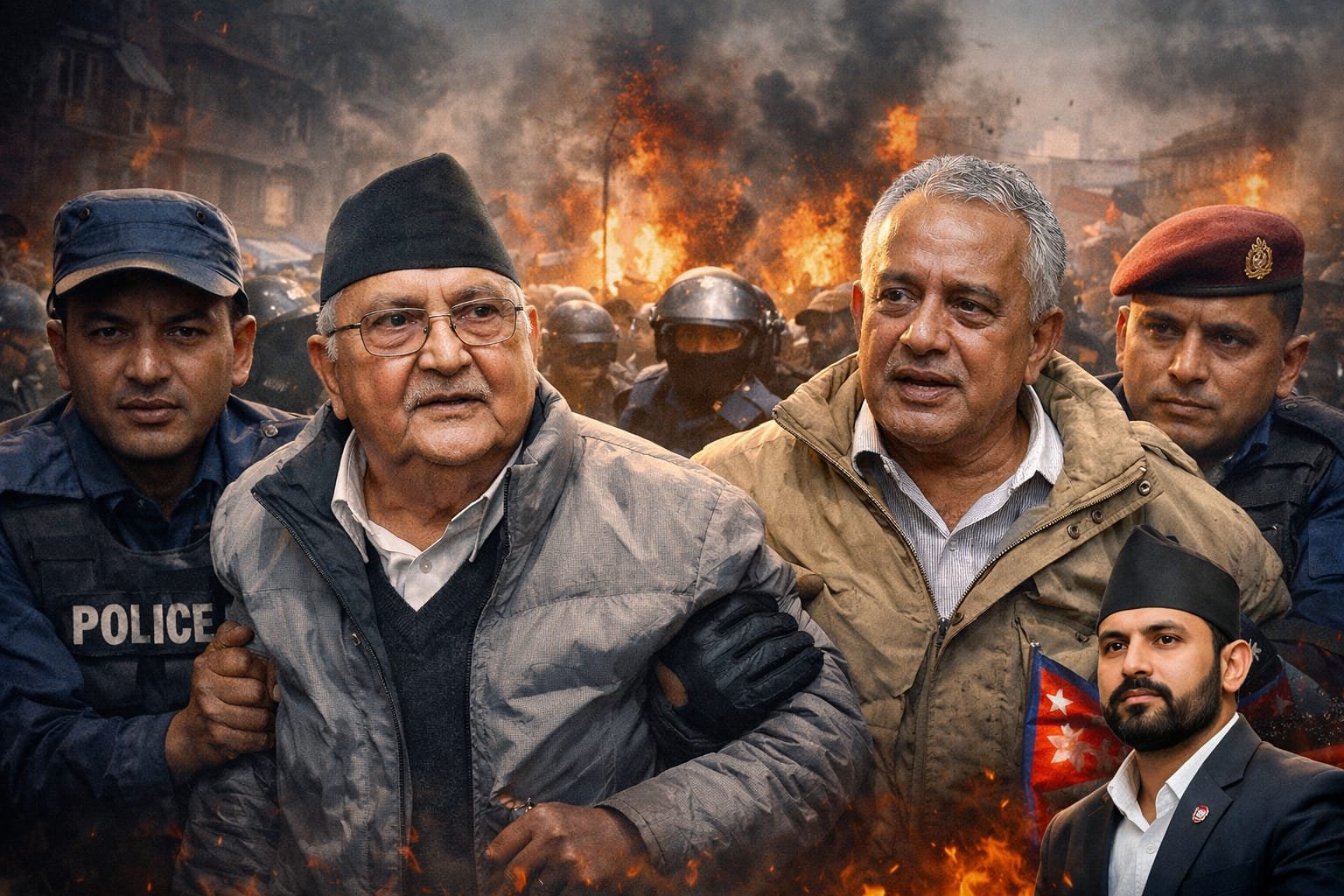
Amid dramatic political developments in Nepal, the newly formed government has sent a strong message by detaining former Prime Minister K. P. Sharma Oli and former Home Minister Ramesh Lekhak shortly after coming to power. The action is reportedly linked to investigations into the violence and deaths that occurred during the 2025 “Gen Z movement.”
According to police sources, both senior leaders have been taken into custody for questioning, and a detailed investigation is currently underway. The development has stirred significant political reactions across the country and is being viewed as a major step toward fixing accountability.
The new government is led by Balen Shah, who was sworn in as Prime Minister only recently. This action, taken just a day after his oath, signals a firm and proactive stance by the administration. Political analysts believe the move clearly outlines both the priorities and intent of the new leadership.
The “Gen Z movement,” which began in 2025, rapidly spread across Nepal as a protest against corruption, unemployment, and government policies. Initially peaceful, the protests later turned violent in several areas. Official figures suggest that around 76 people lost their lives, while hundreds were injured. At the time, the role of security forces—especially the use of gunfire—sparked widespread criticism and controversy.
A government inquiry commission’s report had raised serious concerns about the handling of the situation by the then administration. It pointed to major lapses in crisis management and delays in taking effective action. The role of the former Home Minister also came under scrutiny, with several key issues highlighted in the findings. However, final conclusions will depend on the judicial process.
Political reactions have intensified following the arrests. Supporters of Oli have termed the move politically motivated, while the government maintains that the action is strictly based on law and the findings of the investigation. Officials have emphasized that no individual will be spared if found guilty, regardless of position or influence.
Meanwhile, reports have emerged that Oli’s health deteriorated after his detention, and he is currently under medical supervision.
In the coming days, the case is expected to proceed through court hearings and further legal processes. Experts believe this development could mark the beginning of a new phase of accountability and transparency in Nepal’s political landscape, with long-term implications for governance.