

The U.S. Ambassador Sergio Gor explains how to shape U.S.–India relations as a defining strategic partnership of the 21st century and ensure concrete benefits for both countries.
Charvi Arora
Ambassador Sergio Gor is the 27th U.S. Ambassador to India. He has come to this position with experience in public service, political engagement, and strategic leadership in Washington. Earlier, he served as an aide to President Donald J. Trump and as Director of Presidential Personnel at the White House, where he oversaw thousands of rapid political appointments across the federal government. A graduate of George Washington University, Ambassador Gor’s leadership and public engagement experience shape his approach to advancing one of America’s most important strategic partnerships. In New Delhi, Ambassador Gor brings his results-oriented approach to strengthening U.S.–India relations in areas such as defense, trade, and critical technologies—sectors central to the long-term strategic goals of both nations. In a conversation with SPAN, he highlighted his early impressions of India and his priorities for deepening cooperation between the two countries.
What are your initial impressions of India, and which aspects of this role excite you the most?
I first visited India about 15 years ago with my family. Since then, the impact of that visit has never left my mind. India’s culture, history, colors, and remarkable stories, along with the possibilities of taking our bilateral relations to the next level, make this role very appealing to me. But the deepest impression was left by the warmth and kindness of the people of India. I can say that even after so many years and in very different circumstances, the friendliness of the Indian people has not diminished.
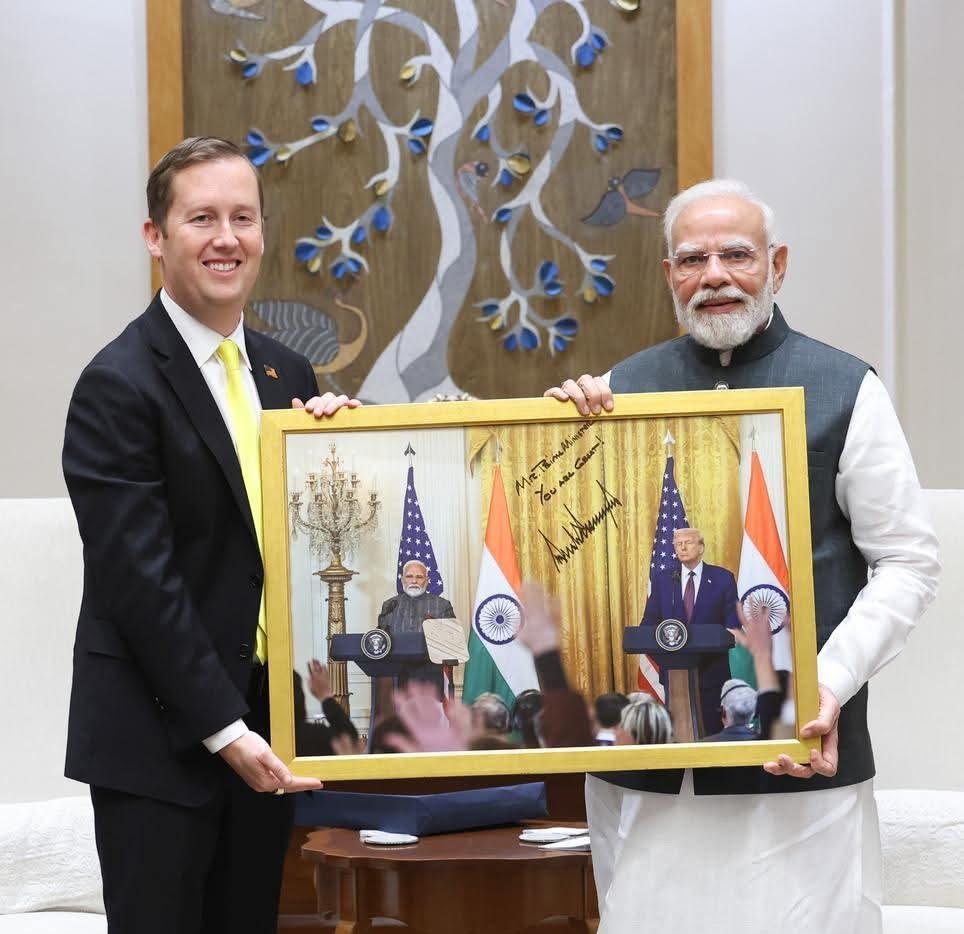
This friendship also extends to the highest levels of leadership in the United States and India. President Trump considers Prime Minister Modi a true friend, and their authentic relationship strengthens the already significant ties between our countries. It is a great privilege to deepen our relations and work toward mutually beneficial goals.
You have worked closely with President Donald Trump. How has that experience shaped your approach to advancing U.S. priorities in India?
President Trump is one of the hardest-working individuals in politics. He works quickly and demands results. His results-oriented approach ensures that I come to the embassy every morning with a single goal—how I can deliver concrete and positive outcomes for the American people. Every call and every meeting is aimed at fulfilling this objective—either to secure a deal or ensure a win for the United States—and that is how the President operates. Our task is simple: deliver results for America while taking our bilateral relationship to new heights.
In your view, which areas of U.S.–India cooperation hold the greatest potential for innovation, economic growth, and technological advancement?
Defense and security cooperation represent our most strategically important area of collaboration. The U.S.–India major defense partnership is deepening, including a new 10-year framework, growing defense industrial cooperation, collaboration in science and technology, and operational coordination.
Economic investment and trade expansion also offer equally transformative potential. President Trump’s goal is to increase bilateral trade in a way that creates unprecedented opportunities for American businesses and workers. India’s growing economy and vast infrastructure needs align perfectly with American expertise in energy, aviation, advanced manufacturing, and digital infrastructure. These investments are beneficial for both countries and strengthen the economic foundation of our long-term strategic partnership. Simply put, this is a win-win situation.
How do you see U.S.–India defense and maritime cooperation evolving in the future, and what steps can both countries take to further strengthen these ties?
India is a major defense partner, and defense cooperation is one of the brightest aspects of our bilateral relationship. We also strengthen U.S.–India military interoperability through participation in exercises such as Malabar, Tiger Triumph, and Cope India.
Both countries are also part of the Quad, a strategic partnership that keeps our security interests strong and aligned. These three key elements—diplomacy, defense exercises, and military sales—ensure strong and sustained defense cooperation. If these elements are maintained, I expect our defense ties to naturally grow stronger.
What are the prospects for U.S.–India cooperation in securing critical mineral resources and building strong advanced manufacturing supply chains?
I am pleased to say that these prospects are extremely strong. For example, the U.S.–India Compact Framework prioritizes building resilient supply chains for semiconductors, critical minerals, and pharmaceuticals. Recently, on the final day of the AI Impact Summit, India became the tenth signatory to our Pax Silica declaration. Pax Silica focuses on further aligning U.S.–India economic and national security interests through partnerships in critical mineral processing capacity and AI infrastructure investments.
This combination of political and financial commitments ensures that our supply chains are not controlled by a single source, significantly reducing risk.
Amid evolving strategic dynamics in South and Central Asia, what role can the United States play in promoting regional stability, economic connectivity, and long-term security?
The United States is uniquely positioned to be a key partner in economic development in both regions. In Central Asia, Kazakhstan and Uzbekistan have committed to significant investment deals with U.S. companies, helping develop critical minerals, digital infrastructure, and energy resources while supporting American jobs. In South Asia, our new trade agreement with India provides a strong foundation for regional economic integration.
From a security perspective, the United States remains focused on working with partners to combat terrorism, violent extremism, and transnational crime. We understand that security and economic prosperity are interconnected. Stable nations attract investment, and legitimate financial opportunities reduce the appeal of crime and extremism.
Artificial intelligence is rapidly transforming economies and societies. How do you see the U.S. and India working together to harness its benefits and address its challenges?
A few weeks ago, I witnessed firsthand the immense potential of U.S.–India collaboration in AI innovation. New Delhi hosted the AI Impact Summit, which was an excellent platform for public and private stakeholders to shape the future of AI. The reality is that AI is now part of our daily lives. So, how do we use it to our advantage? The answer is certainly not to have a global governance board set by the United Nations deciding what AI can or cannot be used for. This is a complex and evolving issue that requires open dialogue between the United States and India.
What is your vision for the U.S.–India partnership in the coming years, and what key achievements would you like to see during your tenure?
My vision is to transform U.S.–India relations into a defining strategic partnership of the 21st century that delivers concrete benefits for both countries.
I want to see the positive outcomes of our partnership reach ordinary citizens—greater sales by American farmers in Indian markets, successful joint research in energy and healthcare, and seamless cooperation between our militaries to keep the Indo-Pacific secure.
U.S.–India relations are based on shared democratic values, mutual prosperity, and common security interests, which will shape the global order for generations to come.
Courtesy: SPAN