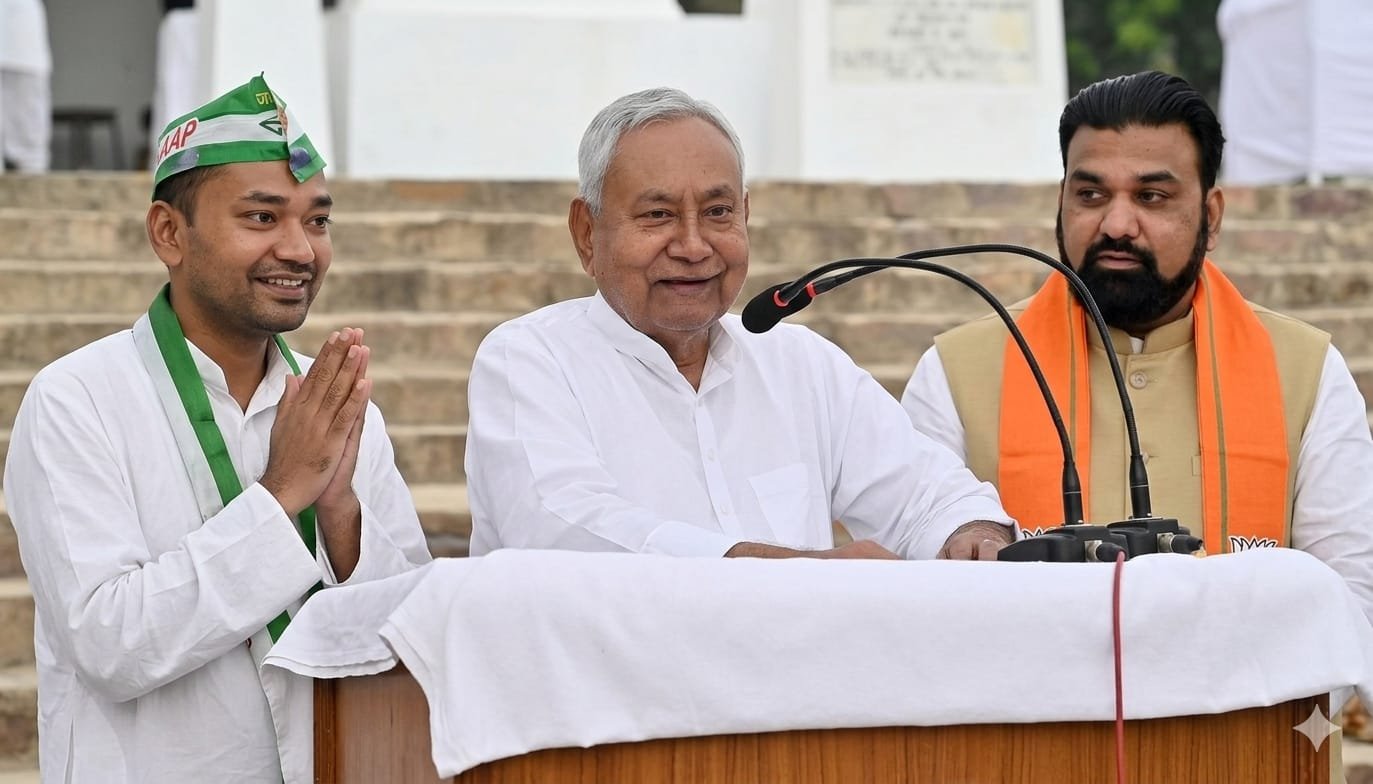



Bihar has become the center of a heated political and social debate after jewelers in the state imposed a ban on customers wearing hijabs, naqabs, burqas, ghunghats, or any other face-covering attire from entering their shops. Strongly criticizing the move, Rashtriya Janata Dal (RJD) state spokesperson Ejaz Ahmed called it a step that violates constitutional provisions and hurts religious sentiments, demanding its immediate withdrawal.
Ahmed stated that targeting religious symbols like hijabs and niqabs under the pretext of security is a violation of the fundamental right to religious freedom guaranteed to every citizen under the Indian Constitution. He further alleged that the decision undermines the secular and constitutional identity of the country and should be revoked immediately to prevent social disharmony. According to him, such measures hurt religious sentiments and may affect the respectful participation of all communities.
On the other hand, the All India Jewelers & Gold Federation (AIJGF) clarified that the decision was made to curb increasing incidents of theft and robbery, and is not directed against any community. Bihar president of the federation, Ashok Kumar Verma, explained that there have been instances where masked individuals have entered showrooms and committed thefts, putting both shopkeepers and customers at risk. He added that customers who reveal their faces or show proper identification will be allowed to make purchases.
With this move, Bihar has become the first state in the country where jewelers have implemented a widespread ban on face-covered entry, set to take effect from January 8. The rule prohibits entry with hijabs, niqabs, burqas, helmets, ghunghats, and similar face coverings. However, shopkeepers maintain that the measure is purely a security provision aimed at identity verification.
Beyond RJD’s criticism, the decision has triggered diverse political and social responses. Some opposition leaders emphasized the need to balance security concerns with individual freedom, stressing the importance of respecting religious identity and dignity. Meanwhile, some traders view it as a positive step given the rising incidents of thefts and robberies in the jewelry sector.
Analysts note that the controversy extends beyond a simple security policy, touching on issues of religious freedom, constitutional rights, and social tolerance, thereby deepening the debate across the state.