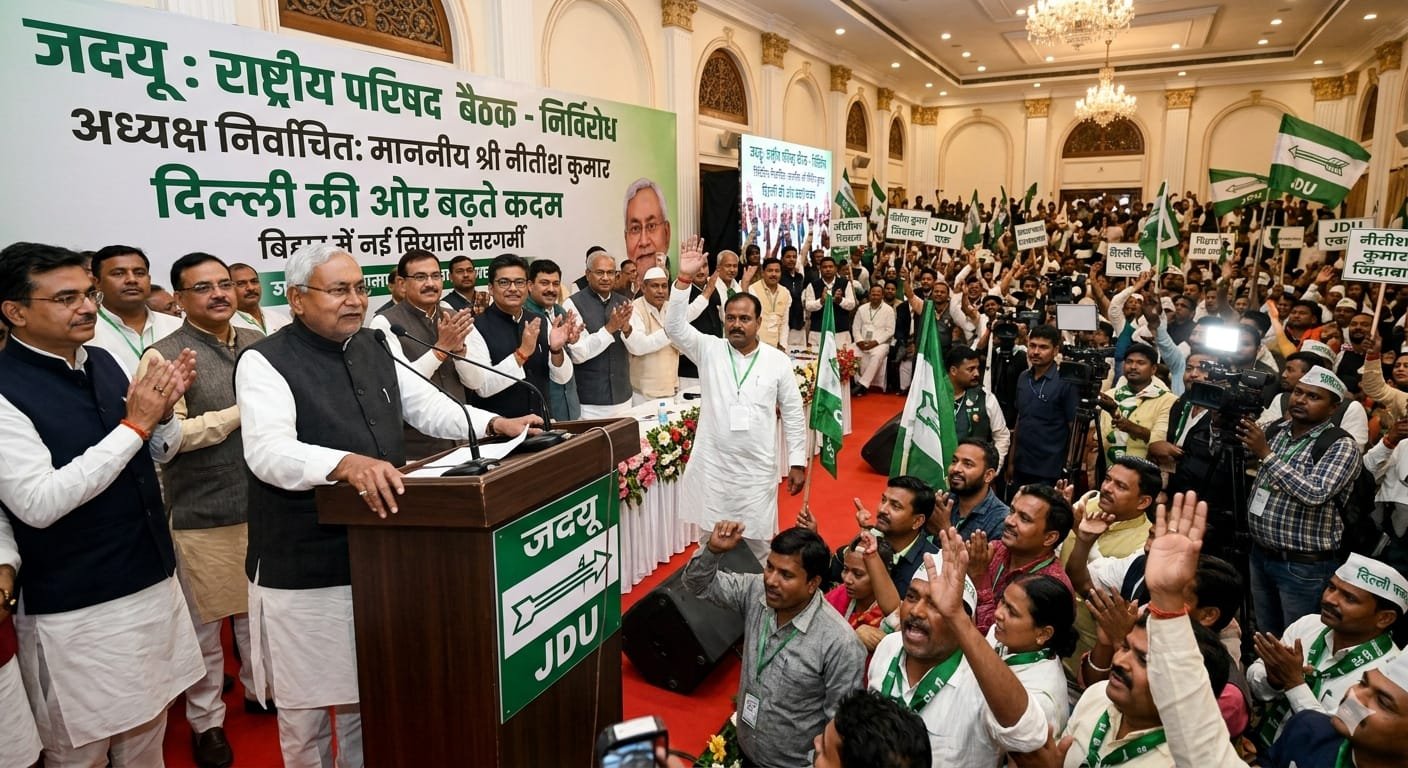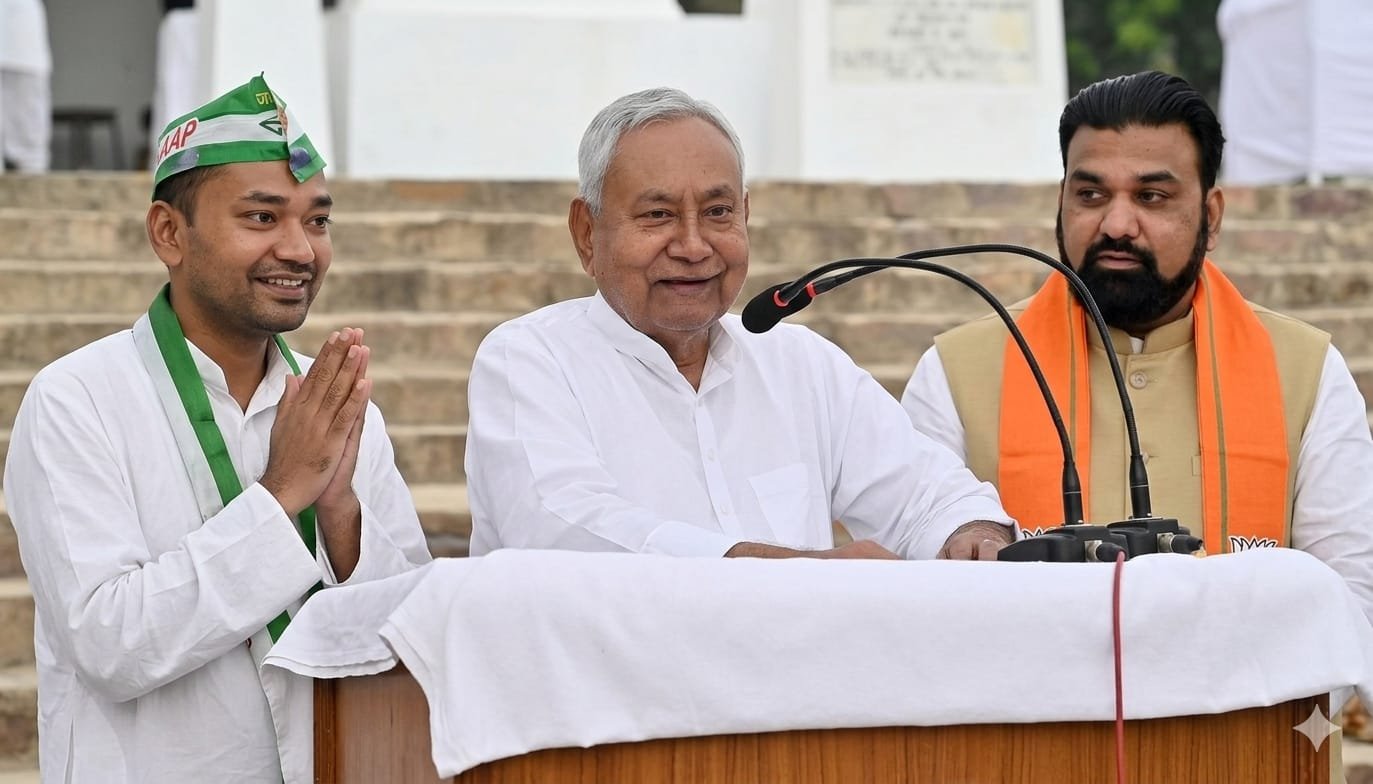



Following the formation of the new government in Bihar, the allocation of departments has been formally completed. For the first time, Chief Minister Nitish Kumar has not retained the Home Ministry, which has been assigned to the Bharatiya Janata Party (BJP). However, despite BJP controlling the Home Department, the major budgetary portfolios remain with the Janata Dal (United) (JDU).
The cabinet currently consists of 27 ministers: 14 from the BJP, 9 from the JDU, and 4 from other allied parties. While BJP leads in terms of the number of ministers, the JDU holds a preferential position in terms of budget allocation.
According to available data, the JDU’s 18 key departments have a total budget of approximately ₹1,37,751 crore, whereas the 18 departments allocated to the BJP have been assigned ₹79,407 crore. This means that JDU-controlled departments receive nearly ₹58,000 crore more than those under BJP.
JDU portfolios include Education, Rural Development, Energy, Rural Works, Social Welfare, Water Resources, Building Construction, Finance, Planning & Development, Food & Consumer Affairs, General Administration, Information & Public Relations, Transport, Minority Welfare, Science & Technology, and Commerce & Taxation. Among these, the Education Department has been allocated the largest share.
BJP, on the other hand, holds Home, Health, Urban Development & Housing, Road Construction, Agriculture, Disaster Management, SC/ST Welfare, Backward & Extremely Backward Class Welfare, Law, Tourism, Cooperation, Labour Resources, Environment & Forest, Animal & Fisheries, Sports, Industry, Mines & Geology, and Information Technology. Of these, the Health and Home departments are considered comparatively large-budgeted.
Experts in economic affairs note that Nitish Kumar has historically retained control over high-value departments. They suggest that although the Home Ministry has gone to BJP this time, JDU remains stronger in terms of budgetary influence.
In the 2025 Bihar Assembly elections, the NDA won 202 out of 243 seats. This includes 89 for BJP, 85 for JDU, 19 for LJP (Ram Vilas), 5 for HAM, and 4 for RLM. Within the alliance, BJP leads in terms of seats and the number of departments, but budgetary control and major administrative influence appear to remain with JDU.