

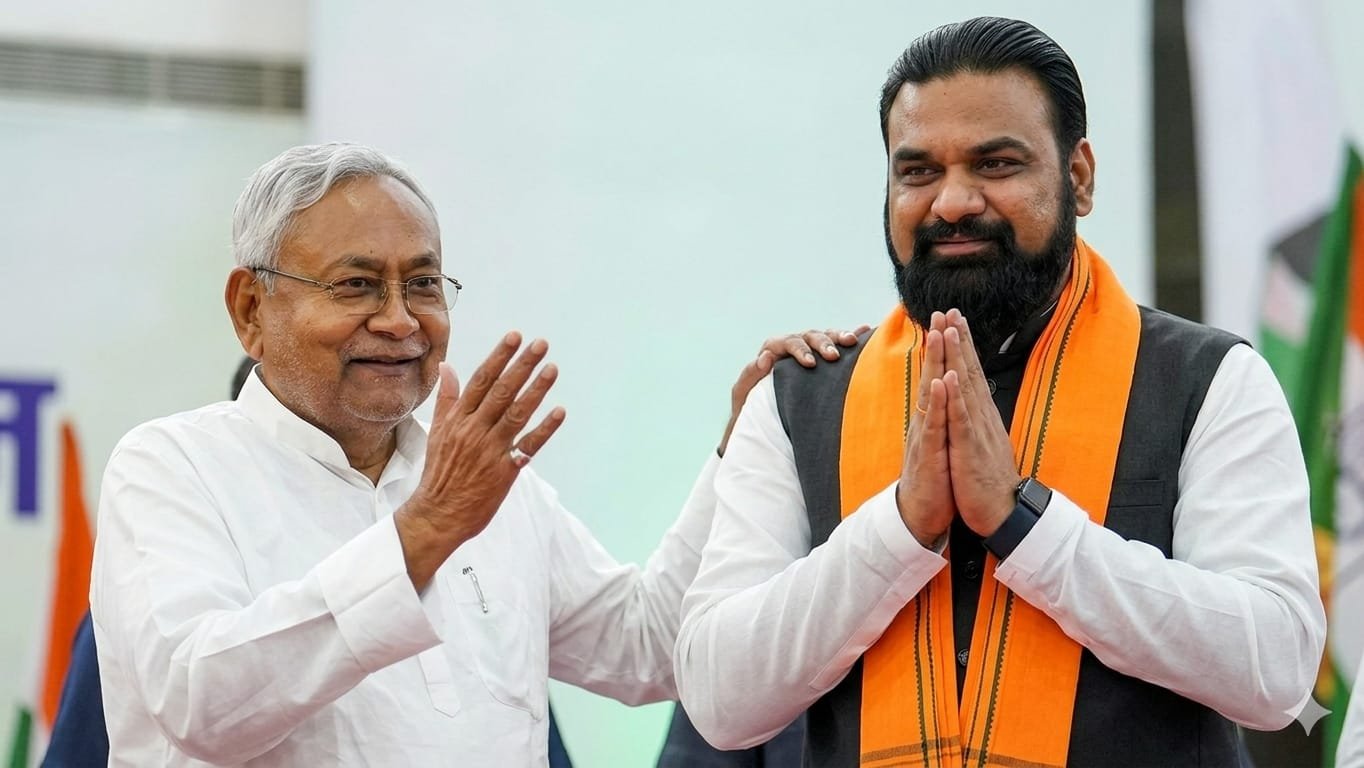
Bihar’s politics witnessed a historic turning point on April 14, 2026, marking the end of a long era. With the resignation of Nitish Kumar from the post of Chief Minister, not only did a political phase spanning nearly two decades come to a close, but a new script for the state’s power structure, alliance dynamics, and future politics also began to take shape. This change is not merely a shift in leadership, but a signal of a broader political restructuring.
From Tuesday morning itself, unusual political activity was observed in Patna. An emotional atmosphere was clearly felt during the final cabinet meeting held at the Chief Minister’s residence. As soon as the meeting concluded, Nitish Kumar publicly announced his resignation and later in the afternoon reached the Raj Bhavan to submit his resignation to the Governor. With this, the process of transfer of power gained rapid momentum. Administrative movements, security arrangements, and a series of political meetings intensified across the city.
Immediately after the resignation, the Bharatiya Janata Party acted swiftly, convening a meeting of its विधायक दल and unanimously electing Samrat Choudhary as its leader. This decision made it clear that Bihar had entered a new phase of leadership. The selection of Samrat Choudhary is being viewed not just as a political appointment, but as a strategic move considering social and caste equations. His identity as an influential face from the backward class and his strong organizational grip made him a key contender for the role.
Over the past two days, his residence had become the new center of Bihar’s political activity. The continuous movement of MLAs, senior leaders, and officials indicated that the center of power was gradually shifting. The role of the central leadership was also significant in this entire development. Shivraj Singh Chouhan, popularly known as “Mama,” arrived in Patna as a central observer and played a decisive role in the process from the विधायक दल meeting to the leadership selection. His presence made it evident that this transition was part of a broader political strategy.
Meanwhile, discussions around Nishant Kumar also intensified. Although he has currently declined to accept any government position, his increasing activity within the party organization suggests that he is being groomed for future leadership. This is being seen as part of a long-term strategy, focusing first on strengthening organizational control.
With the formation of the new government, a clear shift in the balance of power within the National Democratic Alliance is visible. The Janata Dal (United), which had been playing a dominant role so far, now appears relatively weaker, while the Bharatiya Janata Party has emerged as the decisive force. The Chief Minister’s post going to the BJP and the possibility of a Deputy Chief Minister position for the ally clearly reflect this changed equation. Along with this, ministries are being redistributed to reshape the power structure.
Although the government is currently being formed within the existing assembly, discussions about the possibility of mid-term elections are gaining momentum in political circles. Changing equations and potential internal differences do not completely rule out this possibility. If the balance of power is disturbed, the state may once again move toward elections.
Despite his resignation, Nitish Kumar is not considered politically irrelevant. Given his strong hold over the party and his long experience in coalition politics, it is believed that he will continue to play a guiding role from behind the scenes. Meanwhile, opposition leader Tejashwi Yadav has questioned the entire development, calling it pre-planned. His remarks संकेत that political confrontation may intensify in the coming days.
With the formation of the new government, major changes are also expected in the cabinet. Redistribution of ministries, the emergence of new faces, and changes in the roles of senior leaders indicate that Bihar is undergoing not just a leadership change, but a broader transformation of power.
Ultimately, Bihar has now entered a transitional phase, where experience and new political ambitions will move forward together. Under the leadership of Samrat Choudhary, it will be crucial to see whether the state achieves stability or whether this change becomes the foundation for a new political experiment. What is certain is that the beginning of this “post-Nitish era” will determine both the direction and condition of Bihar’s politics in the coming months.