

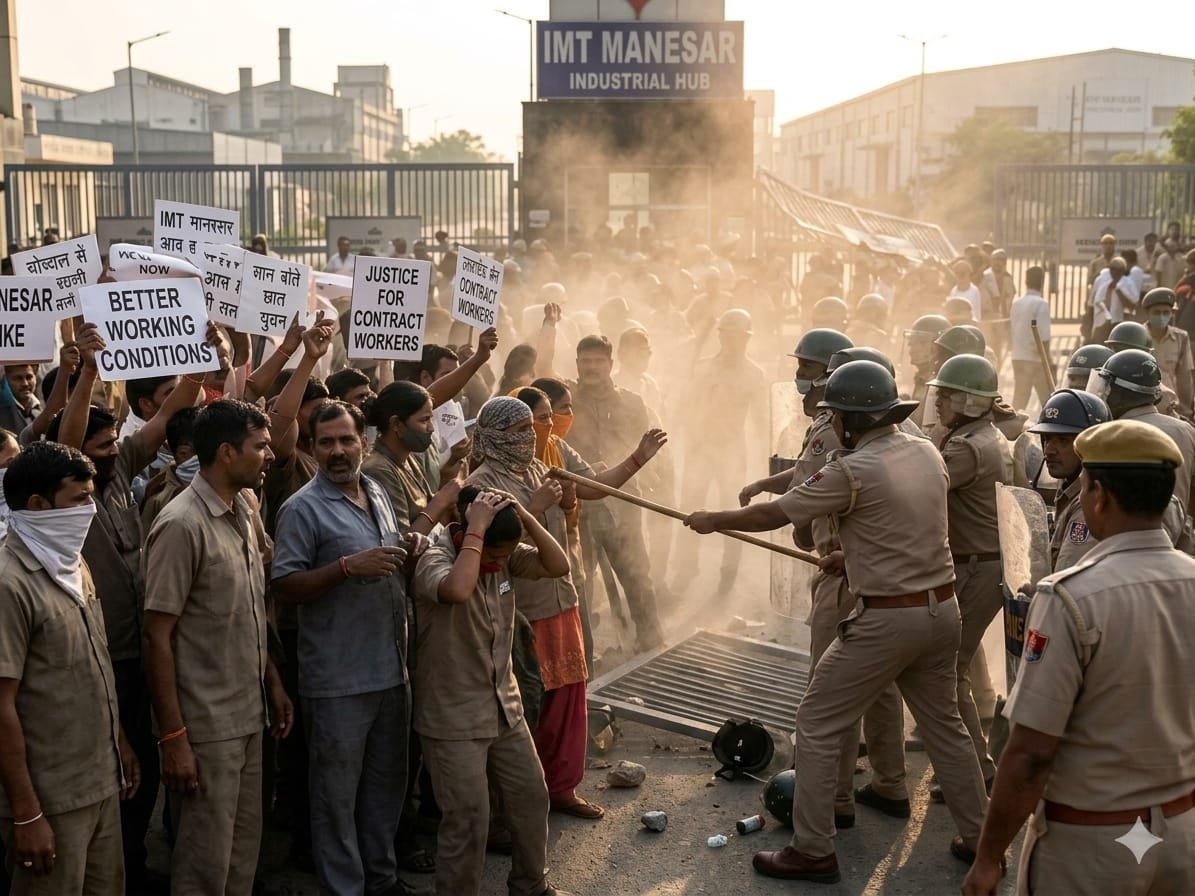
In the industrial area of IMT Manesar in Haryana, widespread protests and strikes by workers have intensified since the beginning of April 2026. Across the country—particularly in the energy sector and industrial hubs—this wave of unrest has made Manesar its focal point, where contract workers have launched an organized movement for their rights.
According to reports, these strikes began on April 2 and involve contract workers from several companies, including Honda, Munjal Showa, Satyam Auto, Roop Polymers, Richico Global, Modelama Exports, Rico, Suprajit Engineering, and Syrma SGS. The key demands of the workers include an increase in minimum wages, implementation of an 8-hour workday, double overtime (OT) pay, better safety standards, and dignified working conditions.
Meanwhile, Campaign Against State Repression (CASR) has issued a press statement expressing solidarity with workers in Manesar and across the country. The organization has strongly condemned the actions of the Haryana Police, calling them “brutal and coordinated repression.”
The press statement alleges that several worker representatives and activists associated with labour organizations were detained from the protest site, and some were even picked up from their homes. They were taken to police stations and allegedly forced to sign documents under coercion. There have also been reports of lathi-charge and physical violence, in which several workers were injured. Heavy police deployment has created an atmosphere of fear and intimidation in the area.
CASR stated that what is happening in Manesar is not an isolated incident, but part of a growing pattern of repression against labour movements across India. The statement mentions trade union leader Baccha Prasad Singh, who has been imprisoned for over a year under the UAPA. It also refers to NIA actions against labour and cultural activists in Chhattisgarh as part of the same pattern.
The organization also raised concerns about the new labour laws, stating that they restrict the right to strike, expand employer control, and weaken protections for contract workers. This, they argue, strengthens the nexus between corporations and the state, while suppressing workers’ voices.
CASR has called upon all democratic forces, trade unions, and civil society to come forward in support of the Manesar workers, demand accountability for police action, and oppose the criminalization of labour movements.
The struggle in Manesar is no longer confined to one region; it is increasingly becoming a symbol of rising worker unrest and the fight for rights across the country.