

This week proved historic for Middle Eastern politics and the global energy market. The President of the United States, Donald Trump, announced on Tuesday that he is postponing his planned attacks on Iran for two weeks. This decision was made on the condition that Iran fully, immediately, and safely opens the Strait of Hormuz.
Trump’s Statement
President Trump wrote on his official social media platform, Truth Social:
“I have agreed to postpone bombing and attacking Iran for two weeks.
This will be a bilateral ceasefire.
The reason is that we have already achieved all our military objectives, and now we are very close to a long-term peace with Iran and a solid agreement for peace in the Middle East.
We have received a 10-point proposal from Iran, and we consider it a valid basis for negotiations.
Almost all controversial points have been agreed upon between the U.S. and Iran, but this two-week period is necessary to finalize and mature the agreement.
Representing the U.S. and Middle Eastern countries, I am proud to say that this pending issue is now close to resolution.”
Trump clarified that this two-week ceasefire will only allow time to finalize and formally confirm the agreement.
Iran’s Response
Iran confirmed the ceasefire, stating that if U.S. attacks are postponed, its armed forces will halt defensive operations. Foreign Minister Abbas Araghchi said, “During the next two weeks, safe navigation through the Strait of Hormuz will be possible under the coordination of Iranian armed forces. This decision follows Trump’s recognition of Iran’s 10-point proposal as a valid basis for negotiations.”
Iran’s proposal includes the withdrawal of U.S. troops from military bases, compensation for war damages, lifting of sanctions, and the return of Iranian assets held abroad.
Strait of Hormuz and Global Impact
The Strait of Hormuz is a major route for global energy transport. Approximately 20% of the world’s oil and gas passes through it. During the conflict, Iran had almost blocked this route, causing oil prices to reach record levels and creating instability in the global energy market.
Analysts believe that the ceasefire will not only reduce regional tensions but also signal relief for the global economy.
Pakistan’s Mediation
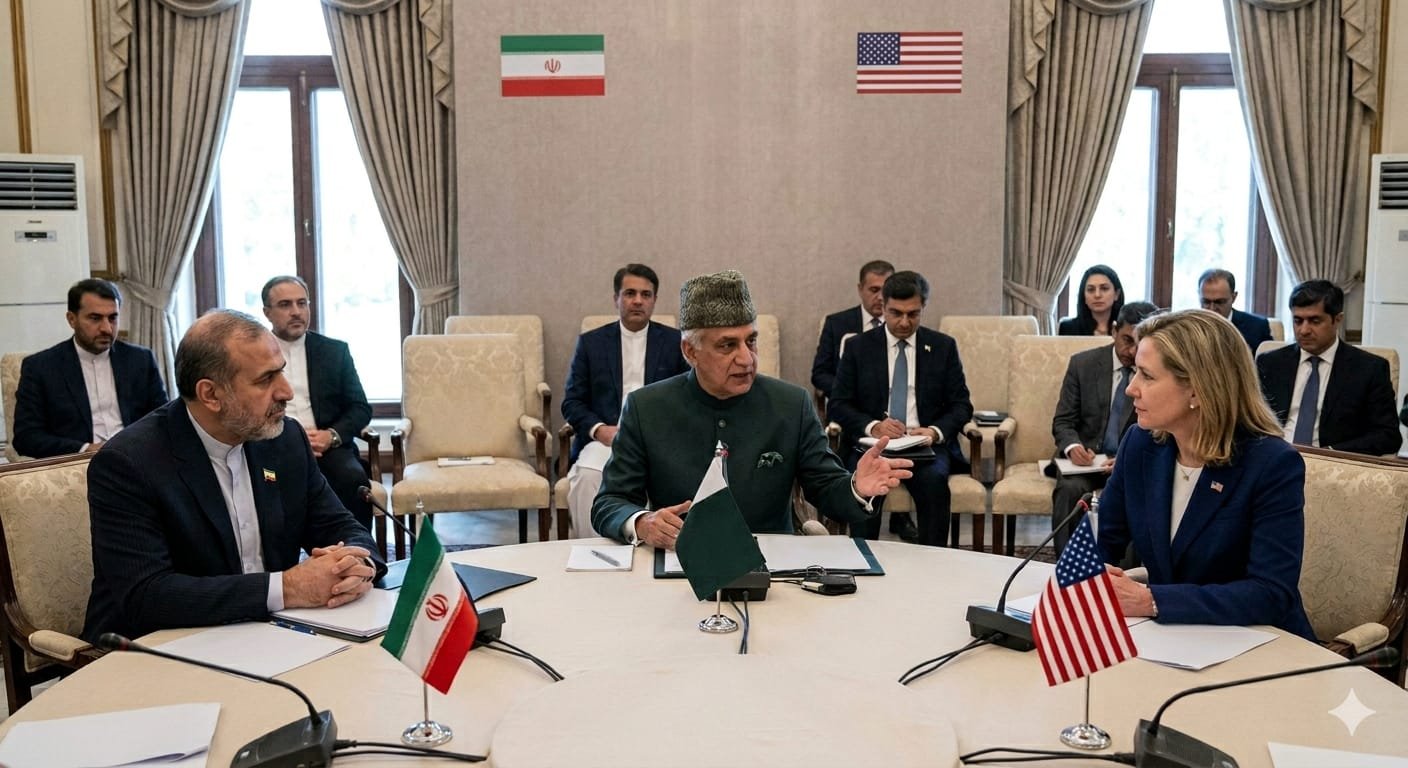
Pakistan’s Prime Minister, Shehbaz Sharif, mediated between both parties to pave the way for talks. He stated that negotiations will begin in Islamabad on Friday, April 10, 2026, with the goal of reaching a final and lasting agreement.
Background of the Conflict
The U.S. and Israel launched a joint military campaign against Iran on February 28. So far, approximately 2,076 Iranian civilians, 13 U.S. soldiers, and 26 Israeli civilians have been killed.
Trump and Israeli Prime Minister Benjamin Netanyahu claim that the campaign was necessary to prevent Iran from becoming a regional threat and acquiring nuclear weapons. However, international legal experts consider it an unprovoked attack.
Future Challenges
Experts believe that this ceasefire is an interim peace. It will be crucial to see whether it evolves into lasting peace after the two-week period, and whether Israel and its allies will halt their attacks against Iran.
Expert Trita Parsi states that Israel does not want to face Iran alone, so following U.S. directives is essential for it.
Considering Donald Trump’s full statement and Iran’s proposal, it is clear that the complex balance between military power, diplomacy, and resources in the Middle East is now being maintained through this two-week ceasefire. This period will be decisive in finalizing peace talks and ensuring global energy security.