

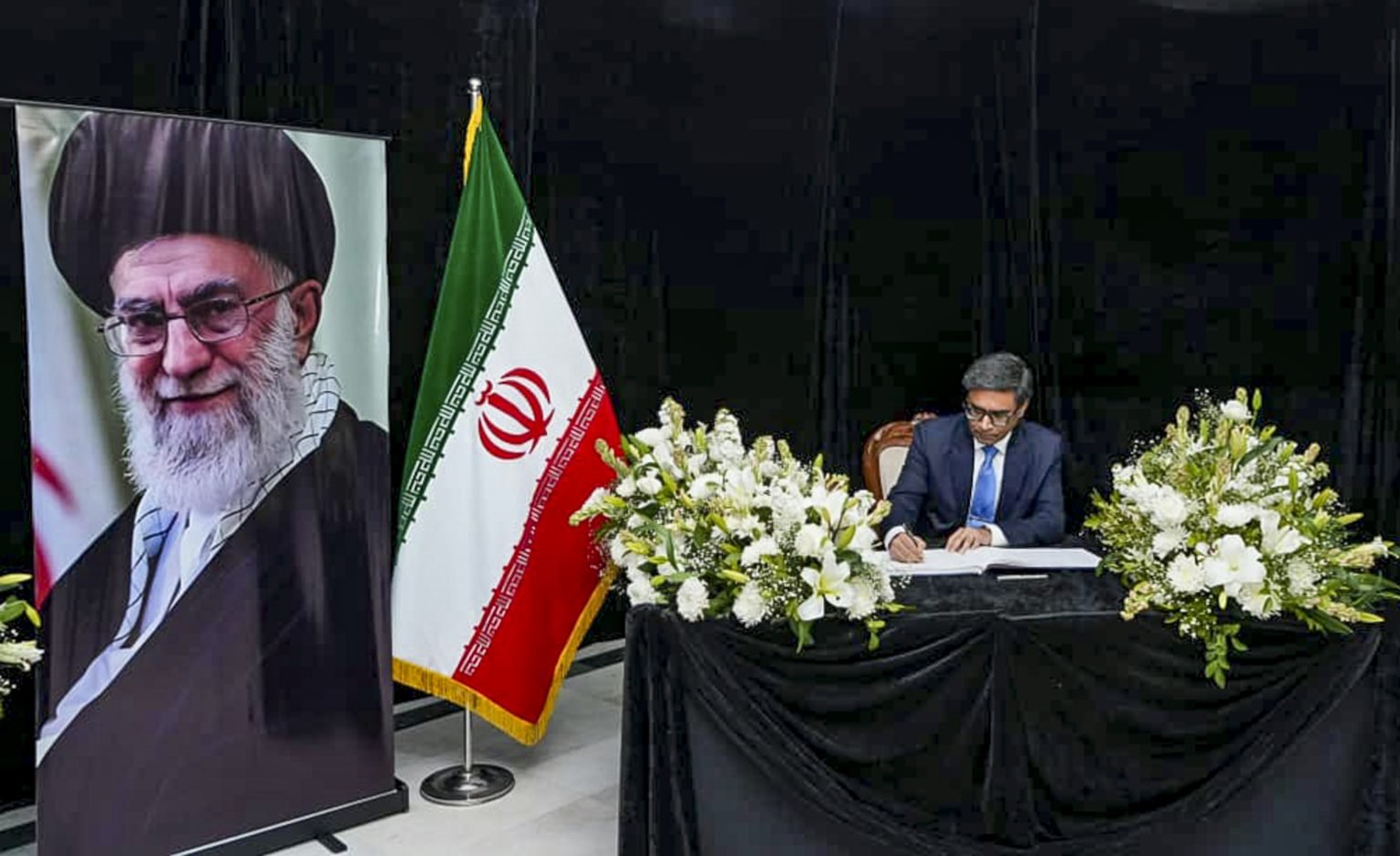
India has formally expressed condolences following the assassination of Iran’s Supreme Leader, Ayatollah Ali Khamenei. Indian Foreign Secretary Vikram Misri visited the Iranian Embassy in New Delhi, signing the condolence book and conveying India’s sympathies on behalf of the government.
In addition, External Affairs Minister S. Jaishankar spoke with his Iranian counterpart over the phone to extend condolences. During the conversation, the Iranian ambassador condemned the United States and Israel, holding them responsible for Khamenei’s assassination.
Questions Raised Over Delay in Condolence
India’s formal expression of sympathy came nearly five days after the killing, sparking political and social debate. While India has a precedent of promptly reacting to the death of Iranian figures such as former President Ibrahim Raisi, the delayed response in Khamenei’s case drew criticism.
Modi Government’s Approach: Balance and Caution
The Indian government emphasized reducing regional tensions, promoting dialogue, and seeking diplomatic solutions, avoiding direct attribution of blame. Prime Minister Narendra Modi, in conversations with global leaders, stated that military confrontation is not a solution and stressed the urgent need for a peaceful environment in the region.
The Ministry of External Affairs also dismissed reports suggesting that India’s ports were used by U.S. naval forces as false and unfounded.
Global Context: Rising Tensions
Khamenei’s assassination, confirmed as part of a joint U.S.-Israel airstrike, has intensified tensions across the Middle East. Iran has declared a 40-day mourning period along with seven days of public holidays. An interim council has assumed administrative responsibilities.
Some reports suggest that Khamenei’s son, Mojtaba, may be under consideration as the next Supreme Leader, though this has not been officially confirmed.
Domestic Response in India
Within India, the timing of the condolence and the government’s measured response have sparked debate. Some view it as a demonstration of India’s balanced diplomatic approach, while others criticize the government for not issuing a clear and direct statement.
India has expressed respect for its relationship with Iran while emphasizing dialogue and diplomatic efforts to maintain peace and stability in the region. Prime Minister Modi’s cautious stance and delayed public response have elicited mixed reactions from analysts and society, especially against the backdrop of an already sensitive geopolitical situation.