

The Union Ministry of Home Affairs has issued guidelines mandating the full six-stanza version of the national song Vande Mataram at government functions, schools, and formal ceremonies across the country. The order issued on 6 February 2026 said that “When the National Song and the National Anthem are sung or played, the National Song will be sung or played first.The audience must stand to attention whenever the official version is sung or played.
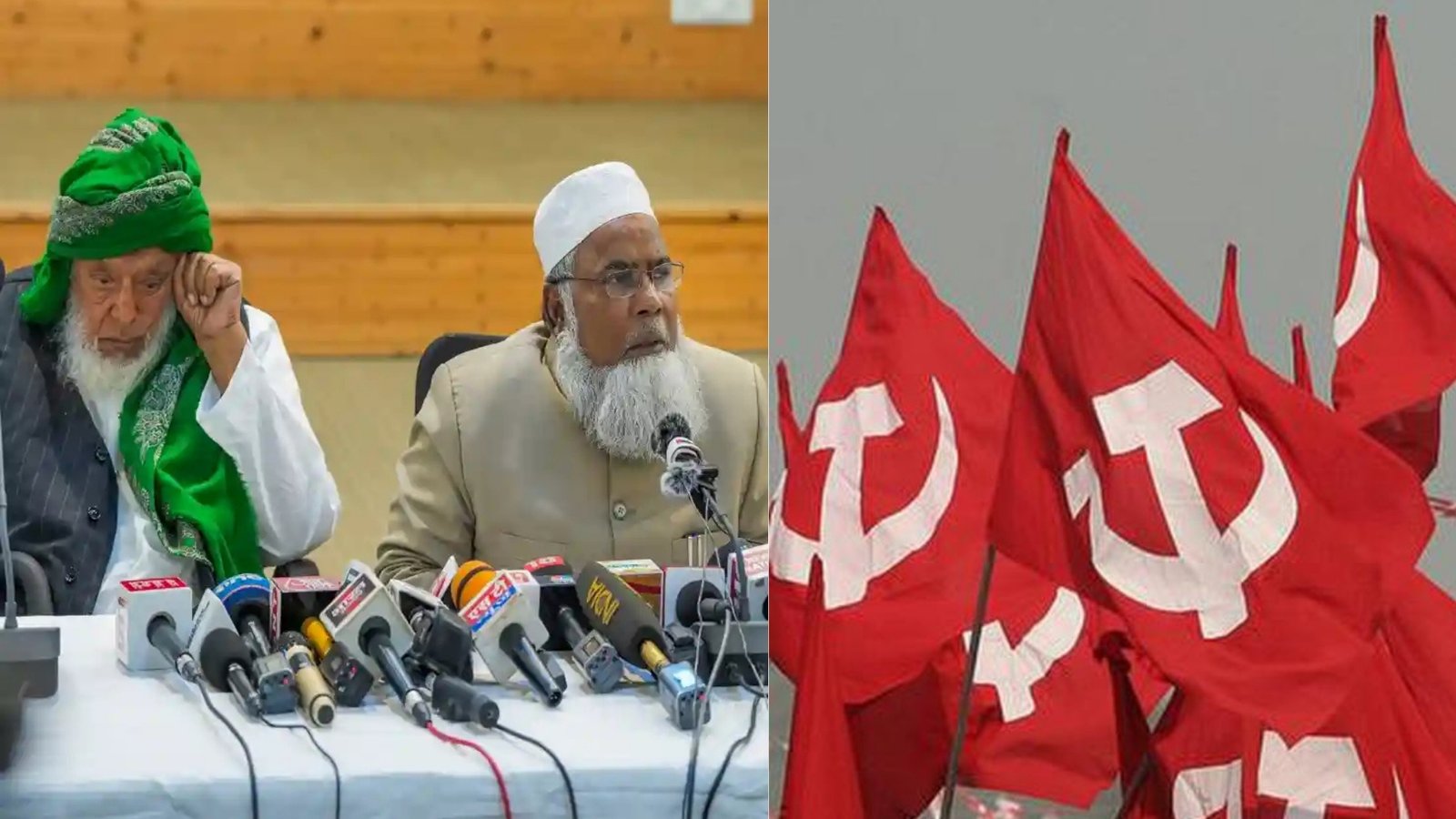
These rules apply to government events, schools, and formal ceremonies including state functions, school assemblies, civilian award ceremonies, flag parades, and occasions involving the President or governors. The move, coinciding with the 150th anniversary of the song written by Bankim Chandra Chatterjee in 1875, has drawn strong opposition from Muslim organizations and left parties, who argue it conflicts with religious freedom, secular principles and historical precedents.
The All India Muslim Personal Law Board (AIMPLB) demanded that the Central Government immediately withdraw the notification, Otherwise it will challenge it in court.
In a press statement, the Board’s General Secretary, Maulana Mohammed Fazlur Rahim Mujaddidi said “the decision is completely unacceptable to Muslims. He termed it unconstitutional, against religious freedom, secular values, contrary to Supreme Court judgment, and directly conflicting with the religious beliefs of Muslims.
“Following Rabindranath Tagore’s advice and deliberations in the Constituent Assembly, it had been agreed that only the first two stanzas of Vande Mataram would be used. Secular government cannot forcibly impose the beliefs or teachings of one religion upon followers of other religions,” He added.
The Communist Party of India (CPI) accused the BJP-led government of attempting to create an unnecessary controversy concerning the National Song and the National Anthem with ulterior motives. The BJP government should not be allowed to play with such historic cultural symbols.
The Constitution of India clearly states in Article 51A(a) that it is the duty of every citizen to respect the National Flag and the National Anthem. After thorough deliberation, the Constituent Assembly adopted the statement made by President Rajendra Prasad concerning the National Song, whose two stanzas only would be sung. Through its recent order, the government seeks to include the remaining four stanzas, which the Constituent Assembly felt did not resonate the secular character of the Indian Republic, Party said in a press release.
We demand the government to uphold the spirit of the Constitution and immediately withdraw this order, Party added.
CPI’s Rajya Sabha MP Sandosh Kumar P accused the govt of “cynically weaponising culture to polarise the people.” Our position is clear for us, the country comes first; for the BJP, elections come first,” he added.
Referring to the ruling party at the Centre, he alleged that “it is deeply ironic that those who had no role in the freedom struggle and remained subservient to British colonialism now claim the authority to issue certificates of nationalism.”
The song was written in the context of Bengal and contains references to the worship and veneration of Durga, Lakshmi and other deities. “Muslims cannot accept it, as it directly conflicts with their faith. A Muslim worships only One God, Allah, without partners, and Islam does not permit any form of associating partners with God.”
Muslim civil society accused the ruling party of communal politics and polarisation behind this decision, especially ahead of the West Bengal assembly elections. They called it electoral politics, a sectarian agenda, and a deliberate effort to divert public attention from fundamental issues. “The true measure of love for one’s country lies not in slogans but in character and sacrifice. Such decisions weaken the country’s peace, unity, and democratic values and undermine the spirit of the Constitution,” they said.
Jamiat Ulama-i-Hind has also strongly urged the Government of India to review the circular in light of constitutional provisions, judicial precedents, and the diverse social fabric of the nation, so that religious liberty, constitutional dignity, and social harmony may be preserved.
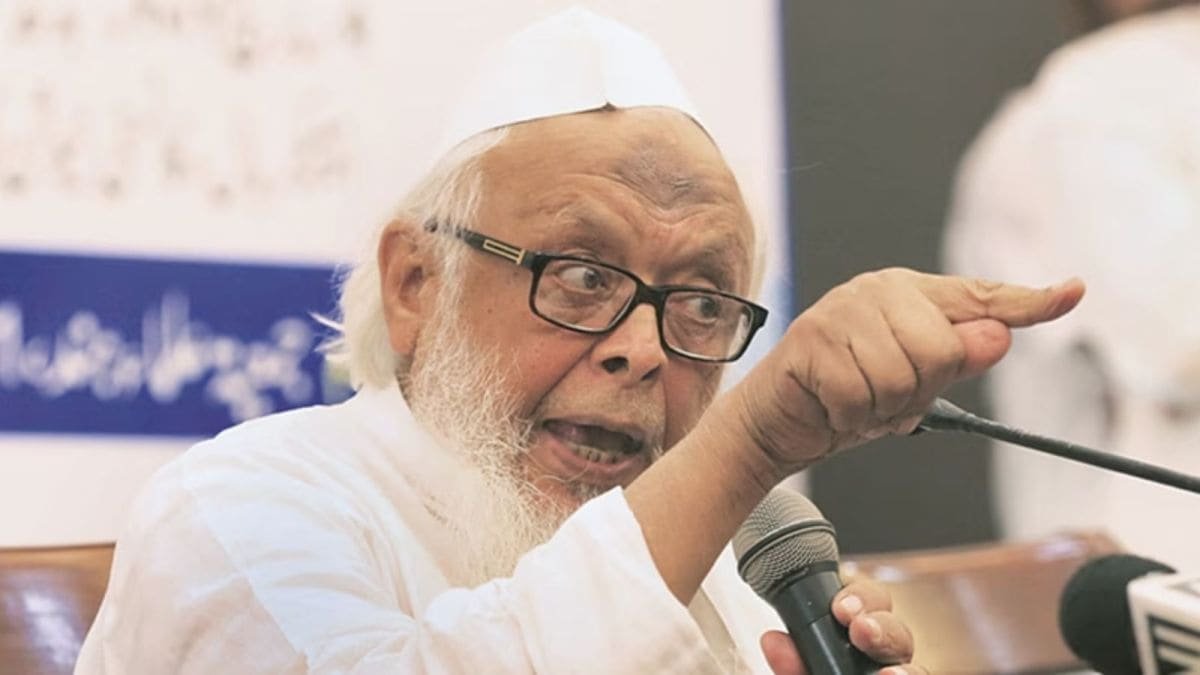
Jamiat Ulama-i-Hind President Arshad Madani said on X “The Central Government’s unilateral and coercive decision to make “Vande Mataram” the national song and to mandate all its stanzas is not only a blatant attack on the freedom of religion guaranteed by the Constitution of India but also a systematic attempt to curtail the constitutional rights of minorities.”
“Muslims worship only one Allah, forcing them to sing this song is a clear violation of Article 25 of the Constitution and several judgments of the Supreme Court, as Some verses of “Vande Mataram” are based on beliefs that portray the homeland as a deity, which contradict the fundamental belief of monotheistic religions. It must be remembered that Muslims worship only one God; they may endure everything, but they cannot accept associating partners with Him. Therefore, making “Vande Mataram” compulsory is a clear assault on the Constitution, religious freedom, and democratic principles,” He added.
Maulana Hakimuddin Qasmi said “The Constitution of India guarantees every citizen the inalienable right to profess, practice, and propagate his or her religion, and to live in accordance with one’s faith and conscience under Article 25 of the Constitution of India. Therefore, compelling any individual to recite a specific poem or composition that conflicts with his or her religious beliefs is contrary to the spirit and provisions of the Constitution.”
“India is a pluralistic and multi-religious nation where constitutional supremacy and the principle of “unity in diversity” form the foundation of national integration. Muslims are not opposed to the poem per se. If the majority community wishes to recite it, they are fully entitled to do so but making it mandatory for all citizens to recite it, would amount to imposing restrictions on religious freedom. Any step that weakens this foundation cannot be in the interest of the country,” Qasmi added.
“The Muslims of India hold a unanimous and unequivocal position that any decision undermining religious freedom will not be accepted. We strongly urge the Government of India to review the said circular in light of constitutional provisions, judicial precedents, and the diverse social fabric of the nation, so that religious liberty, constitutional dignity, and social harmony may be preserved,” He further said.
“As far as love for the nation is concerned, it is part of our religious duty. We have always loved our country and will continue to do so. However, any expression that falls within the domain of worship cannot be accepted, as the Constitution itself guarantees us the right to practice our faith freely,” He also stated.
Indian courts have also held that the other verses are inconsistent with secular values and have restricted their recitation in the past.
Congress MP Imran Masood said, “Vande Mataram is the national song, we will stand fully in its honour. We have no objection to it. There is no need for any debate. Everyone has the freedom to follow their own religion… I will respect Vande Mataram, but as far as singing and the lyrics are concerned, at my place, prostration is permissible only to Allah, besides whom no one else
The controversy comes as the song marks its 150th anniversary, originally written by Bankim Chandra Chatterjee in 1875. The first two stanzas praise the beauty of the land and were chosen for official use to keep it inclusive for all faiths.