

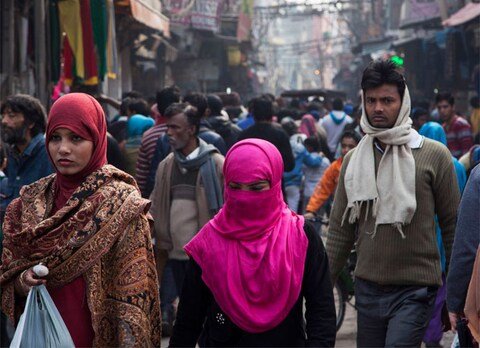
Residential segregation along caste and religious lines remains deeply entrenched in India’s cities and villages, with a direct impact on access to education, healthcare, and basic civic amenities, according to a new working paper by the US-based research institution National Bureau of Economic Research.
Titled “Residential Segregation and Unequal Access to Local Public Services in India,” the study analyzes data from nearly 1.5 million urban and rural neighborhoods across the country. The findings show that Scheduled Caste (SC) and Muslim communities have relatively lower and weaker access to local public services.
According to the report, about 26 percent of the Muslim population lives in neighborhoods where more than 80 percent of residents are Muslim. Similarly, nearly 17 percent of the SC population resides in areas where over 80 percent of residents belong to Scheduled Castes.
The study finds that segregation among the SC community is nearly the same in rural and urban areas, while urban segregation among Muslims is significantly more pronounced. Comparing the situation to racial segregation in the United States, the researchers note that India’s rapidly growing cities are reproducing long-standing social divisions.
The research highlights that SC- and Muslim-majority areas have fewer secondary schools, hospitals, and health centers. Access to piped water, sewerage systems, and regular electricity connections is also weaker compared to other neighborhoods.
The report emphasizes that these disparities are statistically significant and cannot be explained by income differences alone. Even within the same city, neighborhoods with similar economic conditions show sharp differences in service access based on social identity.
Referring to the “neighborhood effect,” the study notes that children growing up in highly segregated areas experience adverse educational outcomes.
According to the findings, a child living in a neighborhood with a 100 percent Muslim population receives, on average, nearly two fewer years of schooling than a child living in an area with no Muslim residents. Children in SC-majority neighborhoods also face substantial educational disadvantages.
The study estimates that nearly half of the education gap between SC and Muslim children in urban areas can be attributed to neighborhood effects.
Researchers identify social preferences, economic constraints, and discrimination in housing markets as key drivers of residential segregation. The report cautions that limited access to public services in these communities should not be interpreted as lower demand, but rather as a result of political and administrative neglect.
The study calls on policymakers to prioritize inclusive urban planning and equitable service delivery, arguing that addressing residential segregation and the resulting service inequalities is essential for ensuring social justice and equal opportunity in India.