

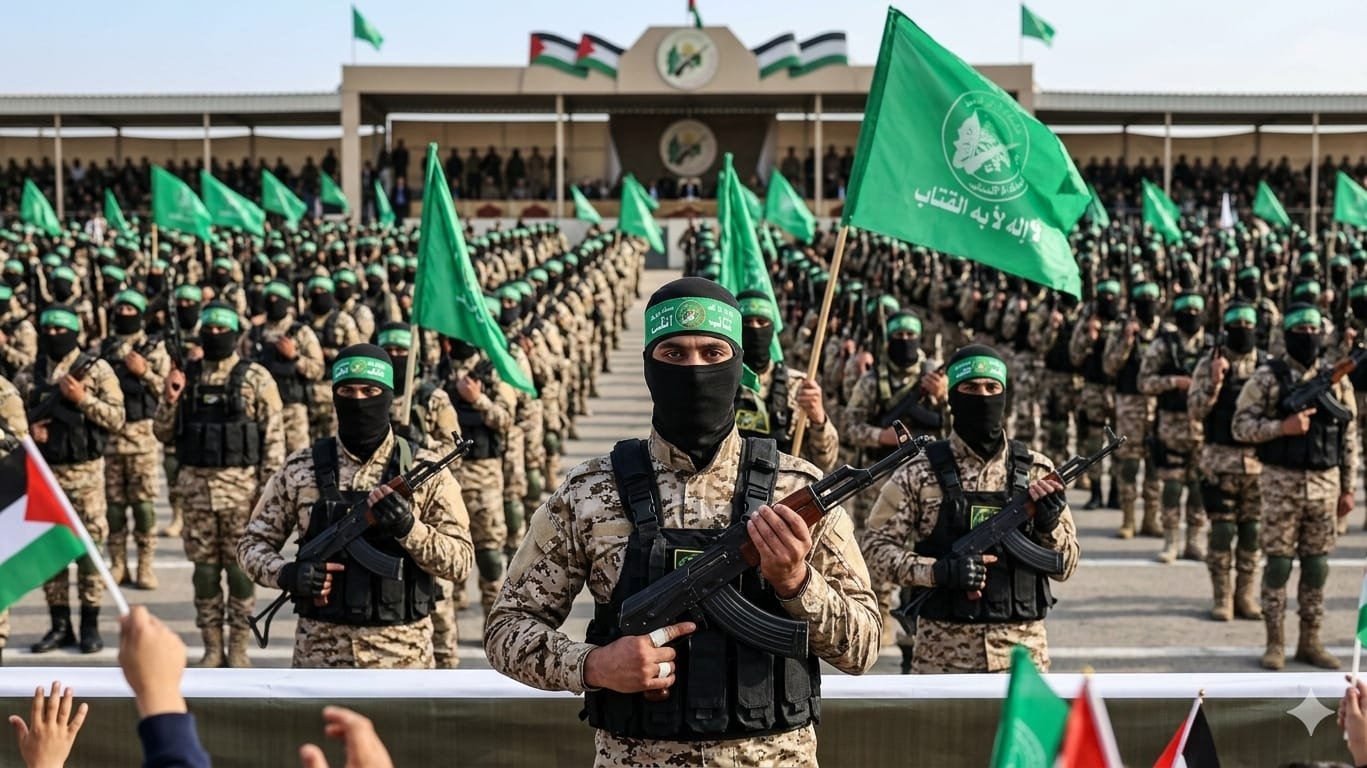
The situation in the Middle East has become increasingly complex. The Palestinian armed group Hamas has openly urged its ally Iran to immediately stop missile and drone attacks on neighboring Gulf countries. At the same time, Hamas reiterated Iran’s right to self-defense.
In a statement issued on March 14, Hamas said that Iran has the right to protect its security under international standards, but targeting regional countries is not in the interest of regional brotherhood and peace. The statement emphasized that all countries should work together to end the war and establish a lasting solution.
Experts say this statement marks a historic turning point. Traditionally, Hamas has supported Iran, but now it is trying to maintain a political and economic balance with the Gulf countries.
Iran‑U.S.-Israel Conflict
Since the U.S. and Israeli military operations began on February 28, 2026, Iran has intensified missile and drone attacks in the Gulf. These attacks are not only targeting military installations but are also affecting the coasts and airspace of Gulf countries.
Iran has warned U.S. facilities and oil infrastructure in the United Arab Emirates to ensure the safety of civilians. This has delivered a significant shock to regional politics and global energy security.
Humanitarian Crisis and the Strait of Hormuz
The United Nations has urged that humanitarian aid be allowed to pass safely through the Strait of Hormuz. Rising tensions in the strait are disrupting the supply of essential goods such as food and medical materials.
This route handles nearly 20% of the world’s maritime oil trade, so any disruption could also impact the global economy.
India and Gulf Security
Amid the recent crisis in the Persian Gulf, Indian LPG ships have safely crossed the Strait of Hormuz, and all crew members are reported safe. This has raised hopes for stability in India’s energy supply and markets.
Experts believe that Hamas’s statement signals that regional groups now want to prevent the full-scale war from spreading to Gulf countries. Restraint and diplomacy have become even more crucial.